 Pin
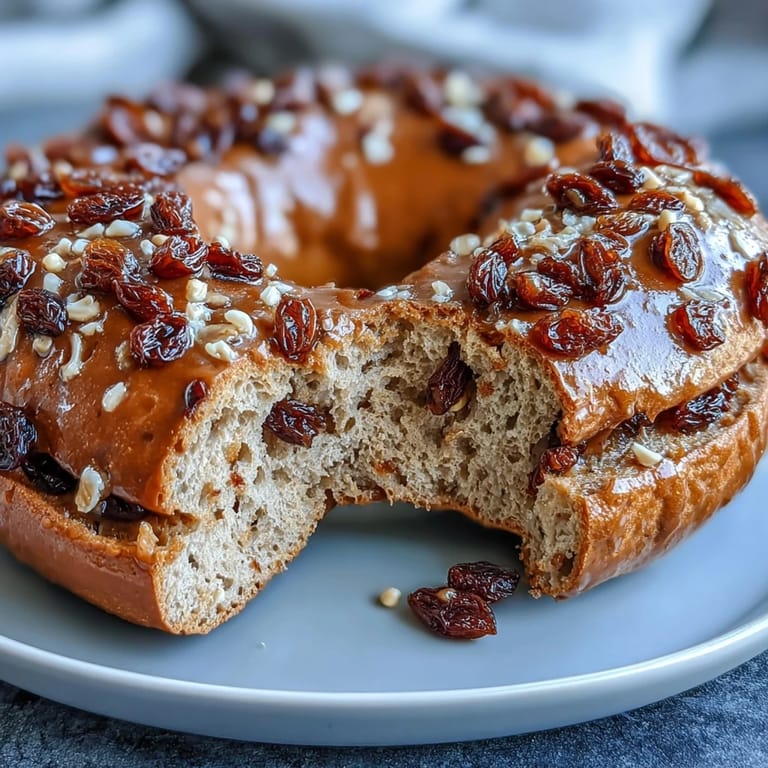
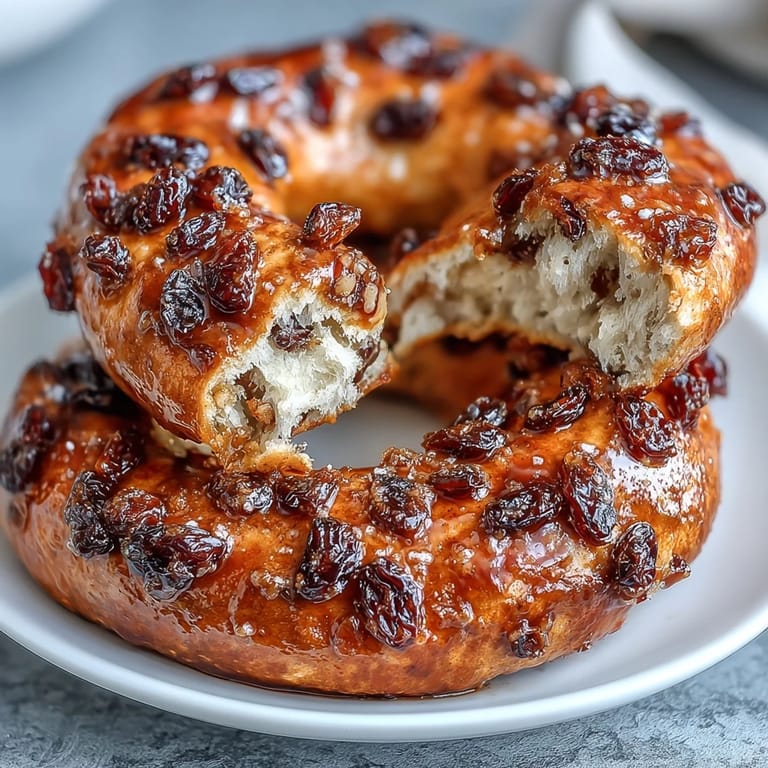
Pin My roommate challenged me to make bagels that didn't taste like protein powder, and honestly, I almost gave up halfway through kneading. But then something clicked when I added the Greek yogurt—it made the dough impossibly tender, and the cinnamon raisins smelled so good rising on the counter that I knew I'd cracked it. These bagels proved that high-protein breakfast food doesn't have to taste like a chore, and now they're the first thing people ask me to make.
I made a batch for my friend's Saturday morning gathering, and watching people take seconds without asking what was in them was a quiet win. Someone actually said these tasted better than the bagel shop versions, which made all those years of experimenting with protein ratios feel completely worth it.
Ingredients
- Bread flour: Three cups gives you the structure and chew that regular all-purpose can't deliver, and it plays nicely with the protein powder without making things gummy.
- Vanilla or plain whey protein powder: One cup is the sweet spot—enough for real protein content but not so much that it overwhelms the dough or leaves a chalky aftertaste.
- Ground cinnamon: Two teaspoons might sound like a lot, but it's what makes these smell like actual cinnamon raisin bagels rather than a generic breakfast item.
- Granulated sugar: Two tablespoons feeds the yeast and adds just enough sweetness to highlight the raisins without making these dessert-like.
- Instant dry yeast: One packet (the standard 2.25 teaspoons) works with the Greek yogurt's thickness to create proper rise and an open crumb structure.
- Salt: One teaspoon balances everything and strengthens the gluten network, especially important when you're mixing protein powder into the dough.
- Plain Greek yogurt: One cup is non-negotiable—use full-fat or at least 2 percent because the fat is what keeps the bagels tender and gives them that signature chew.
- Warm water: Half a cup at about 110°F activates the yeast without the yogurt making the dough too stiff to work with.
- Raisins: Three-quarters cup plumped slightly if you have time, so they stay moist in the final bagel instead of turning hard.
- Water for boiling: Two quarts is essential—a proper boil gives you that glossy crust and chewy interior that sets bagels apart from bread.
- Honey or barley malt syrup: Optional but worth the addition, it creates a subtle shine and helps the bagels brown evenly in the oven.
- Egg wash and cinnamon sugar topping: These make the bagels look bakery-quality and give you something nice to bite into, though they're completely optional if you're watching calories.
Tired of Takeout? 🥡
Get 10 meals you can make faster than delivery arrives. Seriously.
One email. No spam. Unsubscribe anytime.
Instructions
- Mix the dry team:
- Combine your bread flour, protein powder, cinnamon, sugar, yeast, and salt in a large bowl and whisk everything together so the yeast and salt don't touch directly when you add water. This simple step prevents any dead yeast patches in your final bagels.
- Bring the wet ingredients together:
- Pour in your Greek yogurt and warm water, then stir with a spoon until a shaggy, slightly sticky dough forms. You want everything incorporated but not smooth yet—that comes next.
- Knead until it's alive:
- By hand or with a stand mixer and dough hook, knead for 8 to 10 minutes until the dough transforms into something smooth, elastic, and slightly tacky. You'll feel the difference when the gluten network develops and the dough starts to spring back when you poke it.
- Tuck in the raisins:
- Add your raisins and knead briefly for another minute or so until they're evenly distributed throughout. Don't overwork this—you just want them tucked in, not broken apart.
- Let it rise and double:
- Oil a bowl lightly, place your dough in it, cover with a damp cloth, and set it in a warm spot (like an oven with the light on) for about an hour. You're looking for the dough to roughly double in size—this develops flavor and creates the proper crumb structure.
- Divide and shape with intention:
- Punch down the dough and portion it into 8 equal pieces using a kitchen scale if you're being precise. Roll each piece into a ball, poke your thumb through the center, and stretch it gently into a bagel shape with a hole you can see clearly.
- Give them a short rest:
- Place shaped bagels on parchment paper, cover loosely, and let them sit for about 15 minutes. This second rise keeps them light and prevents them from becoming dense when you boil them.
- Heat your boiling water:
- Bring 2 quarts of water to a gentle boil and stir in honey or barley malt syrup if you're using it. The syrup gives you better browning and a subtle sweetness that enhances the cinnamon flavor.
- The boil—where the magic happens:
- Carefully place 2 or 3 bagels into the boiling water and let them float and cook for 1 minute per side. You'll see them puff up slightly and change texture—that's the starch setting and creating the signature chewy exterior.
- Top and finish strong:
- Return boiled bagels to the parchment, brush with beaten egg if you're using it, and sprinkle with cinnamon sugar topping. This is where they go from homemade to bakery-looking.
- Bake until golden:
- At 425°F, bake for 20 to 25 minutes until the tops are a deep golden brown and the bagels sound hollow when you tap them. The color tells you when they've hit their peak.
- Cool completely before enjoying:
- Transfer to a wire rack and let them cool all the way down—this sets the crumb structure and makes them easier to slice. I know it's hard to wait, but this step is worth it.
 Pin
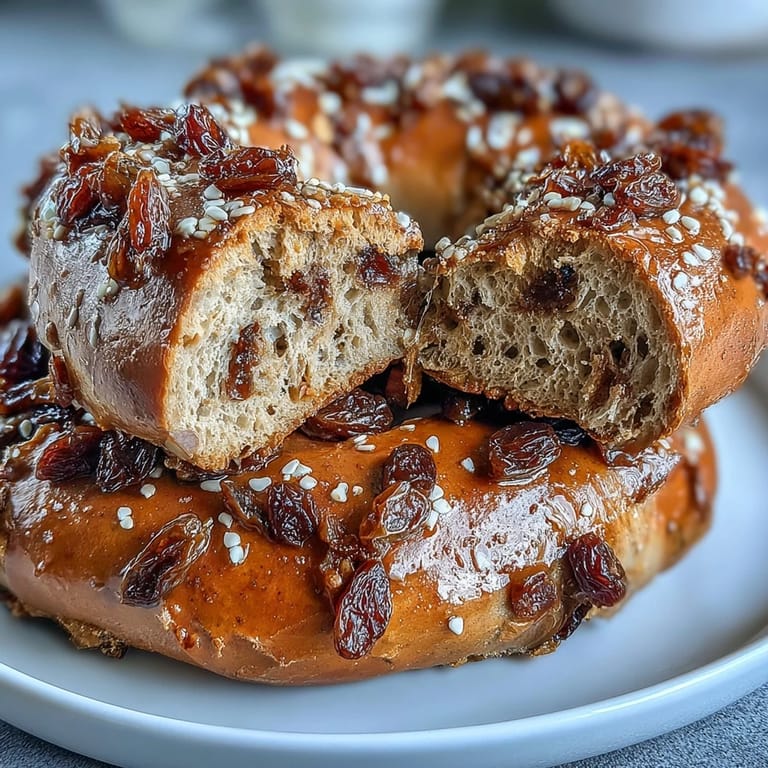
Pin There's something quietly satisfying about pulling a dozen chewy, cinnamon-scented bagels from the oven on a Sunday morning, knowing that something you made with your own hands is genuinely good for you. That's the moment these stopped being just a recipe and became a small ritual I actually look forward to.
The Protein Powder Secret Nobody Talks About
Most people add protein powder and hope for the best, but the real trick is using a lighter hand with yeast and letting fermentation do more of the work for you. I learned this by accident when I forgot to add a full packet one Saturday and the 18-hour cold fermentation actually made better bagels—the extended time broke down the powder's flavors and made them meld with the dough instead of standing apart.
Why Your Bagels Might Be Dense (and How to Fix It)
Overmixing after you add the raisins is the most common culprit—too much kneading at that point develops gluten past the point of helpfulness and creates a tough crumb. Another reason is underproofing; if your first rise feels slightly short, let the bagels sit an extra 5 minutes after shaping instead of rushing to the boil.
Serving and Storage Ideas That Actually Work
These bagels stay fresh in an airtight container for about three days, and they freeze beautifully for up to a month—slice them before freezing so you can toast straight from frozen. The protein powder in the dough means they don't dry out as quickly as regular bagels, which is honestly one of my favorite perks of this whole setup.
- Split and toast with almond butter for a post-workout breakfast that actually tastes like something you want to eat.
- Serve warm with Greek yogurt, a drizzle of honey, and a sprinkle of extra cinnamon for a dessert-breakfast hybrid nobody will regret.
- Slice and use for sandwich bases—the sturdy crumb holds up to wet fillings without falling apart like regular bagels sometimes do.
 Pin
Pin Making bagels from scratch might feel ambitious, but this recipe has a real forgiving quality that comes from the Greek yogurt. Once you nail your first batch, you'll be surprised how often you find yourself making them again.
Recipe FAQ
- → What makes these bagels high in protein?
The addition of whey protein powder and Greek yogurt increases the protein content, providing a nutritious boost to the traditional bagel dough.
- → How does Greek yogurt affect the bagel texture?
Greek yogurt adds moisture and tenderness, resulting in a softer crumb and a chewier bite compared to standard bagels.
- → Can I substitute raisins with other dried fruits?
Yes, you can replace raisins with dried cranberries, chopped dates, or other dried fruits for variation in flavor.
- → Why do you boil the bagels before baking?
Boiling sets the bagel’s crust, giving it a chewy texture and shiny surface once baked.
- → Is it possible to make these bagels without an egg wash?
Yes, skipping the egg wash will reduce shine but won’t affect the overall flavor and texture significantly.