 Pin
Pin My kitchen smelled like a pizzeria the first time I realized chicken didn't need a bread coating to be crispy and golden. A friend who'd gone keto kept raving about almond flour, and honestly, I was skeptical until that moment the oven door swung open and proved me wrong. The chicken emerged bronzed and nutty-smelling, nothing like the limp low-carb experiments I'd imagined. Now it's the recipe I reach for when I want something that feels indulgent but keeps me on track.
Last spring I made this for a dinner party where half the table was keto and the other half wasn't, and something magical happened—nobody asked for separate versions. The person next to me actually set down their fork halfway through and asked for the recipe, which felt like the highest compliment a cook can receive. That's when I stopped thinking of this as "keto chicken" and just started calling it really good chicken.
Ingredients
- Boneless, skinless chicken breasts (4 breasts, about 150 g each): Buy them roughly the same thickness so they cook evenly, and don't skip patting them dry—that moisture is the enemy of a golden crust.
- Salt and black pepper (1/2 teaspoon each): This seems minimal, but the real seasoning happens in the coating, so trust it and season your chicken simply.
- Almond flour (1 cup): Make sure it's finely ground, not the coarse kind meant for baking, or your coating will feel sandy and unpleasant.
- Grated Parmesan cheese (1/2 cup): Use freshly grated if you can; the pre-shredded kind has anti-caking agents that make the coating less cohesive.
- Dried Italian herbs (1 teaspoon): A blend of oregano, basil, and thyme works beautifully, and you can always add a pinch of garlic powder if you're in the mood.
- Large eggs (2): These are your glue—they help everything stick together and create that slight browning on the outside.
- Sugar-free marinara sauce (1 cup): Read the label carefully because some brands sneak in sugar, and honestly, homemade is worth it if you have twenty minutes.
- Shredded mozzarella cheese (1 1/4 cups): Low-moisture mozzarella melts more evenly than fresh mozzarella, which can get watery and slide around.
- Fresh basil (2 tablespoons, optional): Add it after baking because the heat fades its brightness, and you want that fresh herbaceous pop at the end.
- Olive oil (2 tablespoons): Just enough to coat your baking dish and prevent sticking without adding unnecessary fat to the final dish.
Tired of Takeout? 🥡
Get 10 meals you can make faster than delivery arrives. Seriously.
One email. No spam. Unsubscribe anytime.
Instructions
- Heat your oven and prep your stage:
- Set the oven to 400°F and lightly grease a large baking dish while it preheats. This takes about five minutes and gives your oven time to reach full temperature, which matters more than you'd think for that golden crust.
- Dry and season the chicken:
- Pat each chicken breast completely dry with paper towels, then season both sides generously with salt and pepper. Moisture is the enemy of crispiness, so don't rush this step.
- Build your dredging stations:
- In one shallow bowl, whisk your two eggs until they're a uniform pale yellow. In another, mix the almond flour, Parmesan, and Italian herbs until everything is evenly distributed.
- Coat with intention:
- Take one chicken breast, dunk it fully into the egg, then place it directly into the almond-Parmesan mixture and press gently so the coating actually adheres rather than just dusting off. Don't be shy here—a thick, even coating is what gives you that restaurant-quality crust.
- Arrange and bake the base:
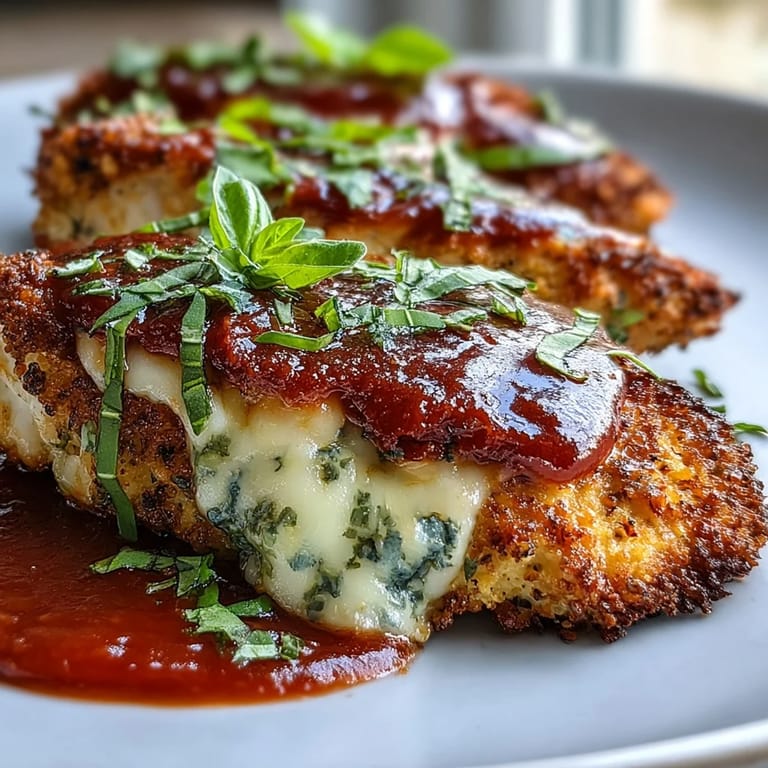
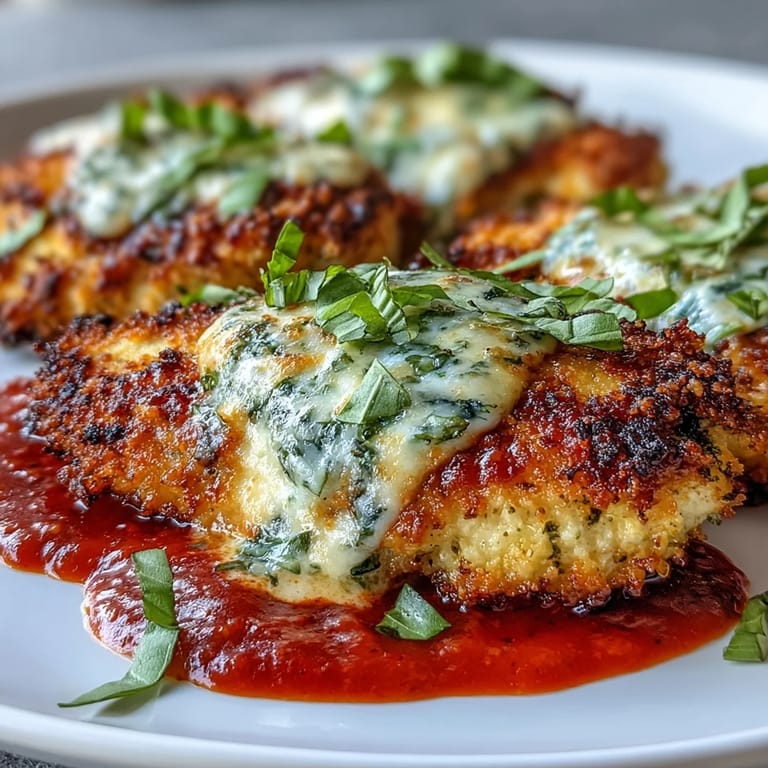
- Place your coated chicken breasts in the baking dish in a single layer, making sure they don't touch, and bake for twenty minutes. You're looking for the coating to turn golden brown, not deep brown—it'll get a little darker when you add the toppings.
- Add the marinara and cheese:
- Pull the dish from the oven and spoon about 1/4 cup of marinara sauce over each chicken breast, then top with a generous handful of mozzarella. The sauce should coat the chicken but not drown it.
- Final bake and temperature check:
- Return to the oven for eight to ten minutes until the cheese is bubbling and golden at the edges and the internal temperature reaches 165°F. A meat thermometer inserted into the thickest part removes all the guesswork.
- Garnish and serve:
- If you're using fresh basil, scatter it over the top right before serving so it stays bright and aromatic. Let it rest for two minutes so the cheese sets slightly.
 Pin
Pin There's a moment right when you pull it out the second time and the cheese is still bubbling that you realize this isn't just a workaround for a dietary choice—it's legitimately delicious. My mom tried this last month and asked me to make it again the very next week, which tells me everything about how well it actually tastes.
Why Almond Flour Works Here
Almond flour sounds intimidating if you've never cooked with it, but in this context it's genuinely superior to traditional breadcrumbs. It browns beautifully in the oven, developing a nutty flavor that complements the Parmesan and marinara without any bitterness. The fat content in almond flour actually creates a more tender, less dense coating than most bread-based crusts, and that's not me being optimistic—it's just how the chemistry works.
Timing and Temperature Matter
The two-stage baking approach exists for a reason: the first twenty minutes gets your chicken cooked through and your coating set, while the second stint melts the cheese without drying out the chicken underneath. If you bake the whole thing together, either your cheese doesn't melt properly or your chicken turns stringy and overcooked. Room temperature chicken breasts actually cook faster than cold ones straight from the fridge, so consider pulling them out ten minutes before you start your prep work.
Serving and Storage Wisdom
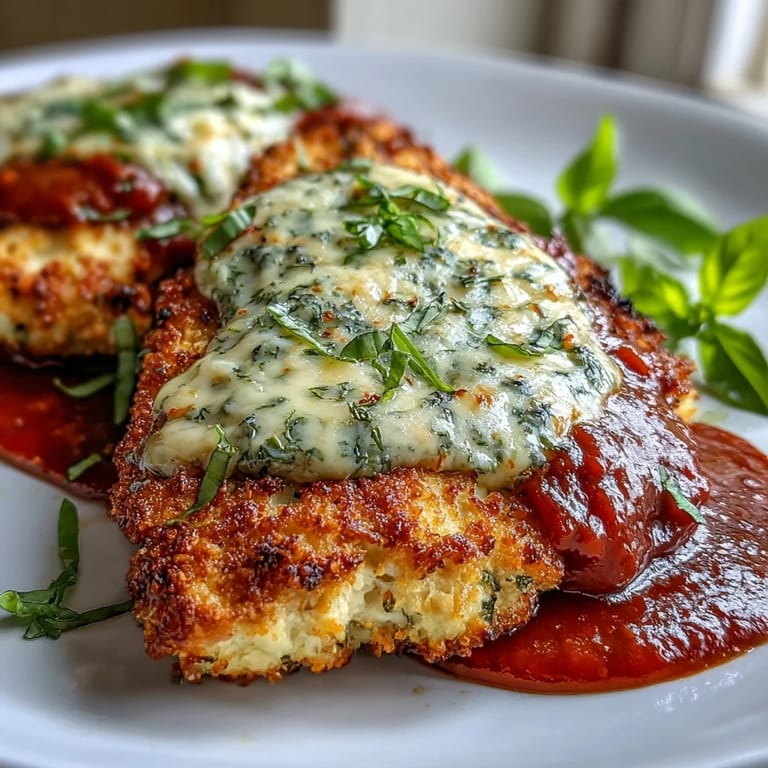
This tastes best served immediately while the cheese is still molten and the coating is at its crispiest, though it reheats surprisingly well in a 325°F oven for about eight minutes. For sides, zucchini noodles or a simple green salad with lemon dressing lets the chicken be the star instead of competing with heavy starches.
- Store leftovers in an airtight container in the refrigerator for up to three days, and reheat gently so the cheese doesn't separate.
- You can prep the coated chicken in the morning and bake it later in the day without any loss in texture or flavor.
- If you want extra crispy cheese, broil the top for one to two minutes right before serving, but watch it closely so it doesn't burn.
 Pin
Pin This recipe has become the thing I make when I want to prove that eating well doesn't mean eating boring food. It's honest, straightforward cooking that happens to check all the boxes.
Recipe FAQ
- → What makes this dish keto-friendly?
Instead of regular breadcrumbs, the coating uses almond flour which keeps carbohydrates very low. The marinara sauce is sugar-free, and all ingredients naturally fit within ketogenic macronutrient ratios while maintaining the classic flavors.
- → Can I use different cheese varieties?
Absolutely. While mozzarella provides that classic melt, provolone or an Italian cheese blend work wonderfully. Just ensure any cheese you choose is low-carb and melts well for the best results.
- → How do I get the crispiest coating?
Press the almond flour mixture firmly onto the egg-dipped chicken to ensure good adhesion. For extra crunch, broil for 1-2 minutes after adding the cheese, watching closely to prevent burning.
- → What sides pair well with this?
Zucchini noodles, cauliflower mash, or a simple green salad with olive oil dressing complement this beautifully. The mild flavors also work well with roasted vegetables like broccoli or asparagus.
- → Can I make this ahead?
You can bread the chicken up to 24 hours in advance and refrigerate. For leftovers, store assembled portions and reheat at 350°F until warmed through and cheese melts again.
- → Is this suitable for other dietary restrictions?
This dish is naturally gluten-free when using certified gluten-free marinara. For dairy-free needs, replace Parmesan with nutritional yeast and use vegan mozzarella, though the flavor profile will change slightly.