 Pin
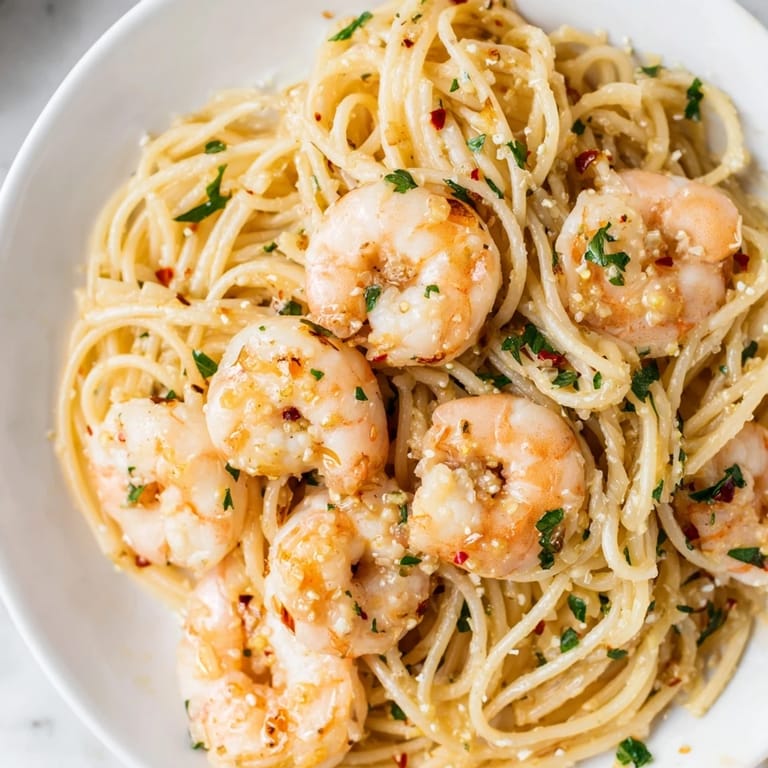
Pin My neighbor brought over shrimp from the market one afternoon, still glistening with ice, and said she had too many. I had spaghetti in the pantry and a lemon rolling around in the crisper drawer. What started as improvisation turned into one of those meals where everyone went quiet halfway through eating. The garlic butter pooled at the bottom of the bowl, and we all fought over who got to dip the last piece of bread in it.
I made this for my sister's birthday once, doubling the recipe and plating it on a big white platter with extra lemon wedges tucked around the edges. She took one bite and asked if I had secretly taken cooking classes. I laughed and told her it was just butter, garlic, and good timing. That night, she texted me at midnight asking for the recipe, which I took as the highest compliment.
Ingredients
- Large shrimp, peeled and deveined: Go for the biggest ones you can afford because they stay juicy and don't overcook in seconds like the tiny ones do.
- Spaghetti: The long strands catch the sauce better than short pasta, and it twirls dramatically on a fork, which matters more than you'd think.
- Unsalted butter: You control the salt this way, and it melts into the sauce with a richness olive oil alone can't match.
- Extra-virgin olive oil: This keeps the butter from burning and adds a fruity undertone that plays nicely with the lemon.
- Garlic cloves, minced: Fresh garlic is non-negotiable here because the jarred stuff turns bitter and tastes like regret.
- Lemon zest and juice: The zest gives you bright, floral notes while the juice brings the acid that makes everything pop.
- Dry white wine: It deglazes the pan and adds depth, but if you skip it, the dish still works because the lemon does heavy lifting.
- Crushed red pepper flakes: Just enough to wake up your tongue without making anyone reach for water.
- Salt and black pepper: Season as you go, tasting between steps, because underseasoned shrimp pasta is a sad thing.
- Fresh parsley: This isn't just for looks; it adds a grassy freshness that balances all the butter.
- Parmesan cheese: Optional, but a little grated on top makes it feel like a hug.
- Lemon wedges: For squeezing over the finished plate when you want even more brightness.
Tired of Takeout? 🥡
Get 10 meals you can make faster than delivery arrives. Seriously.
One email. No spam. Unsubscribe anytime.
Instructions
- Boil the pasta:
- Get your water boiling hard and salt it until it tastes like the ocean. Cook the spaghetti just until it still has a little bite, then save some of that starchy pasta water before you drain it.
- Prep the shrimp:
- Pat them completely dry with paper towels so they sear instead of steam. A quick sprinkle of salt and pepper now means flavor in every bite later.
- Sear the shrimp:
- Heat your skillet until it's almost smoking, then lay the shrimp in without crowding them. Let them sit untouched for a minute or two until the bottoms turn golden pink, then flip once and remove them before they curl up too tight.
- Cook the garlic:
- Lower the heat and add the rest of your butter and oil, then toss in the garlic. Stir it constantly and pull it off the heat the second it smells nutty and fragrant, because burnt garlic ruins everything.
- Build the sauce:
- Pour in the lemon zest, juice, wine, and pepper flakes, scraping up any browned bits stuck to the pan. Let it bubble and reduce for a few minutes until it thickens just slightly and smells like a Italian summer.
- Toss it all together:
- Add the shrimp back in with any juices that collected on the plate, then dump in the drained pasta. Toss everything together, adding splashes of pasta water until the sauce clings to every strand like silk.
- Finish and serve:
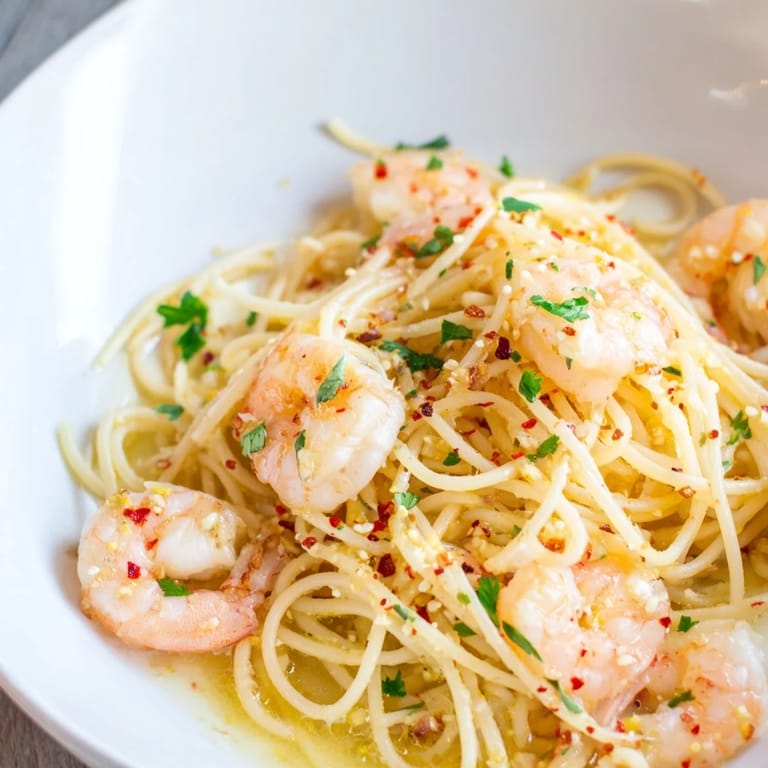
- Taste it, adjust the salt and pepper, then pull it off the heat. Shower it with parsley and Parmesan if you're using it, and serve it immediately with lemon wedges on the side.
 Pin
Pin One night, I made this after a long week and ate it standing at the counter, straight from the skillet. The lemon and garlic smell filled the whole apartment, and I realized I was smiling for the first time in days. Sometimes a dish doesn't need to be fancy or shared to feel special. Sometimes it just needs to taste like relief.
Substitutions and Swaps
If you can't find fresh shrimp, frozen works just fine as long as you thaw them in the fridge overnight and pat them really dry. For a dairy-free version, swap the butter for more olive oil and skip the Parmesan, or use a dairy-free grated topping if you miss that salty finish. Gluten-free pasta holds up well here, especially the chickpea or lentil kinds that don't turn to mush. If white wine isn't your thing or you're cooking for kids, use chicken broth or even just more pasta water with a splash of lemon juice.
Storage and Reheating
This dish is best eaten right away, but leftovers keep in the fridge for up to two days in an airtight container. Reheat gently in a skillet over low heat with a splash of water or broth to bring the sauce back to life, because the microwave will turn the shrimp into rubber. If you know you'll have leftovers, slightly undercook the pasta the first time so it doesn't get mushy when reheated. It won't be quite as magical as the first night, but it's still better than most takeout.
Make It Your Own
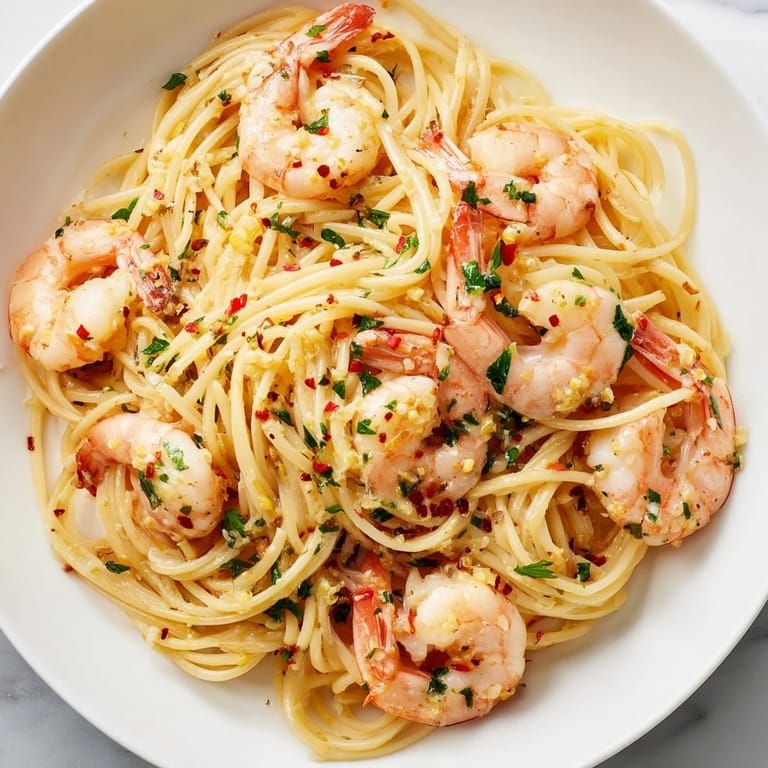
This recipe is forgiving and loves additions. Toss in halved cherry tomatoes during the last minute of cooking for bursts of sweetness, or stir in a handful of baby spinach until it just wilts. If you like heat, double the red pepper flakes or add a thinly sliced fresh chili. Sometimes I throw in a few capers for extra brine, or swap the parsley for fresh basil if that's what's in the garden.
- Try using linguine or angel hair if you want a different texture under all that buttery sauce.
- A handful of toasted pine nuts or breadcrumbs on top adds crunch and makes it feel more restaurant-fancy.
- If you have leftover herbs like dill or chives, chop them in with the parsley for a more complex finish.
 Pin
Pin This is the kind of recipe that makes you feel like a better cook than you actually are, and I mean that in the best way. Keep shrimp in the freezer and a lemon in the fridge, and you'll always have a reason to celebrate a random Wednesday.
Recipe FAQ
- → How do I prevent the shrimp from becoming rubbery?
Cook shrimp for only 1-2 minutes per side until just pink and opaque. Overcooking causes a tough, chewy texture. Remove from heat immediately when they change color, as they continue cooking slightly from residual heat.
- → Can I prepare this dish ahead of time?
Prepare ingredients in advance—peel shrimp, mince garlic, zest lemon, and cook pasta up to 2 hours ahead. Store separately in the refrigerator. Assemble the dish just before serving to maintain the silky sauce and shrimp texture.
- → What's the purpose of reserving pasta water?
Pasta water contains starch that creates a silky, cohesive sauce binding the pasta and shrimp together. Add it gradually while tossing to achieve the desired consistency without making the dish watery.
- → Is white wine necessary for this dish?
White wine adds depth and acidity, but it's optional. Substitute with chicken broth, vegetable broth, or additional lemon juice for similar results without altering the core flavors.
- → How should I store leftovers?
Store cooled pasta in an airtight container for up to 2 days. Reheat gently on the stovetop with a splash of water or broth to restore the sauce consistency. Avoid microwaving, as it can toughen the shrimp.
- → Can I make this gluten-free?
Yes, simply substitute regular spaghetti with certified gluten-free pasta, following package instructions for cooking time. The sauce itself is naturally gluten-free, making this an easy adaptation for dietary needs.