 Pin
Pin I remember the first time I realized that elegance doesn't require complexity. It was at an intimate dinner party where a friend served this stunning black and white platter, and I watched guests pause before reaching for anything—not because they were unsure, but because they were captivated. There was something about the bold geometric contrast, the careful balance of shadows and light on a single board, that made everyone feel like they were at somewhere truly special. That night, I understood that the most sophisticated appetizers are often the simplest ones, the ones that let beautiful ingredients speak for themselves.
I served this platter at my cousin's engagement party, and what struck me most wasn't the compliments—though there were plenty—but how people lingered around it. They'd reach for an olive, then pause to admire the arrangement before taking a bite. It became the conversation starter, the unexpected focal point that said 'someone really thought about this,' and that feeling of quiet thoughtfulness is exactly what this dish delivers.
Ingredients
- Kalamata or Niçoise olives (100g, pitted): These aren't just any olives—they have a depth and complexity that grocery store varieties can't match. The pitting matters because it shows respect for your guests' experience. I learned this after watching someone's face when they hit an olive pit.
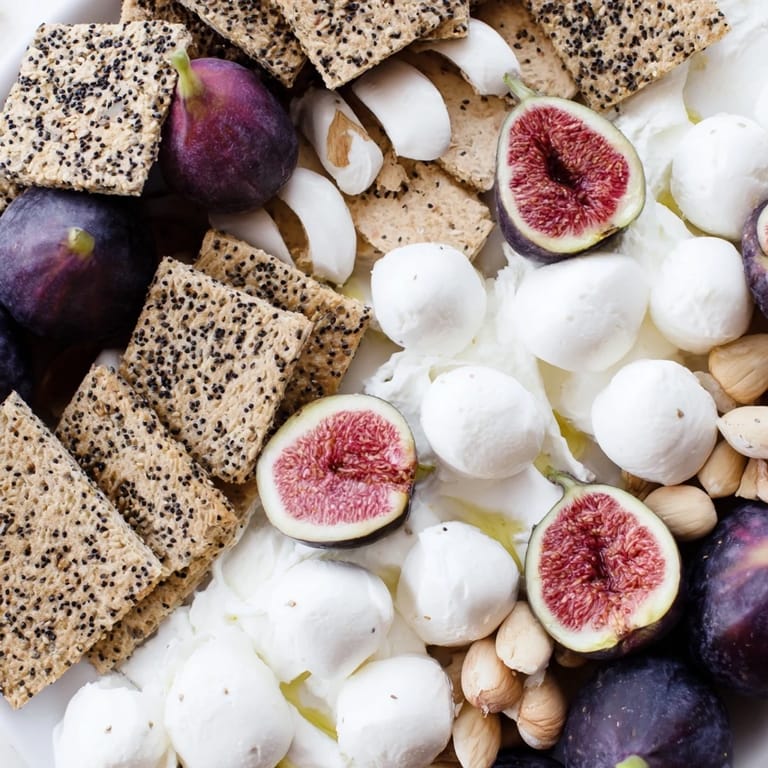
- Dark rye bread (8 slices): The darkness here is crucial; it's your canvas. Dark rye has a subtle earthiness that makes the white elements pop even more dramatically. Slice it into geometric shapes—squares, triangles, rectangles—as if you're creating an abstract artwork.
- Black sesame seeds (1 tablespoon): These are tiny flavor carriers with a nutty, almost mineral quality. They add sophistication and texture without overwhelming anything else on the board.
- Black mission figs (8, halved, optional): I call these the secret weapon. They're optional, but if you include them, they add a whisper of sweetness and jammy richness that transforms the platter from savory to layered. They're especially beautiful when you need that extra touch of drama.
- Fresh mozzarella balls (200g): Quality matters enormously here. Look for mozzarella that's been sitting in brine, not vacuum-packed. These little orbs are your primary white element, and their delicate flavor deserves respect.
- Large fresh mozzarella ball (for slicing): This gives you those perfect thin slices that you can arrange in geometric patterns. The difference between good mozzarella and exceptional mozzarella shows immediately on a platter like this.
- Vanilla bean (seeds scraped): This is unconventional and that's what makes it brilliant. The tiny black seeds dotted on white mozzarella add an unexpected aromatic element. It's like adding a tiny secret to the platter that only reveals itself when someone takes a bite.
- White sesame seeds (1 tablespoon): Toasier and warmer than black sesame, these add their own dimension. They scatter light differently across the dark rye.
- Blanched almonds (16): These are your accent pieces, placed thoughtfully like edible punctuation marks. They're mild, crunchy, and completely pure white.
- Extra virgin olive oil (2 tablespoons): This is a drizzle with intention. Good olive oil has its own flavor profile, so taste it first. You're not drowning anything; you're highlighting.
- Flaky sea salt and black pepper: These finish the composition. The salt should be the last thing you add, right before serving, so it doesn't dissolve into the moisture of the cheese.
Tired of Takeout? 🥡
Get 10 meals you can make faster than delivery arrives. Seriously.
One email. No spam. Unsubscribe anytime.
Instructions
- Create Your Geometric Foundation:
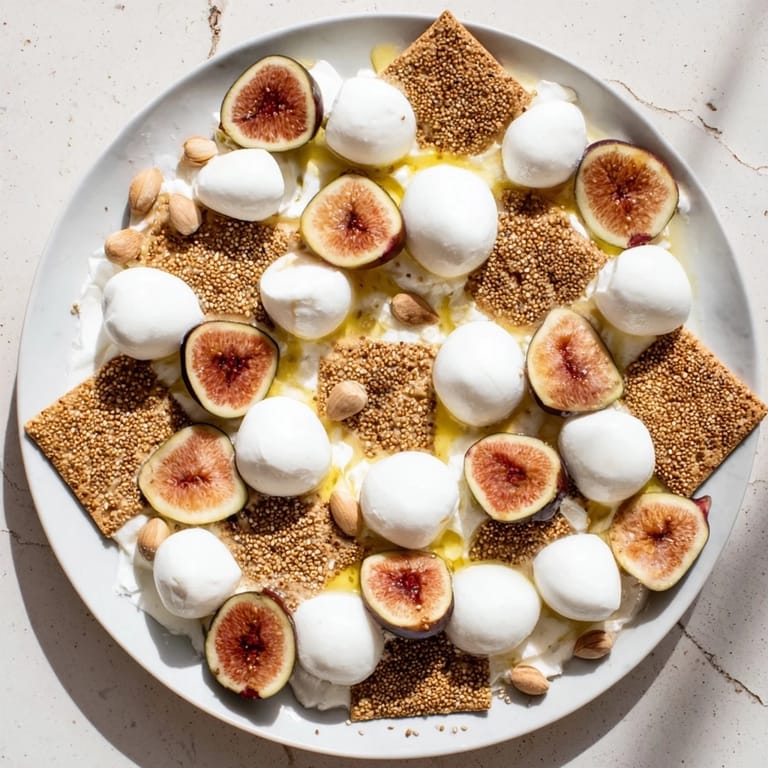
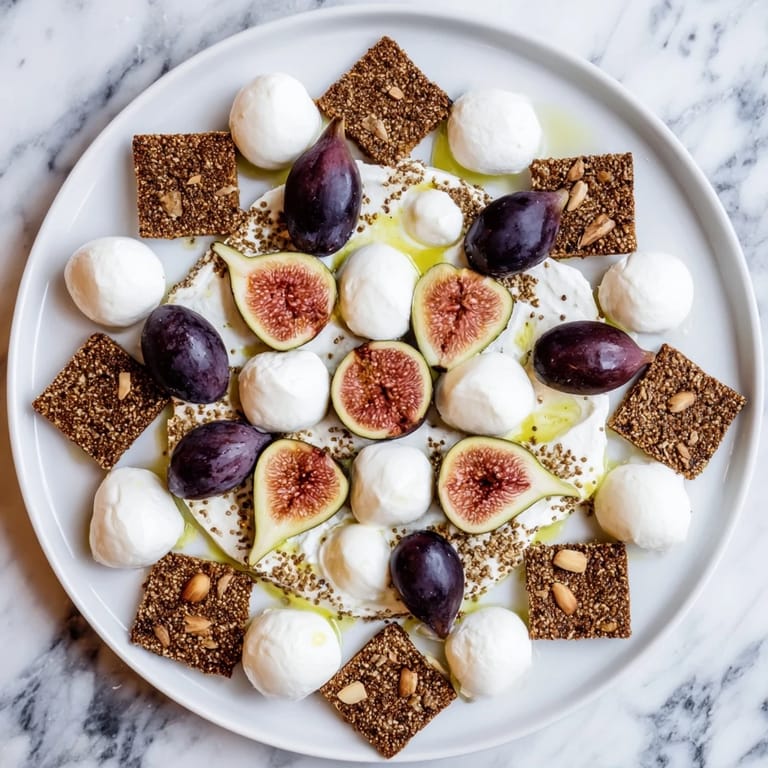
- Take that dark rye bread and cut it with intention. Use a sharp knife—dull knives tear bread and make everything look less refined. Cut some slices into squares, some into triangles, some into rectangles. Arrange them on your large platter in alternating patterns, like you're laying out a minimalist tile floor. This is your anchor, your dark canvas. Step back and look at it. The negative space matters as much as the bread itself.
- Build Your Black and White Conversation:
- Now take your pitted black olives and your fresh mozzarella balls. Arrange them in alternating lines or circles, creating a rhythm across the platter. Black olive, then white mozzarella, then black olive. You want the contrast to feel intentional, almost mathematical in its precision. Let some breathing room exist between elements—this isn't crowded, it's curated.
- Layer Your Sliced Mozzarella Drama:
- Take those slices of fresh mozzarella and arrange them alongside the bread and olives. You might overlap them slightly in one section, stand them at angles in another. This is where you're adding dimension and visual interest. Think about how light will hit each slice.
- Add Textural Whispers with Seeds:
- Sprinkle black sesame seeds over the white mozzarella elements—not everywhere, just enough to create depth. Then scatter white sesame seeds across some of the dark rye bread. You're not trying to cover everything; you're adding accents. These tiny seeds catch light and create visual texture.
- Introduce the Figs (If You're Being Bold):
- If you're using the black mission figs, halve them and place them strategically. These are your jewels—don't hide them, but don't overwhelm with them either. One in a corner, another creating balance on the opposite side. They add that element of unexpected sweetness.
- Anchor with Almonds:
- Place your blanched almonds in small, minimalist clusters or in a gentle line. They should feel like finishing touches, like you're signing your artwork with these white accents. A group of three here, a pair there, maybe one solo element to break the pattern.
- Crown with Oil and Salt:
- Drizzle your excellent olive oil across the cheese and bread with a light hand. You want shine and flavor, not saturation. Then—this is important—sprinkle flaky sea salt while the oil is still glossy. This timing means the salt catches the light and stays distinct rather than disappearing.
- Add the Vanilla Signature:
- Using the tip of a knife, gently scrape vanilla seeds from the pod. You'll see tiny black specks. Dot these artfully across some of the mozzarella slices. This is your secret, your signature move. When someone tastes that vanilla note floating across creamy cheese, they'll know something special happened here.
- Serve at the Right Moment:
- Bring this to the table immediately if your bread needs to stay crisp, or cover it loosely and refrigerate for up to an hour. The cold actually helps the flavors taste more distinct. But serve it cold or at cool room temperature—never warm.
 Pin
Pin What I remember most about these platters isn't the moment people start eating—it's the moment they first see it. There's this genuine pause, this intake of breath, where everyone recognizes that someone cared enough to think about beauty alongside flavor. That moment when food becomes more than sustenance, when it becomes a gesture, a way of saying 'you matter enough for me to create something beautiful'—that's what this platter is really about.
The Geometry of Elegance
I learned to think about appetizer platters the way I think about design: every placement is a choice. The eye naturally follows lines and patterns, so when you arrange your elements in geometric shapes—rows, circles, alternating sequences—you're not just making it look nice, you're actually guiding how people experience the platter. They naturally reach for pieces in the order you've laid them out. Dark bread, then white cheese, then back again. It becomes almost musical in rhythm.
When Simplicity Becomes Sophistication
There's a particular kind of confidence required to serve a platter with only two colors. No vibrant berries, no colorful vegetables, no bright garnishes. Just black and white and the dozens of shades of gray between. That restraint is what makes it feel exclusive, like you're inviting people into a carefully considered vision rather than throwing together whatever looks good. It's the appetizer equivalent of a classic black-and-white photograph—timeless because it removes distraction and focuses attention on what actually matters: the quality and arrangement of what you're serving.
Making It Your Own
Here's what I've learned from making this platter multiple times: the structure is sacred, but the specifics can be deeply personal. Consider these adaptations that respect the vision while making it yours. Keep the black and white foundation—that's what makes it striking—but let your interpretation of the ingredients reflect what's available in your market and what excites your palate.
- Add thinly sliced black garlic alongside the olives for deeper umami and a completely different textural experience, or substitute with a black truffle if you're feeling particularly indulgent
- Include a creamy white goat cheese or burrata alongside the mozzarella for richness, or add thin slices of whipped ricotta on dark bread bases for a different kind of creaminess
- Consider a gluten-free dark bread or even dark seed crackers if you're serving guests with sensitivities—they still create that perfect contrast
 Pin
Pin Every time I make this platter, I'm reminded that elegance isn't about complexity or hours in the kitchen—it's about intention and respect for good ingredients. Serve this knowing you've created something that feels both effortless and deeply considered.