 Pin
Pin The first time I tasted authentic mapo tofu was at a bustling Chengdu restaurant where the owner's grandmother still stirred the wok in the back kitchen. I watched her dance around those numbing peppercorns and fiery bean paste with such ease that it seemed impossible until I tried making it myself and realized the magic wasn't in complexity—it was in respecting each ingredient's moment. Now whenever I make this dish, my kitchen fills with that same intoxicating aroma of Sichuan peppercorns hitting hot oil, and suddenly I'm right back there, hungry and curious.
I made this for my roommate on a rainy Tuesday when she'd had one of those days, and watching her face light up after the first spoonful told me everything—sometimes the best meals are the ones that arrive exactly when you need comfort that's also thrilling. She asked me to teach her right then and there, wooden spoon in hand, so now it's become our thing.
Ingredients
- Silken or soft tofu, 400 g: The delicate curds soak up every drop of that glossy sauce; if you can only find firm tofu, it'll hold its shape better but won't have quite the same luxurious mouthfeel.
- Ground pork or beef, 150 g: This adds a savory depth that makes the sauce richer, but the dish sings just as beautifully without it for vegetarian dinners.
- Sichuan doubanjiang (fermented chili bean paste), 2 tbsp: This is the backbone of the whole dish—seek out the real stuff in an Asian market because it's where all that complex, funky, spicy magic lives.
- Soy sauce, 1 tbsp: Just enough to add saltiness and umami without overpowering the peppercorns.
- Shaoxing wine, 1 tbsp: The cooking wine adds a subtle sweetness; dry sherry works in a pinch but won't give you that exact rounded flavor.
- Sugar, 1 tsp: A tiny bit balances the heat and cuts through the funk of the bean paste in the most elegant way.
- Chicken or vegetable broth, 1/2 cup: Low-sodium is key so you control the final salt level and the tofu stays the star.
- Cornstarch slurry, 1 tbsp cornstarch mixed with 2 tbsp water: This thickens the sauce into a glossy coat that clings to every cube of tofu rather than pooling on the plate.
- Sichuan peppercorns, 1 tbsp: Toast them first so they release their numbing, citrusy oils; ground peppercorns from a jar just won't give you that same electric tingle.
- Vegetable oil, 3 tbsp: Any neutral oil works—you need enough to build flavors without making the dish greasy.
- Garlic, 3 cloves minced: Adds a sharp, pungent note that plays beautifully against the warm spices.
- Ginger, 2 tsp minced: Fresh ginger brings brightness and a subtle heat that complements the peppercorns.
- Scallions, 2 whole: Split the white and green parts—whites go into the pan early for cooked depth, greens scatter on top for fresh bite.
- Dried red chilies, 1–2 chopped: Optional, but they add another layer of heat and a subtle fruity note that deepens the sauce.
Tired of Takeout? 🥡
Get 10 meals you can make faster than delivery arrives. Seriously.
One email. No spam. Unsubscribe anytime.
Instructions
- Gather everything first:
- Drain your tofu gently and cut it into roughly 1-inch cubes, being generous with yourself because they'll soften even more as they cook. Mix cornstarch and water in a small bowl and let it sit so the starch fully hydrates, then chop all your aromatics—the white and green parts of scallions should be in separate piles on your cutting board.
- Toast the peppercorns:
- Heat your wok or large skillet over medium heat and add the peppercorns directly to the dry pan, letting them dance around for about a minute until they smell absolutely incredible and slightly darkened. Transfer to a mortar and pestle and grind them into a coarse powder while they're still warm so you capture all that numbing, citrusy magic.
- Build your flavor base:
- Add the vegetable oil to the pan over medium heat, then toss in the scallion whites, minced garlic, and ginger, stirring constantly for about a minute until the whole kitchen smells like you're cooking something serious. Listen for the gentle sizzle and watch for the garlic to just begin turning golden at the edges.
- Brown the meat (if using):
- Crumble your ground pork or beef directly into the fragrant oil and break it apart with your spatula or spoon, cooking until no pink remains and the meat is distributed into small, browned pieces. This step adds a savory depth, but feel free to skip it entirely if you're going vegetarian—the dish won't miss it.
- Wake up the bean paste:
- Stir in the doubanjiang and your chopped dried chilies, coating everything evenly, and let them fry in the oil for a minute or two until the oil turns a deep red and the smell becomes almost overwhelming in the best way. This is when you know the aromatics have released their full power.
- Bring it together:
- Pour in the Shaoxing wine, soy sauce, sugar, and broth, stirring to combine, then bring the whole thing to a gentle simmer and let it bubble softly for a moment. The sauce should smell balanced—spicy, salty, slightly sweet, and complex.
- Introduce the tofu:
- Using a spatula or wooden spoon, gently slide your tofu cubes into the simmering sauce as if tucking them into bed, then let them bathe in the heat for about 5 minutes, spooning sauce over them occasionally. Stir as gently as you can because silken tofu is delicate and each cube should stay as whole as possible.
- Thicken the sauce:
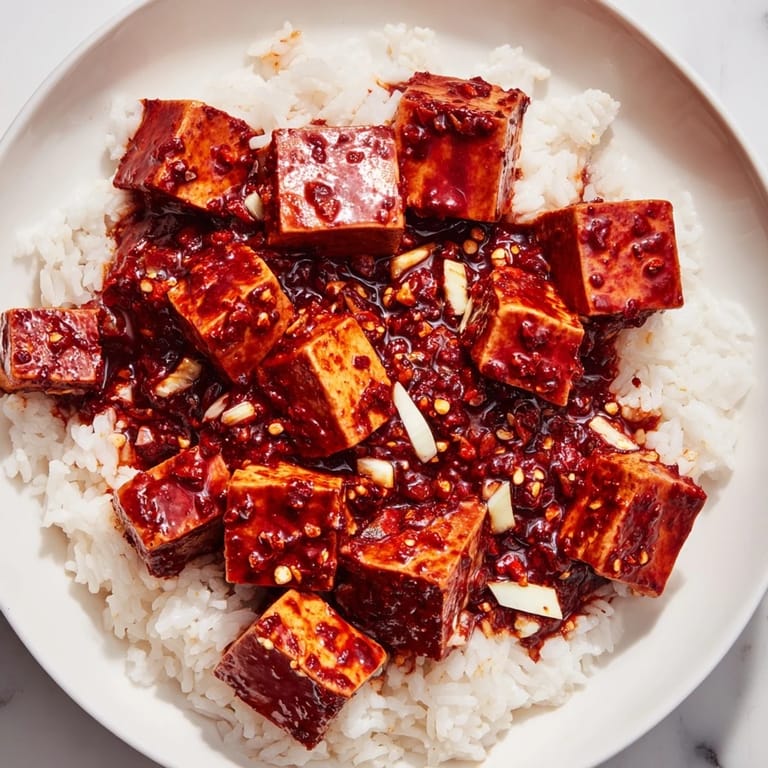
- Give your cornstarch slurry a quick stir to recombine, then drizzle it slowly into the pan while stirring very gently, watching as the sauce transforms from thin and loose to glossy and clinging. It should coat the back of a spoon and cling to each tofu cube like a silky second skin.
- Finish with brightness:
- Remove from heat, sprinkle the ground Sichuan peppercorns over the top, scatter half the scallion greens across the surface, and taste a tiny bit to check if you want more heat or numbing sensation. This is your moment to adjust before serving.
- Serve with pride:
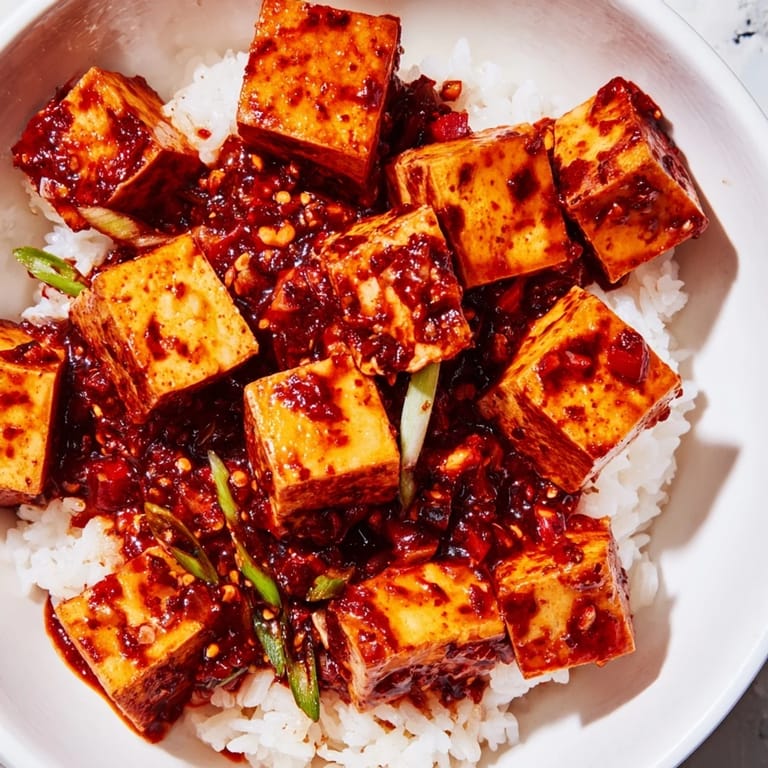
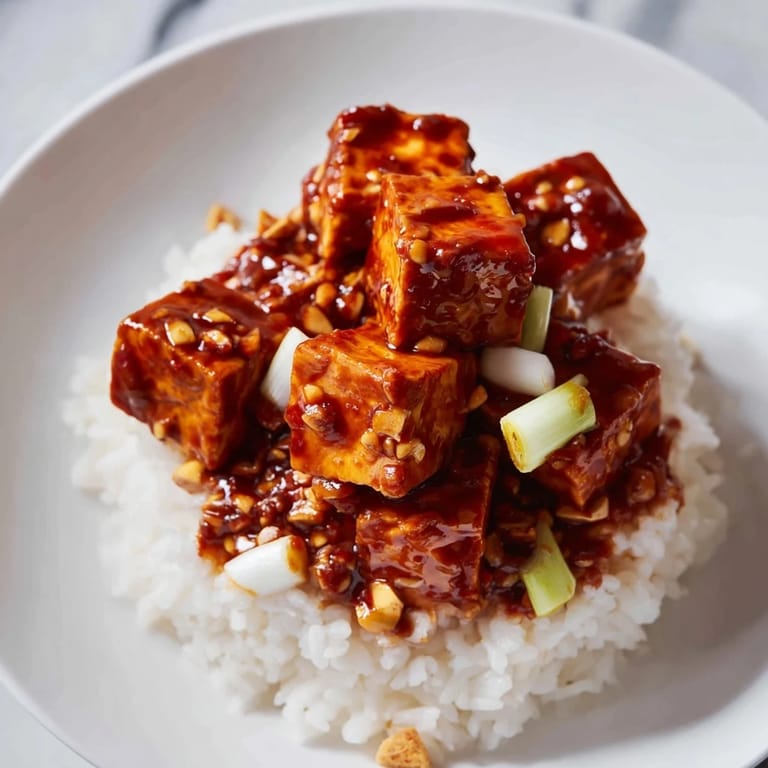
- Ladle the whole glorious thing over steamed jasmine rice, top with the remaining scallion greens and a drizzle of chili oil if you're feeling bold, and serve immediately while the peppercorns are still tingling. The rice will soak up every drop of sauce and turn this already incredible dish into something even more satisfying.
 Pin
Pin I learned what mapo tofu could really be when I stopped rushing through it and started treating each step like a small meditation—toasting peppercorns until their smell made me pause, stirring that bean paste until the oil turned crimson, watching tofu soften without breaking. That's when it stopped being a recipe and became a conversation between me and the pan.
The Soul of Sichuan Peppercorns
Most people think of Sichuan peppercorns as just another hot spice, but they're something entirely different—they contain a compound called hydroxy-alpha sanshool that literally makes your mouth tingle like you've touched a battery, a sensation the Chinese call málà (numbing and spicy together). The first time I felt this instead of just heat, I thought something was wrong, but it's actually the whole point, and now I actively seek out dishes that feature it because it wakes up every taste bud in a way jalapeños never could. Quality matters enormously here, so buy them whole from an Asian market if you possibly can, and always toast them fresh in your wok before grinding.
Tofu Selection and Why It Matters
Silken tofu is almost like pudding—it's delicate and absorbs sauce beautifully, but it can fall apart if you're not treating it with care. Firm tofu holds its shape better and can handle a bit more aggressive stirring, making it forgiving for home cooks who are still building their confidence with this ingredient. Soft tofu is a nice middle ground, and honestly, as long as you're being gentle and respectful of whatever tofu you choose, the dish will be delicious—it's the sauce that's the real star anyway.
Making It Your Own
The beauty of mapo tofu is that it's infinitely adjustable based on your preferences and what's in your kitchen. Some people add mushrooms for earthiness, others crack an egg into the sauce at the end for richness, and still others double the chili bean paste because they live for heat. The sauce-to-tofu ratio is flexible too—if you like your rice absolutely swimming in sauce, add more broth; if you prefer something drier, use less. These aren't failures or deviations, they're just you making the dish yours.
- Try adding thinly sliced mushrooms or bamboo shoots in the braising step for textural variety.
- A swirl of sesame oil at the very end adds a toasted depth that's quietly luxurious.
- If you can't find Sichuan doubanjiang, a mix of regular miso and chili paste can work in a pinch, though the result won't be quite the same.
 Pin
Pin This is the kind of dish that makes people slow down at the dinner table and look up from their bowl with surprise and gratitude, and that feeling never gets old. Every time I make it, I'm reminded that the best food comes from taking time with your ingredients and trusting the process.
Recipe FAQ
- → What type of tofu works best?
Silken or soft tofu offers a delicate texture, but firmer tofu holds its shape better during simmering.
- → How can I adjust the spice level?
Modulate the amount of chili bean paste and dried chilies to suit your preferred heat intensity.
- → Can I make this vegetarian?
Yes, omit meat and use vegetarian doubanjiang and vegetable broth for a plant-based version.
- → Why use Sichuan peppercorns?
They provide a distinctive numbing and citrusy note that balances the dish's spicy richness.
- → What is ideal to serve alongside?
Steamed jasmine rice is traditional and helps to soak up the flavorful sauce.
- → Any tips for cooking the sauce?
Toast peppercorns first to release their aroma, and stir in cornstarch slurry gradually to achieve the perfect sauce thickness.