 Pin
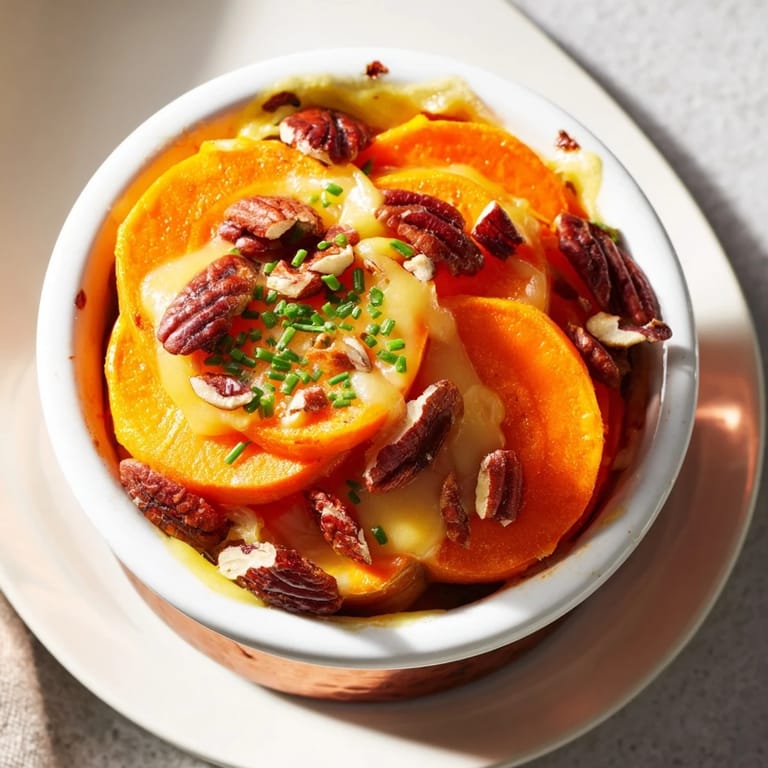
Pin I discovered this dish on a crisp autumn afternoon when my grandmother pulled four copper ramekins from her cabinet and told me they'd been waiting for the right recipe. We spent that afternoon layering vegetables like we were building edible art, and when the cheese melted into golden pools over the roasted sweetness below, I understood why she'd kept those ramekins all those years. That moment taught me that sometimes the most memorable dishes come from the simplest ingredients arranged with intention.
I'll never forget serving this to my friend Marcus on a chilly October evening. He took one bite from the ramekin, closed his eyes, and said it tasted like autumn itself. That's when I realized this dish does something special—it doesn't just taste good, it creates a moment, a memory, a reason to gather around the table.
Ingredients
- Sweet potatoes: The foundation of warmth here. I learned to slice them thin so they cook through while staying tender, not mushy. A mandoline slicer changed my life for this, but a sharp knife works beautifully too.
- Carrots: Their natural sweetness plays against the cheese's sharpness in ways that just make sense together. Slice them the same thickness as the sweet potatoes for even cooking.
- Olive oil: Use a good quality oil here because it's one of your main flavoring agents. I realized early on that cheap oil makes everything taste flat.
- Smoked paprika: This is the secret ingredient that makes people ask what spice that is. Don't skip it or substitute regular paprika—the smokiness is what makes this feel like autumn on a plate.
- Sea salt and black pepper: Season as you go, not just at the end. I learned this the hard way after one underseasoned batch.
- Dried apricots: Their tart sweetness is the counterpoint that prevents this from being too heavy. They plump up slightly in the oven, becoming almost jammy.
- Pecan halves: Toast them yourself if you can—it takes five minutes and completely transforms their flavor. Store-bought toasted pecans are fine too, but fresh-toasted are worth the effort.
- Aged cheddar cheese: The aged kind matters here. It has more complexity than mild cheddar, and it melts into this beautiful golden layer. I tried sharp cheddar once and it overpowered everything, so aged is the sweet spot.
- Fresh chives: A small detail that adds brightness and color at the end, though totally optional.
Tired of Takeout? 🥡
Get 10 meals you can make faster than delivery arrives. Seriously.
One email. No spam. Unsubscribe anytime.
Instructions
- Get your oven ready and prepare your vegetables:
- Preheat your oven to 400°F and while it's warming, peel and slice your sweet potatoes and carrots. The thin slices are important—aim for about the thickness of a coin. Lay them out on a cutting board and take a moment to appreciate how beautiful they look before they go in the oven.
- Coat the vegetables with warmth and flavor:
- In a bowl, toss your sliced vegetables with the olive oil, smoked paprika, salt, and pepper. Use your hands if you want—I always do. You'll see the paprika stain your fingertips a beautiful rust color, and you'll feel the oil coating every slice. This matters because it means the flavor goes everywhere, not just on top.
- Create your edible architecture:
- This is the meditative part. Take your copper ramekins and start layering: sweet potato, carrot, apricot, few pecans, repeat. Overlap the vegetables slightly like roof tiles. It should look intentional and beautiful. This is where the dish becomes more than just food.
- Let the vegetables soften into each other:
- Cover each ramekin loosely with foil and slide them into your hot oven. Listen for that little sizzle when they hit the rack. Set a timer for 20 minutes and let the oven do its work, transforming raw vegetables into something tender and caramelized at the edges.
- Finish with melted golden cheese:
- Remove the foil carefully (steam rising up smells incredible), then sprinkle the grated cheddar generously over each ramekin. Return them to the oven for just five more minutes until the cheese melts into this golden, bubbling layer.
- Rest and serve with intention:
- Remove the ramekins from the oven using a kitchen towel—they'll be hot. Let them cool for just a minute, then serve them right in those beautiful copper vessels. Garnish with chives if you have them, and watch people's faces as they see what you've made.
 Pin
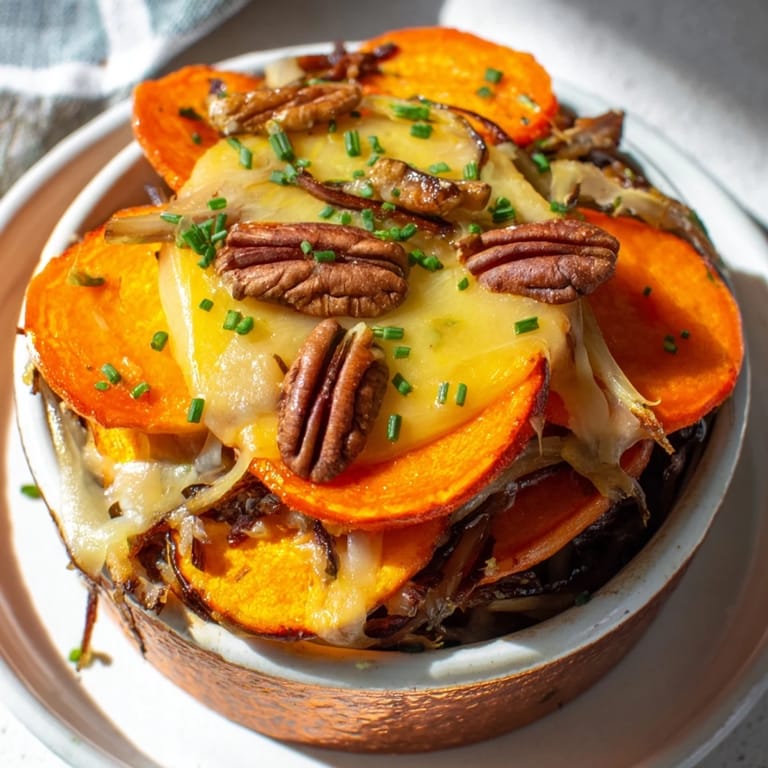
Pin There's a moment right before serving when you look at these copper ramekins with their golden cheese melting over the jewel-toned vegetables and apricots, and you realize you've created something that tastes as beautiful as it looks. That moment is why I keep coming back to this recipe.
The Magic of Copper Ramekins
Copper ramekins do something special here—they conduct heat beautifully and keep food warm longer, which means your guests get every bite at the perfect temperature. But beyond function, there's something about serving individual portions in beautiful vessels that elevates the experience. They transform a side dish into something that feels special and intentional, like you're giving each person their own moment of comfort. I started collecting copper ramekins specifically for dishes like this because they make even simple food feel celebratory.
Seasonal Variations and Swaps
This dish is autumn's song, but it can adapt to other seasons if you listen carefully. In winter, I sometimes add pomegranate seeds instead of apricots for brightness. Spring might bring dried cherries instead. Summer calls for different vegetables entirely—zucchini and yellow squash with dried strawberries feels fresh and light. The structure stays the same, but the flavors shift with what's available and what you're craving.
Pairing and Serving Suggestions
Serve these alongside roasted chicken or turkey, or make them the star of a vegetarian table. They're beautiful at dinner parties but equally wonderful for a quiet weeknight meal for one. I've served them at autumn brunches, as an appetizer at holiday gatherings, and as a comfort food side dish on nights when everything else felt chaotic. This versatility is one of my favorite things about the recipe.
- Pair with a medium-bodied Chardonnay that won't overpower the subtle flavors, or with spiced cider for a non-alcoholic option that echoes the seasonality.
- These reheat beautifully, so make them an hour ahead and pop them back in a 325°F oven for about ten minutes before serving.
- For vegan versions, plant-based aged cheddar works better than I expected, though the flavor is slightly less complex—but still genuinely delicious.
 Pin
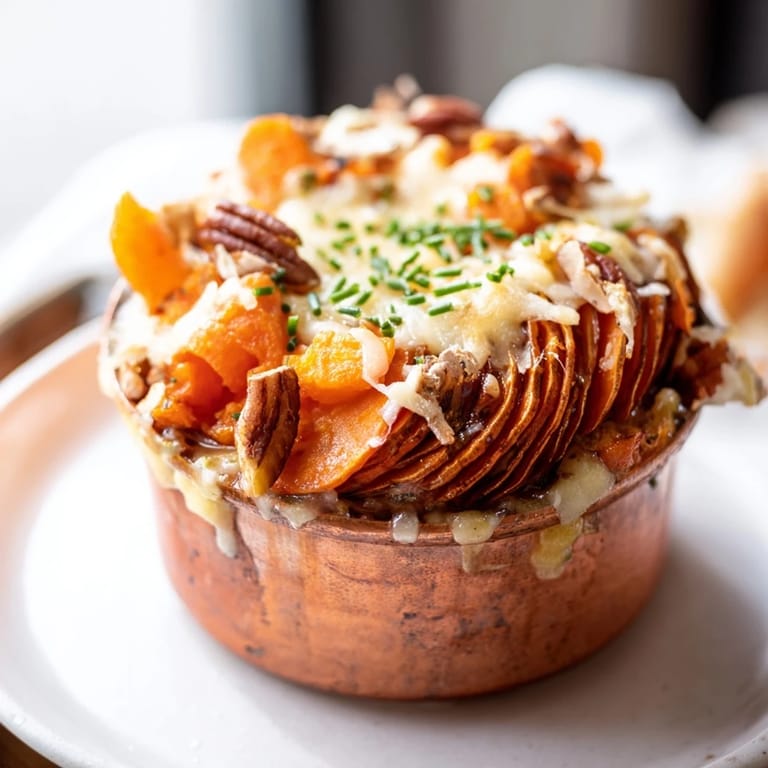
Pin This recipe taught me that some dishes are about technique or nutrition, but the best ones are about creating a reason for people to slow down and pay attention. That's what this becomes every time.
Recipe FAQ
- → Can dried figs or dates be used instead of apricots?
Yes, dried figs or dates provide a different but equally delightful sweetness that complements the roasted vegetables and cheese.
- → How do I get the perfect layering in the ramekins?
Arrange thin slices of sweet potatoes and carrots alternately, placing dried apricots and toasted pecans between layers for balanced flavor and texture.
- → Is it possible to make this dish vegan?
Replace aged cheddar with a plant-based cheese alternative to keep it vegan-friendly without sacrificing creaminess.
- → What wine pairs well with this dish?
A medium-bodied Chardonnay or spiced cider complements the warm, earthy flavors beautifully.
- → Are there any allergy considerations?
This preparation includes dairy and tree nuts; always verify ingredient sources if allergies are a concern.