 Pin
Pin I'll never forget the first time I created a platter that made guests actually pause before eating. It was at a gallery opening downtown, and I'd spent weeks thinking about how food could be as visually striking as the art on the walls. That's when the Crimson & Gold Gala was born—a discovery that appetizers don't have to be complicated to be unforgettable. Sometimes the most elegant moments come from simply understanding how colors talk to each other.
My sister watched me arrange this platter the night before her engagement celebration, skeptical that fruit and cheese could really be that impressive. By the time the first guest picked up a cherry alongside a cube of roasted gold cheddar, I could see her understanding shift. Food that looks this intentional tastes better, even when the ingredients are simple.
Ingredients
- Fresh sweet cherries: Choose the deepest red ones you can find—they're not just flavor, they're jewels on your board. Pit them gently the day before so they don't weep their juice everywhere
- Wine-soaked cheese (Drunken Goat or Merlot BellaVitano): This is your showstopper ingredient. The wine infusion gives you depth that regular cheese can't match, and the color is naturally that wine-dark red we're after
- Dried cranberries: These hold their moisture and keep the red section looking fresh even as the party goes on
- Red grapes: Halve them so they sit flat and show off their interior. They're the easiest element to prepare and they catch light beautifully
- Pomegranate seeds: Add these last—they're delicate and their jewel-like quality is worth protecting until the very end
- Yellow bell peppers, roasted: The roasting is non-negotiable. It transforms raw pepper into something silky and sweet that tastes like late summer
- Aged cheddar or gouda, cubed: Room temperature is key here. Cold cheese tastes sharp; warm cheese is generous and full
- Gold leaf–topped crackers: If you're buying pre-topped, you're buying time. If you're applying gold leaf yourself, go slowly and use tweezers—it's easier than it seems once you commit
- Golden raisins: They bridge the gap between the dried cranberries and fresh fruit, adding sweetness that makes people reach for more
- Yellow cherry tomatoes: Halve them to match the grapes and keep the visual rhythm consistent
- Fresh basil or microgreens: This is your final brushstroke. It adds life and movement to what might otherwise feel static
- Edible gold leaf (optional): A luxury that costs almost nothing and reads as everything
- Olive oil and black pepper: For the roasted peppers. These aren't afterthoughts—they're what make the peppers taste like themselves
Tired of Takeout? 🥡
Get 10 meals you can make faster than delivery arrives. Seriously.
One email. No spam. Unsubscribe anytime.
Instructions
- Roast the peppers until they sing:
- Turn your oven to 220°C (425°F). Place whole yellow bell peppers directly on a baking sheet and let them roast for 10 to 12 minutes, turning them occasionally so every side gets that charred, blistered exterior. You're looking for the skin to darken and loosen. Transfer them to a covered bowl and let them steam for 5 minutes—this is the part that makes the skin slide off like silk. Once cool enough to handle, peel away the papery skin, remove the seeds, and slice into strips. Drizzle generously with olive oil, season with freshly ground black pepper, and let them cool completely. This step can be done hours ahead.
- Prepare your crackers if using gold leaf:
- If you're adding edible gold leaf to plain water crackers, do this carefully and close to serving time. Follow the package instructions—usually it's a matter of using tweezers to place each delicate sheet. It feels precious because it is.
- Arrange the crimson block:
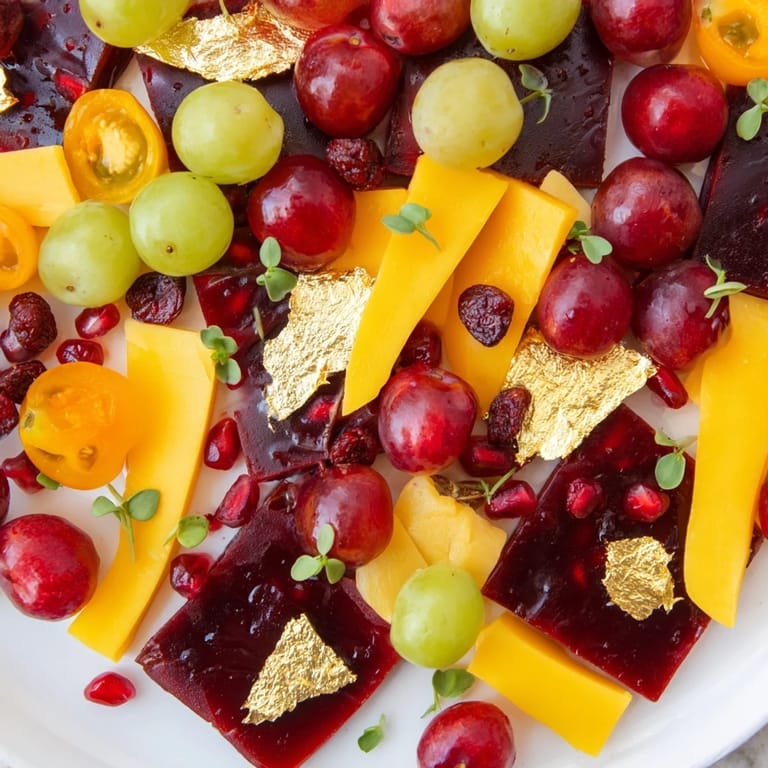
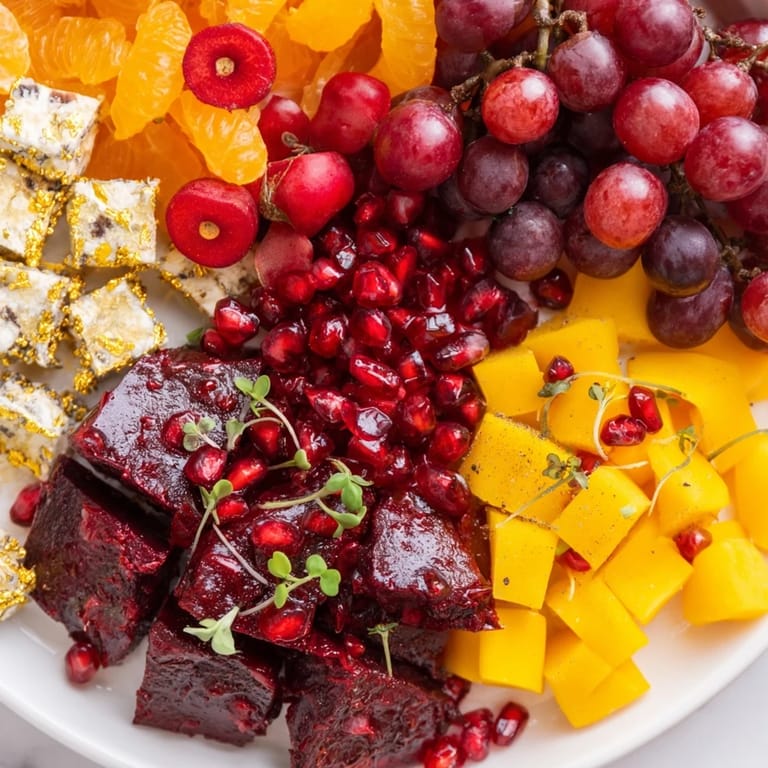
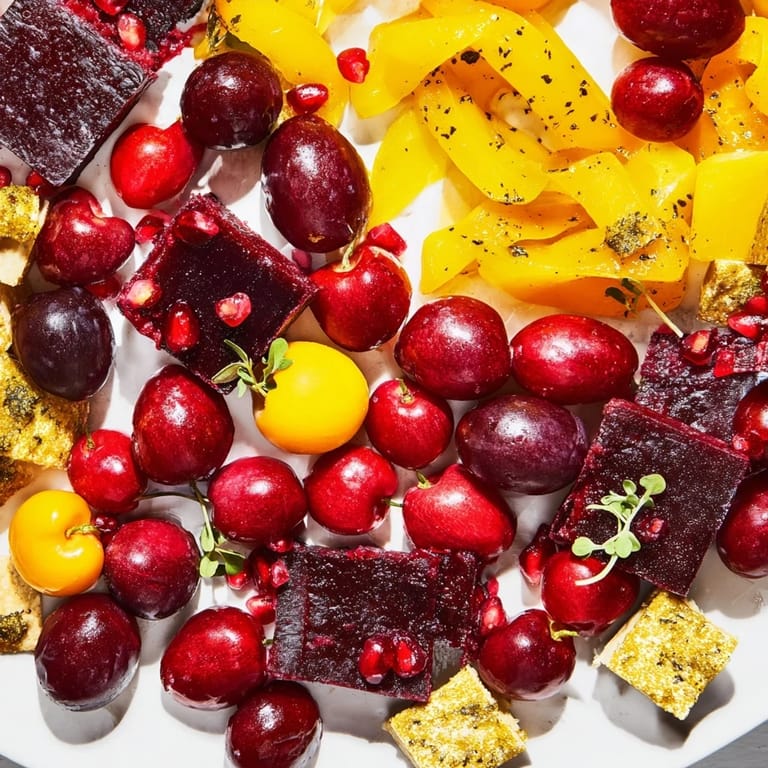
- On a large platter or wooden board, create a tight, defined section on one side dedicated entirely to deep reds. Start with your wine-soaked cheese slices as an anchor. Fill in around them with pitted cherries, dried cranberries, halved red grapes, and pomegranate seeds. Think of it like painting—each element should touch another, creating density and visual weight. Leave no gaps.
- Create the opposing gold block:
- On the opposite side of your platter, build an equally tight arrangement of golden elements. Place your cooled roasted pepper strips, cube of aged cheddar at room temperature, gold leaf crackers standing slightly upright for drama, golden raisins scattered like treasure, and halved yellow cherry tomatoes. Mirror the density of the red side. The contrast between the two blocks is what makes this work.
- Add the finishing flourish:
- Scatter fresh basil or delicate microgreens across both sections, but especially in the spaces between colors. They'll add movement and freshness without compromising the color blocking. Step back and look. If it makes you pause, you've done it right.
- Serve with intention:
- Bring the platter to the table and encourage guests to notice before they eat. Tell them to try a cherry with the gold cheddar, or a roasted pepper with the wine-soaked cheese. Let them discover that the arrangement isn't just for show—it's designed for flavor combinations.
 Pin
Pin A friend once told me that this platter reminded her of the stained glass windows in her grandmother's church—the way the light moved through the colors, the way each piece existed in conversation with the ones beside it. I realized then that food arranged with intention becomes more than sustenance. It becomes a gesture.
The Magic of Color Contrast
The entire power of this platter lives in the tension between the two color blocks. For years I made fruit and cheese boards that were pretty but forgettable—a little bit of everything scattered everywhere. The breakthrough came when I stopped thinking about variety and started thinking about contrast. Deep crimson against brilliant gold doesn't just look striking; it makes each color appear more vivid, more true. It's a principle borrowed from art and design, but it works just as well in the kitchen. Your guests will taste with their eyes first, and if their eyes are delighted, every flavor lands harder.
Timing and Preparation
This is one of those rare appetizers that actually improves when you prepare it in stages. The roasted peppers can be made a full day ahead—in fact, they taste better the next day after the flavors settle. You can pit the cherries hours in advance. The only element that needs to happen close to serving is arranging the board itself. Everything else is just waiting to be placed. I usually do my roasting and prepping in the afternoon, then give myself a calm 15 minutes before guests arrive to compose the platter. This means you can actually enjoy your party instead of being stressed in the kitchen.
Flavor Pairings That Work
The genius of a high-contrast color board is that it doesn't just look dramatic—it creates flavor conversations. The tartness of the dried cranberries plays beautifully against the wine-forward softness of the Drunken Goat cheese. The sweetness of roasted peppers finds its balance in the sharp age of a good cheddar. Fresh basil bridges both sides, adding a green note that makes the reds and golds sing louder. Encourage your guests to explore these combinations intentionally. A cherry with a roasted pepper slice. Pomegranate seeds with aged gouda. These small experiments are where memory lives.
- Always taste your ingredients at room temperature before serving—cheese especially transforms when it warms slightly
- If you want to elevate this further, serve with a crisp white wine or light prosecco that echoes the wine in the soaked cheese
- The board is best enjoyed within 2 hours of assembly, while every element still has its integrity
 Pin
Pin This platter taught me that elegance isn't about complication; it's about intention. Every element here is simple, but together they become something people remember. Make this when you want to show someone you care enough to be intentional.
Recipe FAQ
- → What ingredients create the deep red section?
Fresh cherries, wine-soaked cheese, dried cranberries, red grapes, and pomegranate seeds compose the vivid red block.
- → How are the yellow bell peppers prepared?
Peppers are roasted at high heat until charred, steamed to loosen skins, peeled, sliced, and drizzled with olive oil and black pepper.
- → Can the gold leaf on crackers be substituted?
Yes, turmeric or saffron threads provide a similar golden hue for an alternative garnish.
- → What cheeses pair well for this platter?
Aged cheddar, gouda, or wine-soaked varieties like Drunken Goat complement the contrasting colors and flavors.
- → Is this platter suitable for special diets?
This version is vegetarian; to make vegan, substitute plant-based cheeses and crackers accordingly.