 Pin
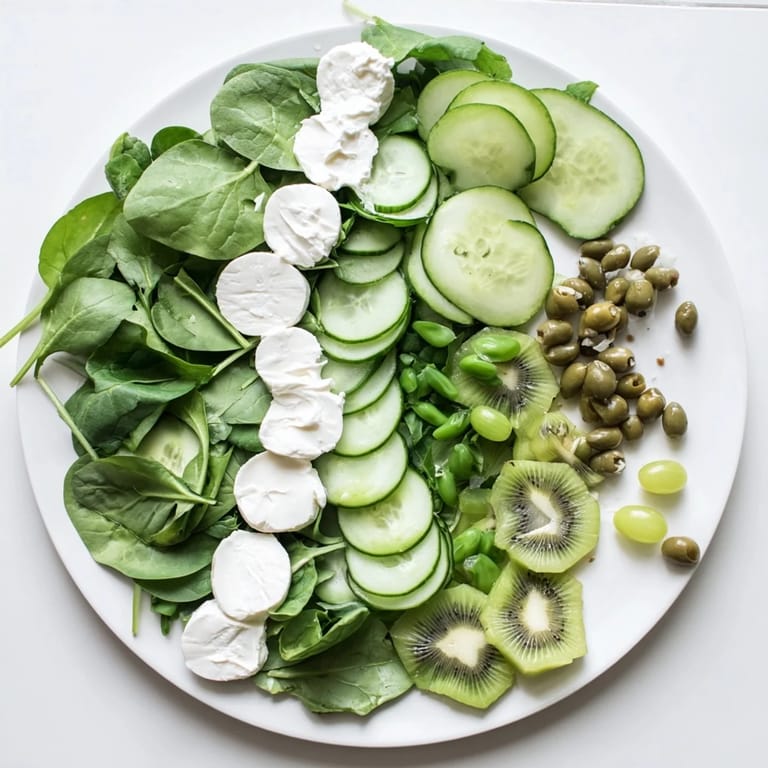
Pin I remember the first time I assembled this salad at a dinner party when I wanted to impress without spending hours in the kitchen. A friend had just returned from a trip to the Emerald Isle, and I was inspired to create something that captured that lush, verdant landscape on a plate. As I layered each shade of green—from deep spinach to bright kiwi—I realized I was creating edible art. The salad came together so naturally, like painting with vegetables, and when I drizzled that creamy white mozzarella river across the top, everyone gasped. It became my signature dish for spring gatherings.
I'll never forget bringing this to a potluck last spring and watching my neighbor's eyes light up when she saw it. She asked if it was too beautiful to eat, and that's exactly the moment I knew this recipe was special. The way the white mozzarella caught the light against all those greens made it feel like something you'd see in a fancy magazine, yet it came straight from my humble cutting board.
Ingredients
- Baby spinach leaves (100 g): The foundation of your green landscape—mild, tender, and packed with earthiness. I've learned to pat it dry gently with paper towels before building your salad; excess moisture can make things wilt.
- Arugula (50 g): This peppery green adds a whisper of spice that keeps your palate interested. Don't skip it, even though spinach alone seems easier.
- Cucumber (1 small, thinly sliced): The refreshing crunch that makes people close their eyes and smile. Slice it just before assembly so it stays crisp and glistening.
- Green bell pepper (1, diced): Sweet, crunchy, and so satisfying when you bite into it. This is your textural anchor alongside the softer greens.
- Kiwis (2, peeled and sliced): A surprising element that brings brightness and tartness. Peel them just before serving—cut kiwi can turn mushy if it sits too long.
- Green grapes (100 g, halved): These little jewels add sweetness and juiciness. Halving them helps them nestle perfectly into the landscape.
- Green olives (50 g, pitted and sliced): The salty, briny note that makes everything else sing. This is where umami enters your salad.
- Fresh basil leaves (30 g): Scatter these throughout—they're aromatics that make people lean in and inhale deeply before tasting.
- Basil pesto (3 tbsp): The soul of your dressing. If you have time, make it fresh, but quality store-bought works beautifully too. I've found that whisking it with the oil smooths out the intensity.
- Extra-virgin olive oil (2 tbsp): Not just any oil—this is where quality matters. Choose one you'd taste on its own.
- Lemon juice (1 tbsp): Freshly squeezed, never bottled. This brightens everything and prevents the greens from oxidizing too quickly.
- Fresh mozzarella (100 g, torn into pieces or thin strips): This is your white river, your moment of visual drama. Room temperature mozzarella tastes better and looks creamier than cold.
- Crème fraîche or Greek yogurt (1 tbsp, optional): A secret addition for extra richness and to help that cheese river hold its shape beautifully.
- Salt and freshly ground black pepper: Don't underestimate these. They're the bridge that connects all your flavors.
Tired of Takeout? 🥡
Get 10 meals you can make faster than delivery arrives. Seriously.
One email. No spam. Unsubscribe anytime.
Instructions
- Build your green base:
- Arrange the baby spinach and arugula across your large serving platter like you're creating a landscape. Don't compress them—let them be loose and full of air, creating that lush, living appearance. This is your canvas.
- Layer the foundational vegetables:
- Scatter your cucumber slices and diced green bell pepper evenly across the greens, thinking about how the lighter cucumber contrasts with the slightly deeper pepper. You're building depth and visual rhythm.
- Artfully scatter the colorful accents:
- Now comes the fun part. Distribute your kiwi slices, halved grapes, and olive slices across the salad, letting them nestle naturally into the layers. Vary the depths—some sitting on top, some tucked underneath—so it feels organic, not calculated.
- Add the aromatic basil:
- Tuck fresh basil leaves throughout, letting some peek out and others hide. Tear some gently as you go; their oils will perfume the air and your salad.
- Whisk your dressing into harmony:
- In a bowl, whisk the basil pesto with olive oil, then add lemon juice, salt, and pepper. The pesto will initially look thick, but the oil will loosen it into a silky dressing. Taste as you go—you're looking for brightness with herbaceous depth.
- Dress the salad with intention:
- Drizzle the dressing evenly across the entire salad, making sure every section gets nourished. Some will pool slightly, and that's perfect.
- Create your mozzarella river:
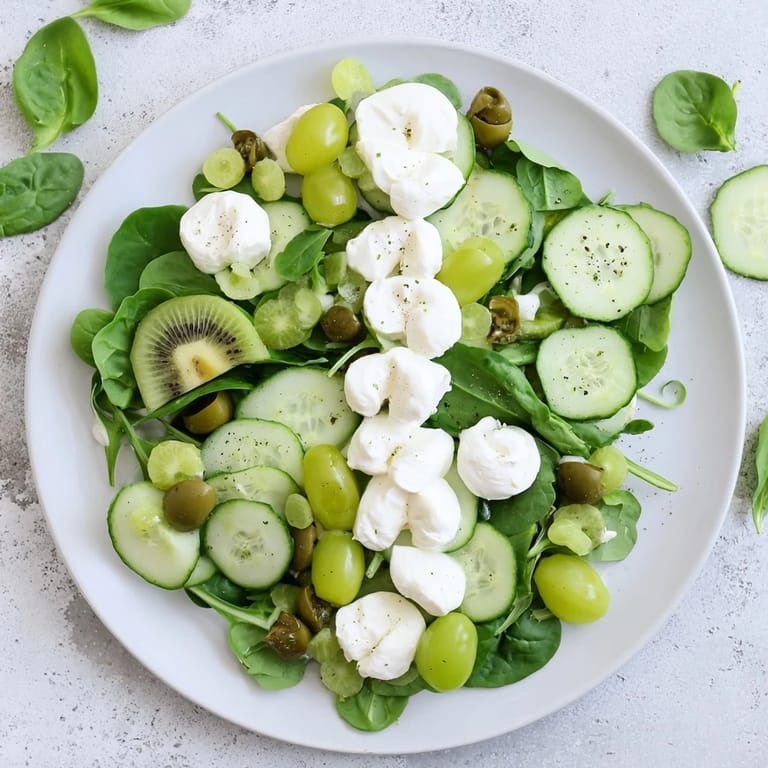
- Here's where magic happens. Arrange your mozzarella pieces or strips in a meandering line across the salad, like a river of cream flowing through your green landscape. If using crème fraîche or yogurt, dot small spoonfuls along the river for extra visual interest and creaminess. This is your artistic signature—make it unique to you.
- Present and serve:
- Bring this to the table while it's still glistening, before tossing. Let your guests admire it, take photos, feel the anticipation. Then gently toss just before serving, so everyone gets a bit of everything with each forkful.
 Pin
Pin The moment I understood this recipe's true power was when my mom, who usually picks at salads, asked for seconds. She said it didn't feel like she was eating salad—it felt like she was part of something beautiful. That's when I realized food can be art and nourishment at the same time, and this dish does both effortlessly.
The Art of Salad Presentation
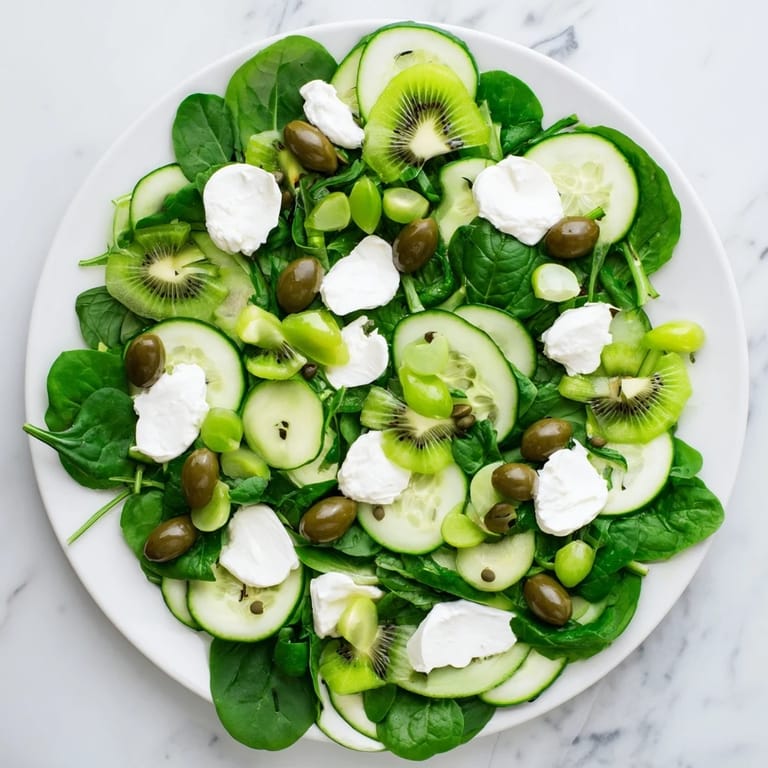
Building this salad is as much about visual storytelling as it is about flavor. Think of your platter as a landscape that someone will photograph before eating. The contrast between the deep greens and bright accents, the curve of that white mozzarella river, the way the basil leaves catch the light—these details transform a simple salad into something memorable. I've learned that plating with intention makes people taste with intention too. When diners see that you've cared about how it looks, they slow down, pay attention, and experience the flavors more fully.
Variations That Keep It Fresh
This salad is wonderfully adaptable without losing its essential character. For a vegan version, swap the mozzarella for a creamy plant-based cheese and use vegan pesto—the visual impact remains stunning. In autumn, I've added toasted pistachios or pumpkin seeds scattered across the top for crunch and warmth. For protein, I've nestled grilled chicken or roasted chickpeas into the landscape. The rule I follow is simple: whatever I add must be green, white, or pale yellow to honor the emerald theme. I've also played with different vinaigrettes—a green goddess dressing, a champagne vinaigrette, even a white miso-lemon combination—and each creates a slightly different personality while maintaining the dish's soul.
Pairing and Serving Suggestions
This salad sings alongside crisp white wines—a Sauvignon Blanc is my go-to, its herbaceous notes echoing the basil in the salad. If you're keeping it alcohol-free, a citrusy sparkling water with fresh mint feels equally elegant. Serve this as a starter to let it shine, or as a main course when paired with crusty bread and a good cheese plate. I've learned that this salad benefits from being the star of the meal rather than a side dish, because its beauty demands attention and its flavors reward focus.
- Serve immediately after assembly to preserve vibrant colors and crisp textures
- Pair with a chilled glass of Sauvignon Blanc or sparkling water for the complete experience
- Double the recipe easily for larger gatherings—it's even more impressive in abundance
 Pin
Pin This Emerald Isle Greenscape has become more than a recipe in my kitchen—it's become a statement about how we can nourish ourselves beautifully, without complexity or unnecessary fuss. Every time I make it, I'm reminded that the simplest dishes, executed with intention and care, are the ones people remember.
Recipe FAQ
- → What ingredients create the green layers in this salad?
Baby spinach, arugula, cucumber, green bell pepper, kiwi, green grapes, green olives, and fresh basil are used to build the salad's green layers.
- → How is the creamy element incorporated into the salad?
Torn fresh mozzarella pieces are arranged in a meandering line to create a creamy 'river' effect across the salad.
- → What dressing complements the layers of green ingredients?
A dressing made from basil pesto, extra-virgin olive oil, lemon juice, salt, and pepper adds a fresh and aromatic finish.
- → Can this salad be adapted for vegan diets?
Yes, use vegan pesto and replace mozzarella with a plant-based cheese alternative to keep it vegan-friendly.
- → What serving suggestions enhance this dish?
Serve on a large platter to highlight the layered colors and pair with crisp white wine or citrusy sparkling water for balance.
- → Are there any suggested add-ons for texture?
Toasted pistachios or pumpkin seeds can be added to provide a crunchy contrast to the creamy and fresh ingredients.