 Pin
Pin I'll never forget the evening a friend brought over a bottle of deep burgundy wine and asked me to create something that felt as sophisticated as the vintage she'd chosen. That night, I found myself drawn to the cool elegance of ash-rinded cheeses, their delicate gray exteriors reminding me of morning mist on slate cliffs. From that moment, I became obsessed with building a cheese board that didn't just taste exquisite but looked like edible art—one where every element, from the darkest blue veining to charcoal-hued crackers, told a story of intentional beauty.
I remember setting this board down in the center of a dinner table and watching my guests literally pause mid-conversation. The play of light on the dark stone, the subtle gray tones creating depth and dimension—it felt like I'd brought a piece of modern art into my home. That's when I realized this wasn't just about cheese anymore; it was about creating a moment of genuine beauty that people would remember.
Ingredients
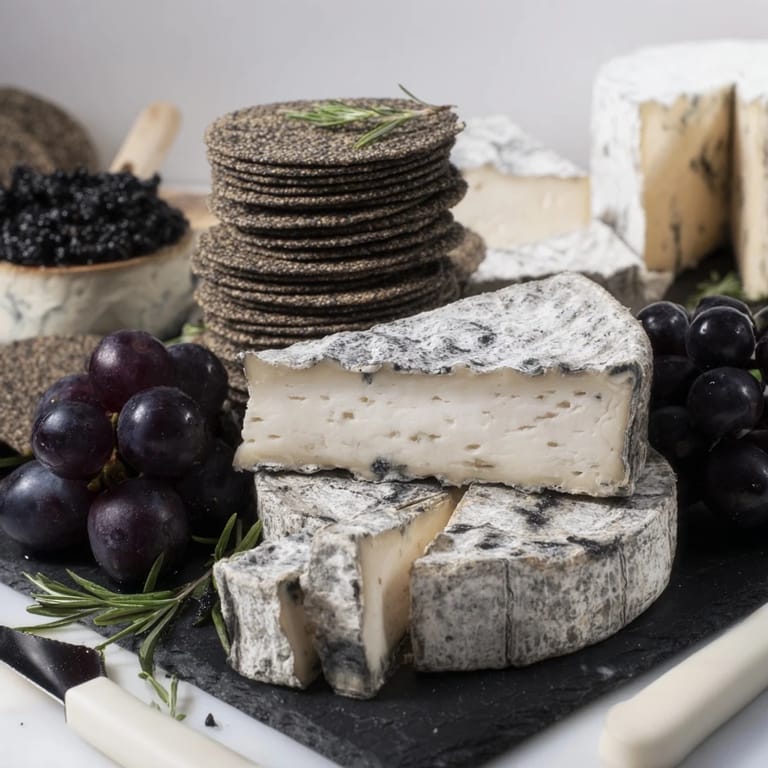
- Morbier or ash-rinded semi-soft cheese (150 g): This is your visual anchor—that distinctive dark ash line running through the center isn't just pretty, it's a marker of careful aging and complex flavor. It has a buttery texture that makes everything feel luxurious
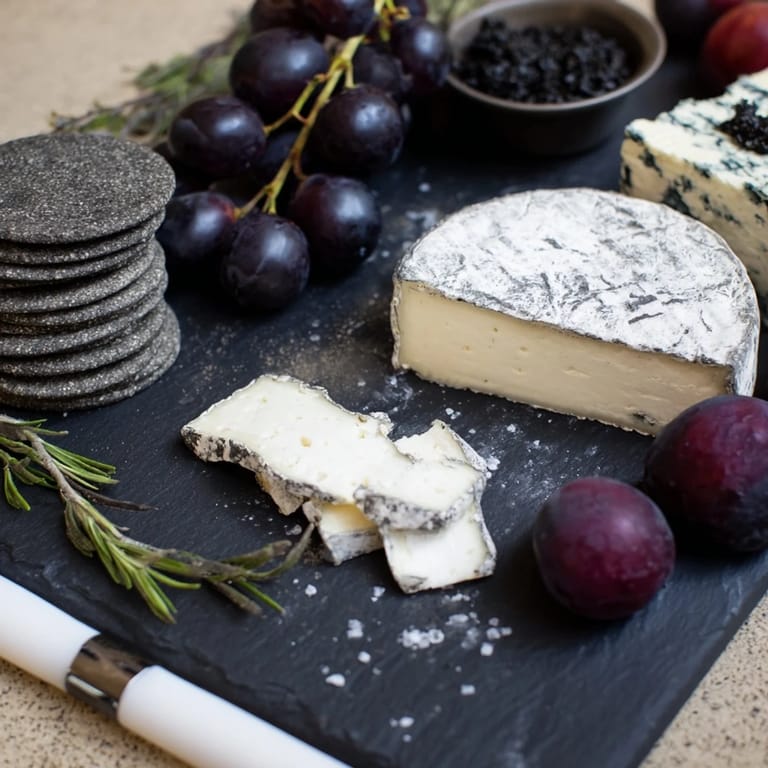
- Humboldt Fog or ash-ripened goat cheese (120 g): The creamy, tangy heart of your board. The ash coating protects and seasons the delicate goat cheese inside, and it's absolutely essential to keeping with the gray theme
- Valdeon blue cheese with gray veining (100 g): This Spanish blue brings minerality and bold character. The natural blue-gray veining is perfect for your monochrome vision
- Slate-colored charcoal crackers (8–10 pieces): These aren't just functional—they're your edible palette. Look for ones made with activated charcoal; they have a subtle earthiness that complements the cheese
- Dark rye or pumpernickel bread (6–8 slices): The deep darkness of pumpernickel adds visual contrast and brings a slightly sweet, caraway-tinged flavor that balances sharp cheeses
- Black grapes or dark plums: Fresh, juicy, and moody—they provide bursts of natural sweetness and moisture that cut through rich cheese
- Blackberries or blueberries: These little dark jewels add texture and prevent the board from feeling too heavy
- Black olive tapenade (2 tbsp): A salty, umami anchor that brings everything together. Make sure it's deep enough in color to stay true to your monochrome vision
- Edible charcoal salt: This finishing touch adds visual sophistication and a subtle mineral saltiness that awakens the palate
Tired of Takeout? 🥡
Get 10 meals you can make faster than delivery arrives. Seriously.
One email. No spam. Unsubscribe anytime.
Instructions
- Setting the stage:
- Place your dark stone or slate board on your work surface and take a moment to appreciate its texture. Run your hand across it—you want the surface clean but with all its natural character intact. This is your canvas
- Positioning the cheeses:
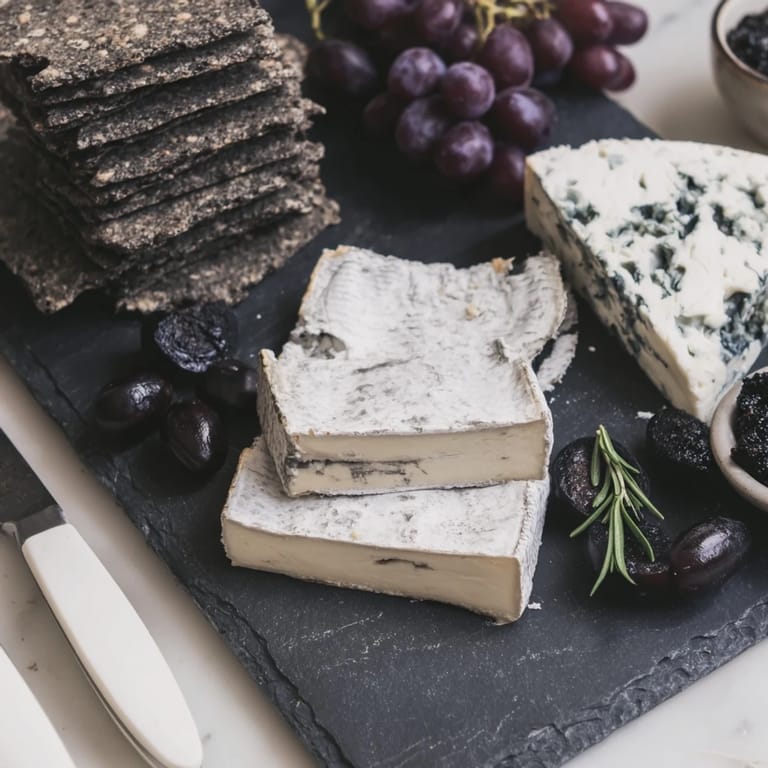
- Slice your Morbier into generous wedges so that ash line is visible. Cut the Humboldt Fog into thin triangles—you want people to see that beautiful ash coating. Crumble or slice the Valdeon into irregular pieces that show off its gray veining. Arrange them in three separate zones across the board, leaving breathing room between each. Think of it like creating a visual rhythm
- Building the structure:
- Fan out your charcoal crackers in small, overlapping stacks. Arrange pumpernickel slices standing up slightly or overlapped, like fallen dominoes. This creates visual interest and makes them easy to grab
- Adding life and color:
- Scatter your black grapes in clusters—group them together rather than spreading them thin. If using plums, slice them so the dark flesh shows. Drop your blackberries and blueberries into the gaps, filling empty spaces with little bursts of jewel-like darkness. The goal is organized casualness
- The tapenade moment:
- Spoon your black olive tapenade into a small dark bowl if you have one, or place it directly on the board using a small spoon as an edible accent. This salty element becomes a flavor anchor
- The finishing touch:
- Give your cheeses a whisper-light sprinkle of edible charcoal salt. Just a pinch—you want sophistication, not excess. If you're using herbs, tuck a sprig of rosemary or thyme into an empty corner. The green will actually make the grays read richer
- Ready to serve:
- Step back and look. Arrange cheese knives near the cheese sections and set out small plates. Serve immediately so the cheese is at its best
 Pin
Pin There's something almost meditative about arranging a monochrome board. As I positioned each element, I realized I wasn't just making food—I was creating a mood, an invitation to slow down and savor. When my guests that evening paused, cheese in hand, to simply look at the board before tasting, I knew I'd created something that touched more than just taste buds.
Choosing Your Cheeses with Intention
The magic of this board lives in the cheese selection. Ash-rinded cheeses aren't just about appearance—they're a whole category defined by a specific aging technique. The ash, traditionally vegetable-based (from edible plants, not actual soot), raises the pH of the cheese surface, encouraging beneficial mold and bacteria that create incredible complexity. When you're shopping, ask your cheesemonger which ash-rinded cheeses are currently in their best form. Some seasons, a French Valencay might be perfect; other times, a California-made Cypress Grove Humboldt Fog will be the star. The point is: treat these selections as a discovery, not a checklist.
The Monochrome Philosophy
Committing to a color story isn't a limitation—it's a clarification. By removing color chaos, every texture, every shade of gray and charcoal and near-black becomes visible and meaningful. I learned this by accident the first time I tried to add a red pepper for 'balance' and realized it completely fractured the calm, sophisticated mood I'd worked to create. Now, I understand that restriction breeds elegance. Every element earns its place by either matching the palette or providing meaningful contrast—like those dark grapes that are almost black, or the tiny pop of green from a single herb sprig.
Wine Pairing and Serving Wisdom
I've discovered that the right beverage transforms a cheese board from 'nice snack' to 'memorable experience.' A smoky pinot noir or deep malbec isn't just a fancy suggestion—the tannins and dark fruit notes complete the monochrome story you're telling. The acidity cuts through the richness, the fruitiness echoes the grapes on the board, and the color stays true to your vision. Serve the wine slightly cool but not cold; cheese demands the same respect.
- Set out small cheese knives or spreaders so guests can help themselves without cross-contaminating flavors
- Toast the dark rye bread lightly 10 minutes before serving—it becomes more flavorful and easier to spread with tapenade
- Keep the board away from direct sunlight so the cheeses stay at an even temperature and the colors don't fade
 Pin
Pin This monochrome cheese board taught me that elegance isn't about complexity—it's about commitment to a vision. Every time I arrange one now, I'm reminded that the most memorable meals are often those where someone took the time to create beauty before taste.
Recipe FAQ
- → What cheeses are used on the monochrome gray stone board?
Cheeses with ash rinds like Morbier, Humboldt Fog, and a blue cheese with gray veining such as Valdeon are ideal for this platter.
- → How can I maintain the monochrome look on the board?
Use slate-colored crackers, dark rye or pumpernickel bread, and dark fruits such as black grapes, plums, or blackberries to keep the color palette consistent.
- → What garnishes complement this cheese arrangement?
Fresh sprigs of rosemary or thyme provide herbal contrast, while edible charcoal salt adds visual depth and a subtle smoky flavor.
- → Can I substitute any ingredients for this platter?
Yes, local cheeses with ash rinds or blue-gray veins work well, and black sesame crackers can replace charcoal crackers if needed.
- → What beverages pair well with the cheese board?
Wines like malbec or smoky pinot noir enhance the flavors and add a dramatic touch to the serving experience.