 Pin
Pin The first time I held a syringe full of neon pink agar-agar, I felt like a mad scientist in my own kitchen. My friend had challenged me to create something she'd never seen before, something that would make her guests actually gasp when she served it. That's when these glowing noodle clouds were born—a playful collision of texture and color that turned out to be surprisingly simple to master. What started as an experiment became the dish people still ask me about.
I'll never forget watching my usually reserved neighbor taste these for the first time at a dinner party. She was skeptical about the whole concept, arms crossed, then one noodle went in and her eyes went wide. The conversation completely shifted that night—everyone wanted to know the trick, wanted to know if they were somehow magic. Turns out, a little strangeness on the plate opens people up in the best ways.
Ingredients
- Water: The foundation of your noodles; use filtered water if your tap water is heavily chlorinated, as it can dull the colors.
- Agar-agar powder: This seaweed-derived gelling agent creates that signature bouncy texture that regular gelatin can't match—it sets firmly without refrigeration.
- Sugar: Just a touch to balance the earthiness of the agar and enhance the delicate sweetness of the noodles themselves.
- Food coloring: Gel or liquid food coloring works best; use neon shades for maximum visual impact, or experiment with natural colorants like spirulina for a more subtle approach.
- Soy sauce or tamari: The salty anchor of your dipping sauce; tamari brings the same umami depth without gluten if that matters to your guests.
- Rice vinegar: Adds brightness and prevents the sauce from tasting too heavy—don't skip it even in small amounts.
- Mirin: A touch of sweetness and body that makes the sauce feel complete and balanced.
- Sesame oil: Just a teaspoon gives the sauce its signature nutty depth; this is not the place to be heavy-handed.
- Fresh ginger: Grate it right before use so you catch all those fragrant oils that add genuine warmth to the sauce.
- Scallion: The fresh green bite that keeps the sauce from feeling one-note; slice it thin so it distributes evenly.
- Toasted sesame seeds: Optional but recommended for a subtle crunch that adds another dimension of interest.
- Microgreens or edible flowers: The final flourish that turns a clever dish into something you'll want to photograph.
Tired of Takeout? 🥡
Get 10 meals you can make faster than delivery arrives. Seriously.
One email. No spam. Unsubscribe anytime.
Instructions
- Dissolve the agar-agar:
- Combine water, agar powder, and sugar in a saucepan and bring to a rolling boil while stirring constantly. You'll notice the powder dissolving into the liquid within 2-3 minutes—once there are no grainy bits left, you're ready to move forward. This is crucial because undissolved agar won't set properly.
- Divide and color:
- Remove the pan from heat and pour the clear mixture into separate bowls, one for each color you want to create. Add just a drop or two of food coloring to each—you can always add more, but you can't take it back. Stir each bowl gently to distribute the color evenly without creating air bubbles.
- Pipe into noodle shapes:
- Using a syringe, squeeze bottle, or even a turkey baster, carefully pipe the colored agar into a bowl of ice water, moving your hand in a gentle back-and-forth motion to create noodle-like strands. They'll set almost instantly from the cold water, becoming firm and noodly within 1-2 minutes. If you're nervous about the syringe method, you can pour the mixture into a flat tray instead, let it set completely, then cut it into thin noodle-like strips with a sharp knife.
- Chill and rinse:
- Gently transfer your noodles to a colander and rinse them briefly under cold water to remove any excess agar residue. Pat them dry carefully and refrigerate until you're ready to serve—they'll keep their firm, bouncy texture for several hours. The cold actually makes them better, so prepare them an hour or two ahead if you can.
- Make the dipping sauce:
- In a small bowl, whisk together soy sauce, rice vinegar, mirin, sesame oil, grated ginger, and sugar, stirring until the sugar completely dissolves. Just before serving, stir in the sliced scallion and sesame seeds so they stay vibrant and fresh.
- Plate and serve:
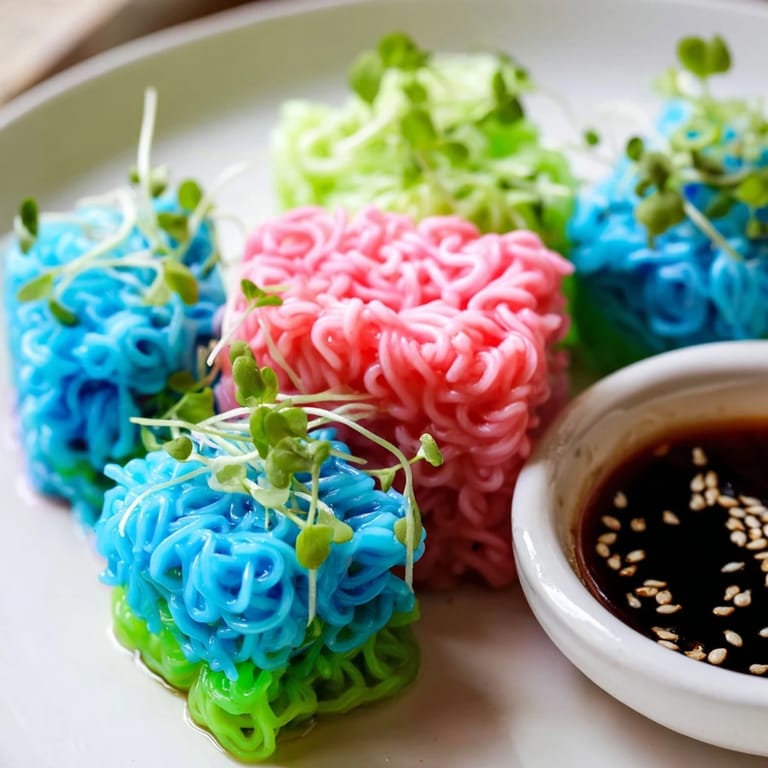
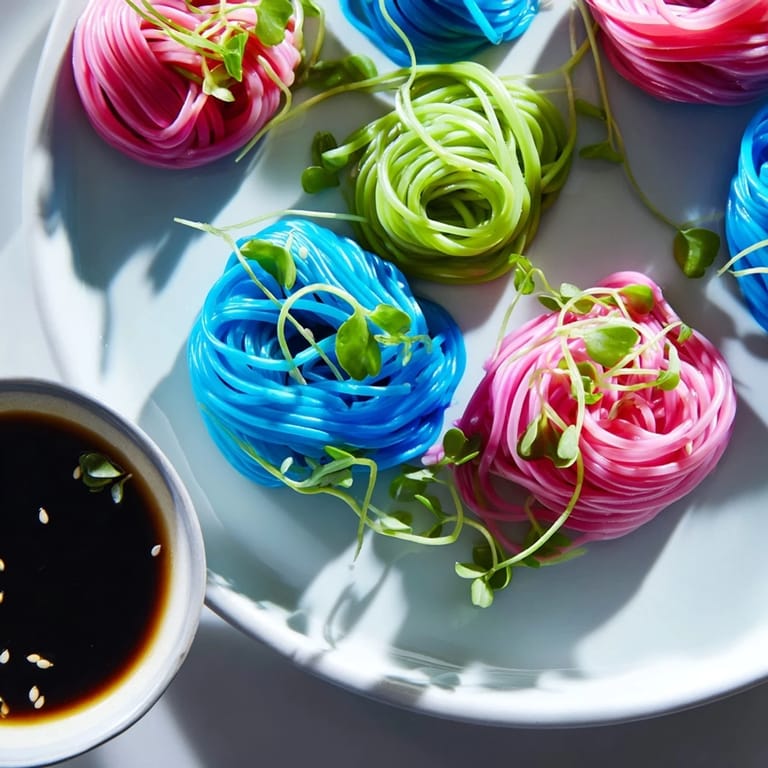
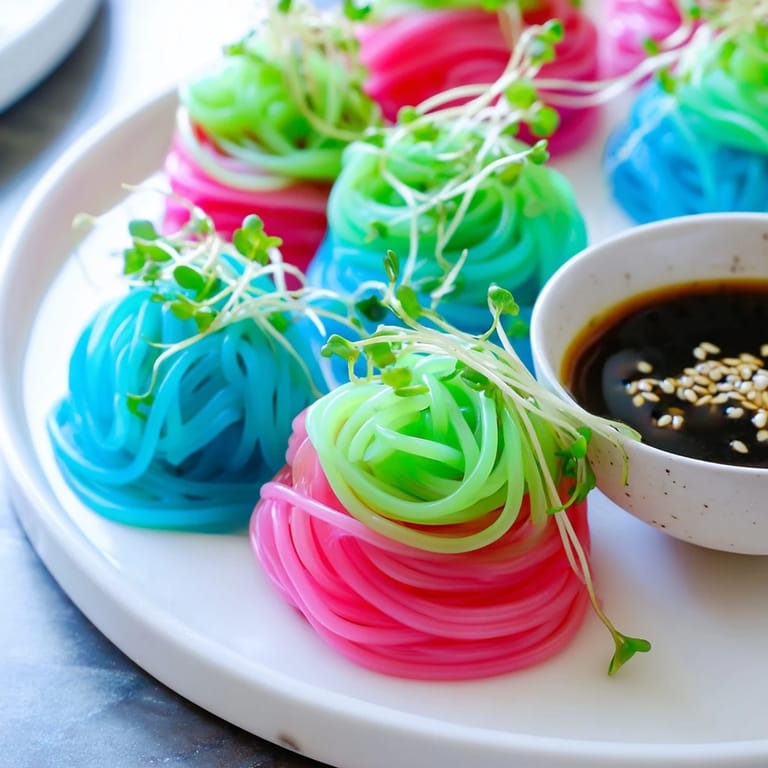
- Gather the chilled noodles into small, loose bundles in serving bowls, top with a few microgreens or edible flowers if you have them, and place a small dish of dipping sauce alongside. The visual presentation is half the charm here, so take a moment to arrange them nicely.
 Pin
Pin There was a moment, maybe six months into making these regularly, when my daughter asked if she could bring them to show-and-tell at school. Not to eat—just to show everyone that food could be this unexpected, this joyful. That's when I realized this dish had become more than a clever appetizer in our house; it was a reminder that cooking is really about creating small moments of delight and wonder.
The Magic of Agar-Agar
Agar-agar is a quiet revolution in the kitchen once you understand what it does. Unlike gelatin, which needs refrigeration to set, agar sets at room temperature—it's the ingredient that makes this whole concept possible. I learned this the hard way when I first tried making these noodles with regular gelatin and ended up with something that wouldn't set unless I camped out by my fridge. The moment I switched to agar, everything clicked into place. It's also naturally vegan and comes from seaweed, which means vegetarians and vegans can enjoy these just as much as anyone else.
Playing With Color and Flavor
The neon colors are part of the fun, but they're not mandatory. Once I got comfortable with the basic technique, I started experimenting with natural colorants—spirulina gave me a gorgeous jade green, butterfly pea flowers made a deep indigo, and a bit of beet juice created a jewel-tone burgundy. These feel more elegant somehow, less artificial, even if they're slightly less vivid. You could even make them all one color and lean into simplicity, letting the texture be the star. The point is that after you've made these once or twice, you own the recipe completely and can bend it to your taste.
Serving Suggestions and Moments
These noodles work beautifully as a standalone appetizer, but they're also brilliant as a palate cleanser between courses at a fancier meal, especially after something rich or spicy. I've served them at the beginning of casual dinners, and I've also used them as a surprise between courses at more formal gatherings. The dipping sauce is the other half of the story—it's savory and bright, with just enough ginger to keep things lively. Think of the sauce as the anchor that keeps these whimsical noodles grounded in real flavor.
- For a lighter touch, thin the sauce with a tablespoon of water if you find it too concentrated.
- A tiny drizzle of chili oil or a drop of yuzu juice in the sauce adds an extra layer of intrigue.
- Make these noodles up to a day ahead and store them in the refrigerator in a covered container; they'll stay perfectly firm.
 Pin
Pin These noodles remind me that the best dishes don't have to be complicated to be memorable. They just need to spark a little wonder, make someone smile, and taste genuinely good when everything comes together on the plate.
Recipe FAQ
- → What gives the noodles their vibrant colors?
Food-safe gel or liquid colorings are added to the agar-agar mixture before setting, creating bright neon hues.
- → How is the unique bouncy texture achieved?
The texture comes from properly dissolving agar-agar powder and allowing it to set into firm, springy strands.
- → Can the dipping sauce be adjusted for dietary needs?
Yes, tamari can replace soy sauce for a gluten-free option, and spice elements like yuzu juice or chili oil can be added for extra flavor.
- → What tools are needed to shape the noodles?
A syringe or squeeze bottle helps form thin, noodle-like strands from the colored agar mixture into ice water.
- → How should the dish be served for best presentation?
Serve the chilled neon noodles in small bundles, garnished with microgreens or edible flowers, alongside the dipping sauce for a vibrant look.
- → Is this dish suitable for specific diets?
Yes, it is vegan and can be gluten-free if tamari is used instead of soy sauce.