 Pin
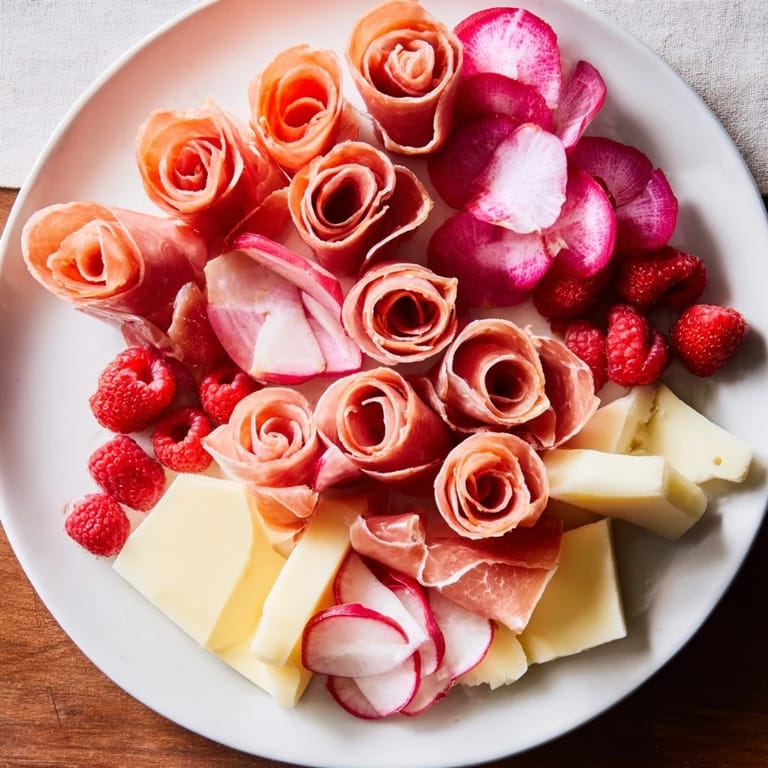
Pin I remember the first time I created this platter for my sister's spring bridal shower. I wanted something that looked as beautiful as the garden she was marrying into, something that felt like edible art. As I arranged those paper-thin radish slices and curved the prosciutto into delicate roses, I realized I wasn't just assembling an appetizer—I was painting with food. The soft pinks and deep reds began to blend across the board like watercolors bleeding into each other, and guests stopped mid-conversation just to photograph it. That's when I knew this wasn't just food; it was a moment.
I'll never forget watching my mother-in-law pick up a prosciutto rose with two fingers, admire it like it was a piece of jewelry, and then pop it in her mouth with the biggest smile. She asked for the recipe that day, and I realized this platter had somehow become the thing people would remember about that gathering—not the conversation or the weather, but the food and how it made them feel seen and celebrated.
Ingredients
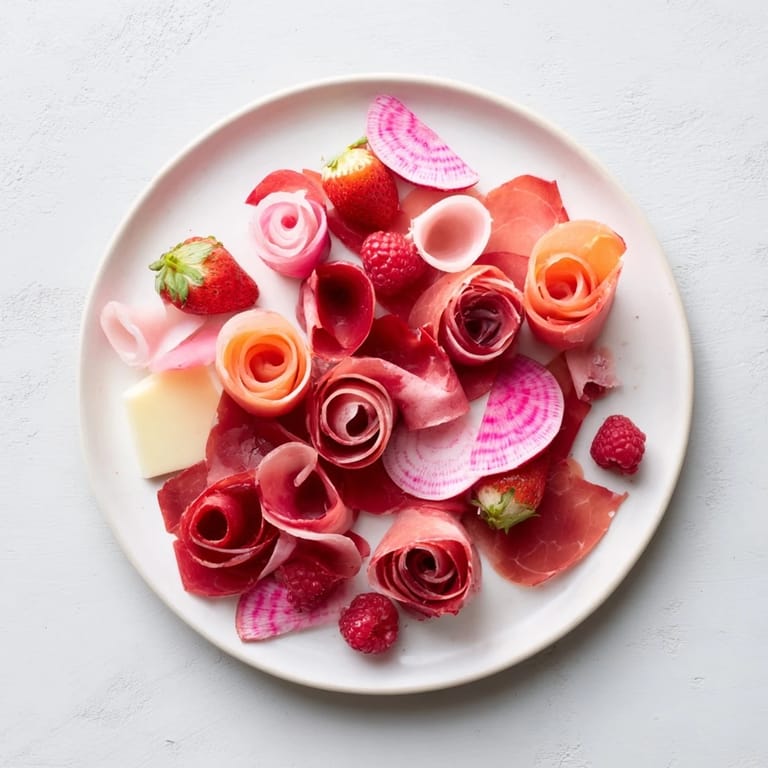
- Prosciutto: Buy it sliced thin at the deli counter and shape each slice into a rose while it's still pliable—this creates the visual anchor of your platter. The saltiness pairs perfectly with the sweet fruits.
- Mortadella: The pale pink cousin to prosciutto, its subtle spice adds complexity. Fold it loosely rather than rolling it tight; those imperfect waves are what make it look artistic.
- Pink radishes: Slice them paper-thin on a mandoline if you have one—this is where a good tool makes all the difference. They hold their crunch and vibrant color beautifully.
- Watermelon radish: The surprise ingredient that reveals gorgeous pink and white rings when sliced. It's mild and slightly sweet, almost like eating a vegetable that's part-way to being a fruit.
- Beet: Cook it ahead and let it cool completely before slicing. It bleeds slightly into other ingredients, which only adds to the watercolor effect.
- Pink-hued cheese: Port wine Derby, rosé goat cheese, or a berry-washed rind cheese creates the sophisticated color palette. Don't skip this—regular cheddar won't give you the same magic.
- Brie or camembert: The soft cheese that brings creaminess and elegance. Cut into wedges rather than cubes so they catch the light.
- Baguette: Slice at an angle for visual interest and better surface area for toppings. If you need gluten-free, rice crackers work beautifully.
- Rice crackers: These add textural variety and stay crispy longer than traditional crackers.
- Strawberries and raspberries: These aren't just decoration—they're the sweet punctuation mark that balances all the salty, savory elements.
- Edible rose petals or microgreens: Optional, but they're worth it for that final flourish of elegance and a hint of floral flavor.
Tired of Takeout? 🥡
Get 10 meals you can make faster than delivery arrives. Seriously.
One email. No spam. Unsubscribe anytime.
Instructions
- Set your stage:
- Lay out your large platter or board on a clear, well-lit surface. This is your canvas, and good lighting will make all your work shine. Take a breath—you're about to create something beautiful.
- Shape your roses:
- Take a slice of prosciutto and gently roll it or fold it into a rose-like form. Place these in loose clusters across your platter. They should feel organic, not perfect. Think of them as guides that anchor the composition.
- Create movement with mortadella:
- Lay mortadella slices in loose, flowing folds beside the prosciutto. Let them overlap slightly and pucker naturally. This creates rhythm on the board.
- Paint with vegetables:
- Now comes the meditative part. Scatter your radish slices in overlapping, slightly fanned layers. Imagine you're brushing watercolor across paper—each slice should catch light slightly differently from its neighbor. Weave in your beet slices and watermelon radish to deepen the color palette.
- Nestle in the cheese:
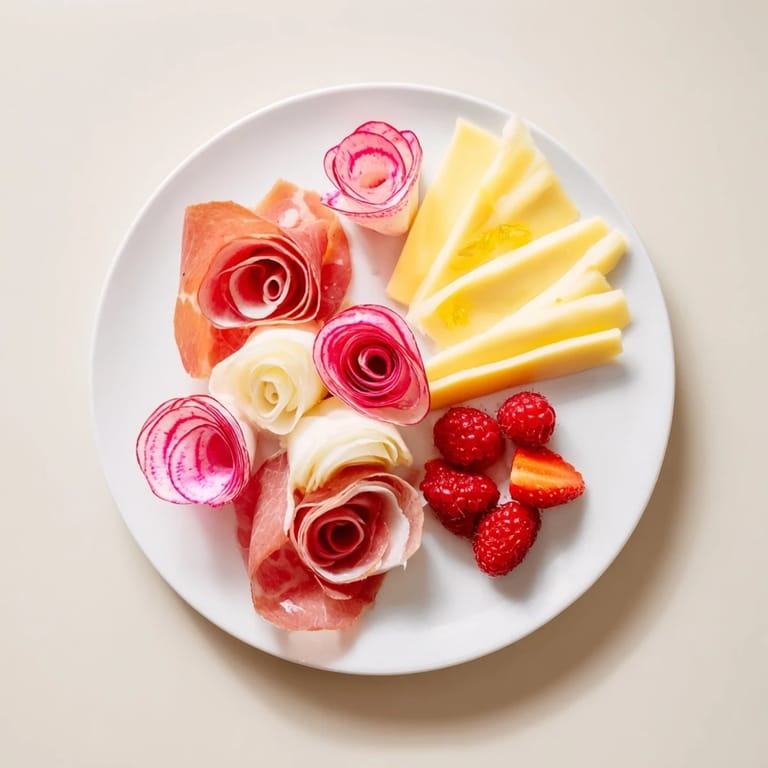
- Place your pink cheese slices and brie wedges in clusters, allowing them to touch the vegetables and meats. The colors will blend and complement each other naturally. Let some cheese overlap the edges to create depth.
- Add structure with bread:
- Arrange baguette slices and rice crackers in gentle curves along the edges or interspersed throughout. These create little resting places for guests and add a textural element.
- Finish with fruit:
- Scatter strawberry halves and raspberries in small piles, letting them nestle into the gaps. They should feel like jewels scattered across the composition.
- The final touch:
- If you're using edible rose petals or microgreens, sprinkle them now. Step back, look at what you've created, and feel proud. This is ready to serve immediately.
 Pin
Pin I remember a moment when a guest asked if I'd taken a culinary class to make this. I laughed and said no—just patience and a belief that food should be as much about beauty as taste. That conversation changed how I approach cooking. It made me realize that presentation isn't fancy or pretentious; it's a way of saying 'you matter enough for me to make this beautiful.'
The Watercolor Philosophy
This platter works because it embraces the imperfect nature of watercolors. Real watercolor paintings aren't rigid or symmetrical—they blend, they shift, they suggest more than they declare. That's exactly what you're doing here. The radish slices overlap slightly. The colors bleed into one another. The mortadella folds naturally rather than geometrically. This isn't about precision; it's about creating a composition that feels alive and artistic. When you approach it this way, even if you feel like you made a 'mistake,' it's probably just adding to the authenticity of the whole thing.
Flavor Layering Like a Composition
Each element on this platter has a job. The salty prosciutto and mortadella provide the backbone. The creamy, slightly tangy cheeses offer richness. The crisp vegetables bring freshness and clean flavor. The fruits add sweetness and brightness. Together, they create a balance that keeps people reaching for more instead of feeling overwhelmed. This is what separates a pretty platter from a memorable one—the flavors should work together like instruments in an orchestra, each audible but part of a greater harmony.
Making It Your Own
Here's the truth about this recipe: it's a framework, not a rulebook. Once you understand the principle—layer colors, balance flavors, arrange with intention—you can adapt it to what you have and what you love. That vegetarian version I mentioned? Just increase your cheese variety and add pickled elements like red onions or pickled beets. Want to play with flavor more? Scatter pink peppercorns across the board or add a small bowl of fig jam in the center. I've made this platter with different cheeses each time, and it's always been gorgeous. The magic isn't in specific ingredients; it's in the care you take arranging them.
- A bottle of rosé wine pairs so beautifully that it almost feels required—the sweetness and acidity complement every element on this board
- Make this platter no more than 2 hours before serving, or cover it loosely with plastic wrap in the refrigerator until guests arrive
- Remember that this is meant to be interactive—guests should feel invited to pick, taste, and explore rather than being served something precious and untouchable
 Pin
Pin This platter is proof that some of the most impressive dishes are also some of the simplest to make. It's about seeing your ingredients not just as food, but as colors and textures and moments of joy waiting to be arranged on a board.
Recipe FAQ
- → How can I create the rose shapes with prosciutto?
Gently roll or fold thin slices of prosciutto into small rose forms, placing them in clusters across the platter for a delicate visual effect.
- → What cheeses work best for this combination?
Pink-hued cheeses like port wine Derby, rosé goat cheese, or berry-washed rind varieties pair beautifully, complemented by brie or camembert wedges.
- → Are there vegetarian alternatives to the meats?
Yes, omit the prosciutto and mortadella, and increase the variety of cheeses and vegetables for a fulfilling vegetarian option.
- → How do the radishes contribute to the platter?
Different varieties of thinly sliced pink radishes and watermelon radish create overlapping layers that mimic watercolor brush strokes, enhancing visual appeal.
- → What drinks complement this platter?
Rosé wine pairs elegantly, balancing the savory meats, creamy cheeses, and fresh fruity notes of the platter.
- → Can I substitute the bread and crackers for gluten-free options?
Absolutely, using gluten-free crackers or gluten-free baguette slices maintains texture while accommodating dietary needs.