 Pin
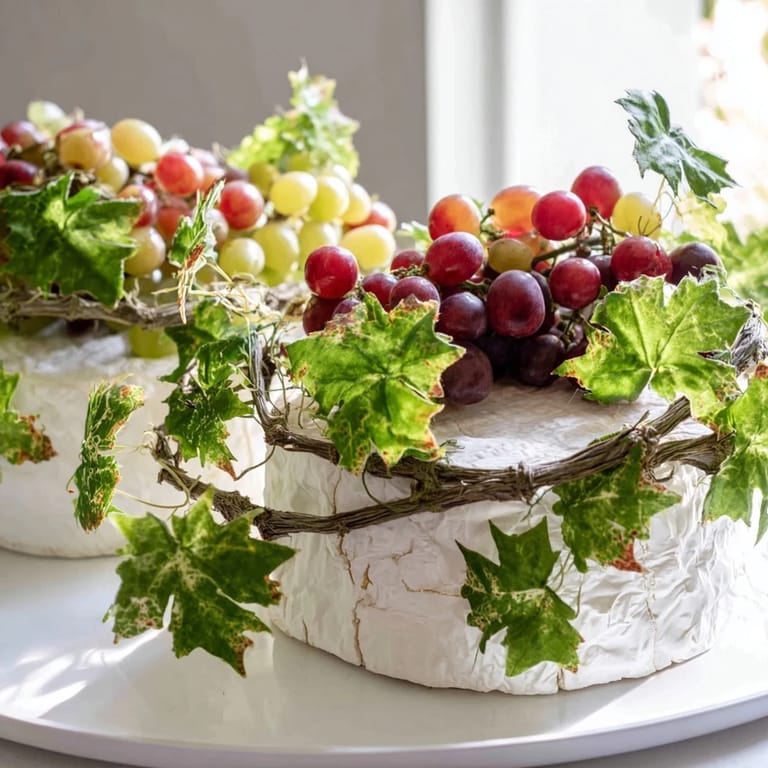
Pin There's a moment that happens at every good gathering when someone brings out a cheese board that stops conversation. Mine came together almost accidentally one autumn when I was arranging ingredients for a dinner party and realized I had these beautiful untreated grapevines from a neighbor's garden. I draped them across a young tomme cheese almost as an afterthought, tucked some grapes in between, and suddenly it wasn't just cheese and bread anymore—it was a conversation piece that tasted incredible.
I served this for the first time to some friends who'd been talking non-stop about wine pairings, and the second they saw the vines draped across the cheese, the whole conversation shifted. They stopped debating tannins and started asking where the cheese was from, how the vines tasted with it, whether they could actually eat the leaves. That's when I realized this dish does something most boards don't—it makes people curious and playful again.
Ingredients
- Young, rustic cheese wheels (2 large wheels, about 1.5 kg each): Look for tomme, young pecorino, or farmhouse cheeses that have character but aren't aged so long they're crumbly; the slight softness lets them pair naturally with the delicate vine leaves.
- Fresh grapevine branches (3–4 long, untreated): These are the star—ask a local vineyard or wine producer, or check farmers' markets; they bring an herbaceous, slightly tart note that brightens the whole board.
- Fresh grapes (500 g, red, green, or mixed): Keep them on the stem when possible so they look abundant and are easier to pick at while eating.
- Baguette or rustic country bread: Slice it just before serving so it stays crisp on the outside; stale bread will absorb the cheese's moisture.
- Assorted nuts (100 g, walnuts or almonds): Their crunch contrasts beautifully with the soft cheese and tender grape leaves.
- Dried fruits (100 g, figs or apricots): These add sweetness and chew, creating flavor bridges between the salty cheese and tart grapes.
Tired of Takeout? 🥡
Get 10 meals you can make faster than delivery arrives. Seriously.
One email. No spam. Unsubscribe anytime.
Instructions
- Prepare your vines:
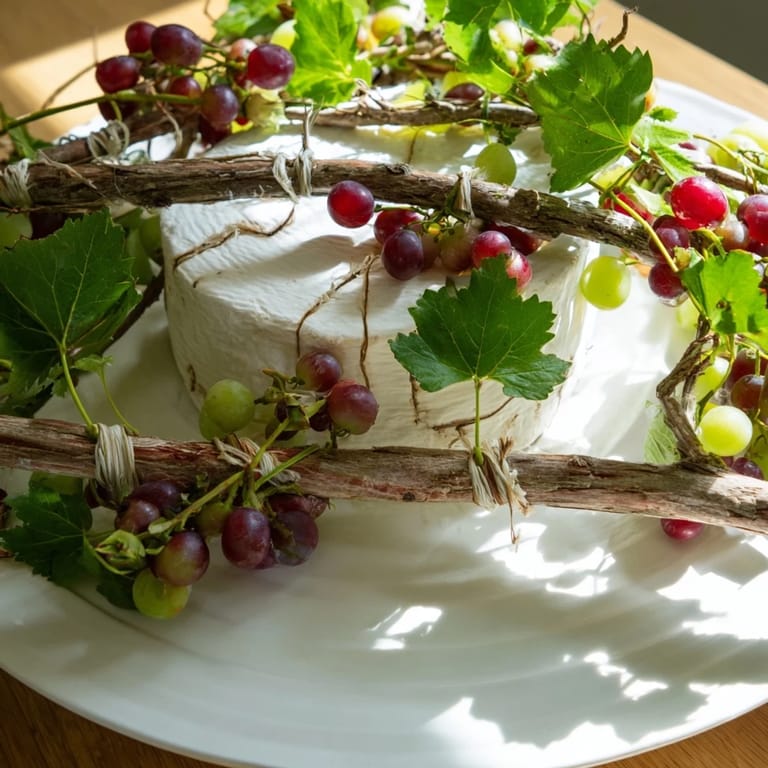
- Wash the grapevine branches under cool water and pat them completely dry with a clean cloth; damp vines will wilt quickly and lose their visual impact. Lay them out on your wooden board or platter, letting them drape loosely and naturally so they catch the light.
- Position the cheese:
- Set the cheese wheels in the center or slightly off-center, then arrange the vines so they frame and cascade around them; this creates depth and draws the eye naturally to the cheese. The leaves should look wild and organic, not arranged.
- Tuck in the grapes:
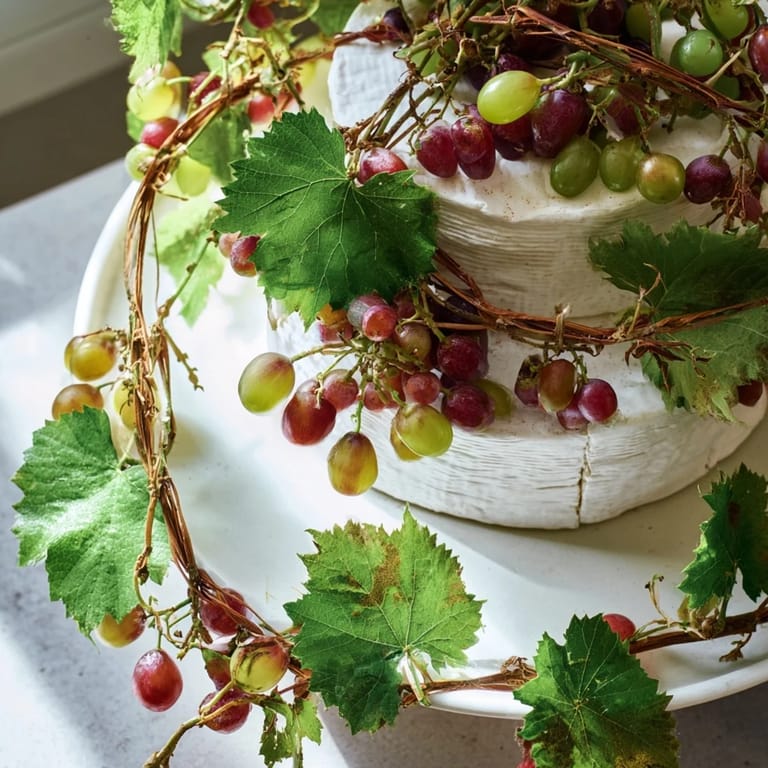
- Nestle grape clusters throughout the vines and around the cheese wheels, filling gaps and adding color; the grapes should look like they grew right there alongside the cheese.
- Build the supporting cast:
- Arrange bread slices, nuts, and dried fruits in small, casual piles around the outer edges; let these ingredients feel like they're there to support the main event, not compete with it. Serve immediately at room temperature so the cheese stays soft and the bread stays crisp.
 Pin
Pin I learned the hard way that this dish isn't about perfection—it's about generosity and celebration. When I first made it, I fussed endlessly about symmetry and balance, but the moment people started eating, all that careful arrangement got happily destroyed. That mess became the point; it meant everyone was engaged and reaching for more.
Why This Works as a Centerpiece
There's something primal about food presented this way, with the vine leaves and natural textures front and center. It signals that you've chosen real ingredients, not shortcuts, and people respond to that. The grapevines also soften the edges of a cheese board—instead of geometric blocks and sharp corners, you get flowing leaves and organic curves that feel warm and inviting. It's the difference between a board that looks like it came from a catering company and one that feels like it came from someone's garden.
Serving and Pairings
Room temperature is absolutely key here; cold cheese loses its flavor and the vines can look a bit droopy straight from a cool room. Bring it out 20 minutes before guests arrive if your kitchen is cold. For wine, skip heavy reds—crisp whites, light rosés, or even natural wines that have a little funk and edge will sing with this board. The wine doesn't compete with the cheese; instead, it highlights those fresh, herbaceous notes the vines bring.
Small Details That Make the Difference
The little finishing touches are where this board goes from nice to memorable. A light drizzle of local honey over one of the cheese wheels, or a small pour of good olive oil for bread-dipping, transforms it into something people will talk about for weeks. Don't overthink it—a few unexpected flavors are better than a crowded board that feels scattered.
- If your cheese is very firm, let it sit out for 30 minutes before serving so it softens and becomes easier to cut and eat.
- Keep the bread separate and uncovered so it doesn't absorb moisture; add it to the board just as people are sitting down.
- A sharp cheese knife and bread knife are the only tools you need, and they should be within easy reach so guests feel comfortable cutting their own slices.
 Pin
Pin This dish reminds me that the best meals aren't the most complicated ones—they're the ones where you start with good ingredients, add a touch of boldness, and let people enjoy them together. Make this and watch what happens at your table.
Recipe FAQ
- → What type of cheese works best for this dish?
Young, rustic cheeses like tomme, young pecorino, or farmhouse cheese with a soft texture complement the grapevine presentation beautifully.
- → Can I use grape leaves instead of full grapevine branches?
Yes, if full grapevines aren’t available, organic grape leaves can substitute to maintain the natural vineyard look.
- → How should the dish be served?
Arrange on a large wooden board or rustic platter at room temperature to allow flavors to develop and be easily shared.
- → Are there suggested pairings with this dish?
Light red or crisp white wines complement the flavors well. Drizzling local honey or olive oil over the cheese adds extra flair.
- → Are the accompaniments necessary?
Accompaniments like sliced baguette, nuts, and dried fruits enhance texture and flavor variety but are optional.