 Pin
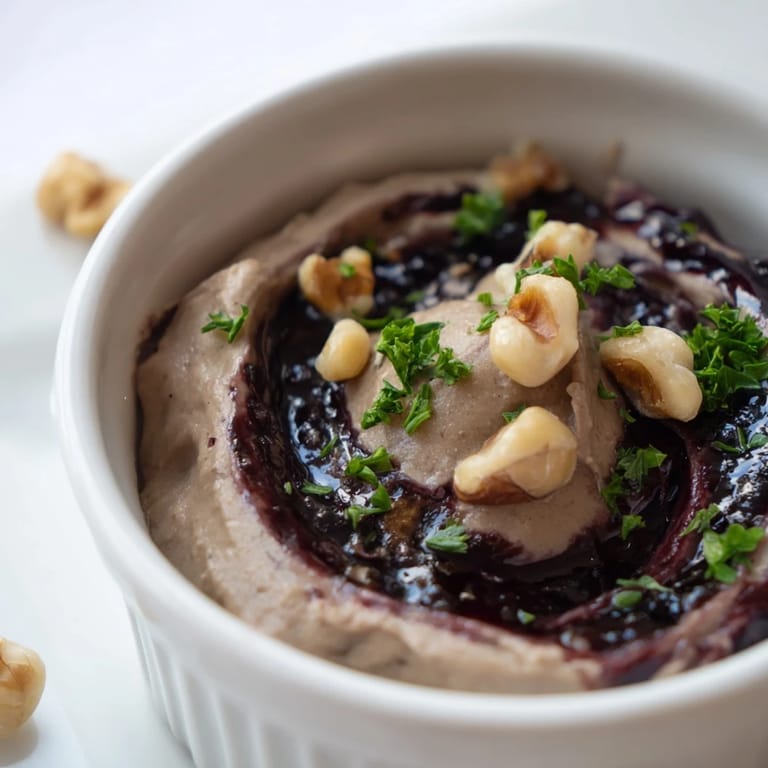
Pin There's a moment in every dinner party when someone reaches for something unexpected and their eyes light up. For me, that happened the first time I composed this layered dish on a narrow marble board at a friend's apartment in Lyon. The pâté was impossibly smooth, the jams gleamed like jewels, and when guests bit through to find those buried nuts, they simply paused and smiled. It became my signature move, the thing people asked me to bring. Now I make it whenever I want to feel a little more composed, a little more European, right in my own kitchen.
I remember plating this for my sister's book club and watching them dissect it piece by piece, debating whether the walnuts or hazelnuts mattered more. Someone said it tasted like autumn in a bite. That's when I realized this dish works because nothing overstays its welcome, nothing demands too much, but together they create something that feels intentional and a little bit luxurious.
Ingredients
- Pâté (200 g): The foundation everything builds on—choose a brand or homemade version with good fat content so it spreads like butter and doesn't fight back.
- Fig jam (4 tbsp): Its subtle earthiness keeps this from becoming too sweet; the dark color creates visual contrast that makes people lean in closer.
- Blackcurrant jam (2 tbsp): The tart edge that wakes everything up and reminds your palate this isn't just a dessert.
- Roasted hazelnuts (50 g): Rough chopping is your friend here—uneven pieces add personality and that critical textural surprise.
- Toasted walnuts (30 g): They bring a deeper, slightly bitter note that balances the sweetness without apology.
- Baguette or crackers: Toast the bread until it's barely crisp so it doesn't compete; it's just the vehicle for what matters.
- Fresh herbs: A whisper of chives or parsley on top transforms this from rich to refined, adding a green breath of freshness.
Tired of Takeout? 🥡
Get 10 meals you can make faster than delivery arrives. Seriously.
One email. No spam. Unsubscribe anytime.
Instructions
- Build your base:
- Spread half the pâté into your serving dish, working it smooth with the back of a spatula. Think of it like laying down a foundation that you want guests to see peeking through later.
- Swirl the jewels:
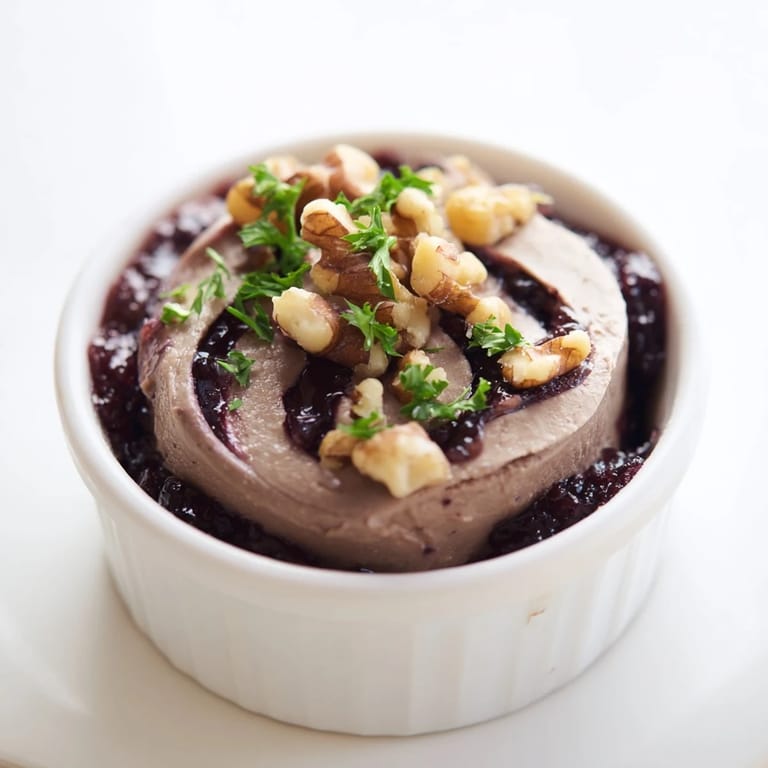
- Dot both jams across the pâté surface in scattered spoonfuls, then swirl them together lightly. You want ribbons of color, not a fully marbled effect—restraint is what makes it look intentional.
- Plant the treasure:
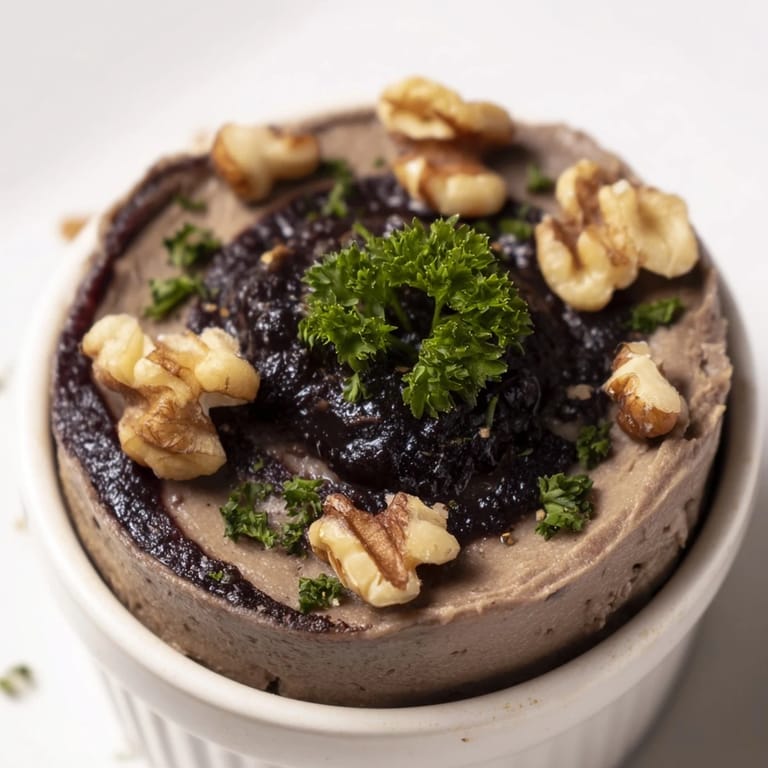
- Sprinkle half the nuts across the jam layer and press them down gently so some disappear into the soft layers beneath. This is where the magic lives.
- Create the second story:
- Repeat the entire layering with remaining pâté, jams, and nuts. The final layer should look finished and intentional, with some nuts visible on top.
- Smooth and garnish:
- Give the top a final gentle pass with your spatula to even things out, then scatter a few more nuts and chopped herbs across the surface like you're adding the final brushstrokes to a painting.
- Bring it to the table:
- Serve immediately with warm toasted bread, crackers, or fresh vegetables. The longer it sits at room temperature, the easier it spreads but the less impressive the layers appear.
 Pin
Pin I made this once for someone who claimed they didn't like pâté, and halfway through her first bite she went completely silent. When she looked up, she asked what made it different. I told her it was the hazelnuts, but really it was that everything worked together instead of competing. She asked for the recipe that night and still makes it.
The Art of Layering
Layering isn't just about stacking ingredients; it's about creating moments of discovery. When you bury those nuts, you're not just adding texture—you're building anticipation. Each layer should feel intentional, not rushed. The pâté holds everything, the jam provides brightness, the nuts deliver surprise. Some of the best appetizers I've tasted worked this way because they rewarded people for paying attention.
Why Texture Matters Here
If this dish were only smooth, it would be forgettable. If it were all nuts and crunch, it would be exhausting. The contrast is what makes it sing, and that comes from respecting the texture of each component. Creamy against sticky against crunchy—that's the conversation happening on your palate, and it's much more interesting than any single ingredient could be alone.
Serving and Pairing Ideas
This dish loves good company, whether that's wine, bread, or people gathered around a table. I've found it works equally well as the opening to a dinner party or the main event of a casual afternoon. The beauty of it is flexibility without compromise—you're never sacrificing quality, just adapting to your moment.
- A glass of Sauternes cuts through the richness with its sweetness in the best possible way.
- Serve with thick slices of toasted baguette warm so the pâté spreads like butter, or cool crackers if you prefer more crunch.
- Fresh vegetables like celery sticks or sliced radishes add brightness and give people who want lighter options a path forward.
 Pin
Pin Every time I make this, I'm reminded that the best dishes don't need to be complicated to feel special. This one proves that thoughtfulness, good ingredients, and a little care with presentation can turn something simple into something people remember.
Recipe FAQ
- → What type of pâté is best for this appetizer?
Use smooth duck or chicken liver pâté, either store-bought or homemade, for the creamiest texture.
- → Can I substitute the jams used in the layering?
Yes, sweet and tart jams like cherry or raspberry work well to maintain flavor balance.
- → How can I make this appetizer nut-free?
Replace roasted hazelnuts and toasted walnuts with seeds such as pumpkin or sunflower seeds.
- → What are suitable accompaniments for serving?
Toasted baguette slices, gluten-free crackers, or fresh vegetable sticks complement the layered flavors perfectly.
- → Is this appetizer suitable for gluten-free diets?
Yes, if served with gluten-free crackers or vegetables instead of baguette slices.