 Pin
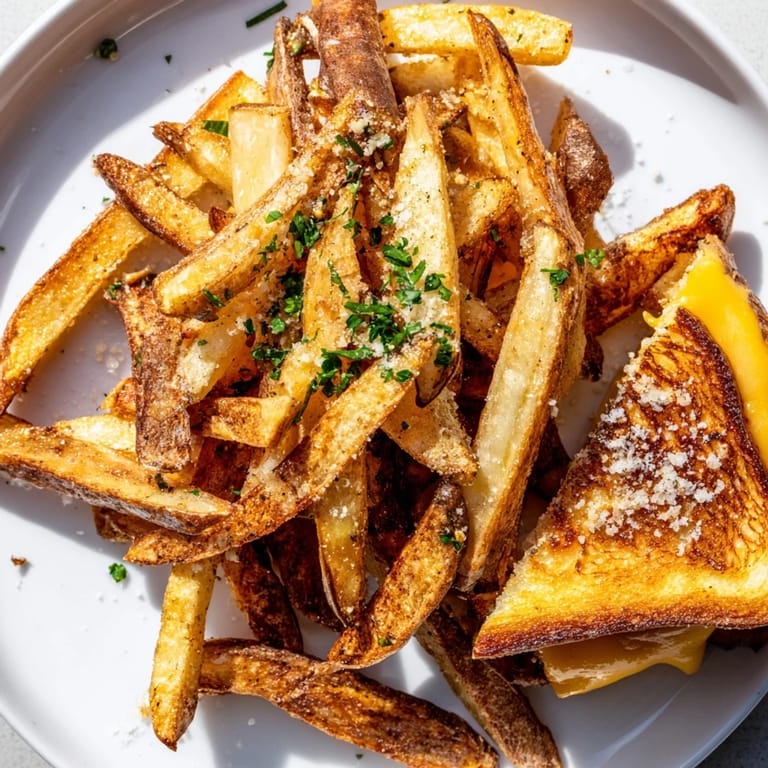
Pin There's something about the smell of beef tallow hitting hot oil that takes you straight back to old-school diners and backyard cookouts. I stumbled onto this combination by accident one Sunday afternoon—I had just rendered a batch of tallow from beef bones and was itching to use it, and at the same time, I'd picked up this gorgeous sourdough loaf and sharp cheddar that demanded to be melted between crispy bread. The result was undeniably indulgent: fries so golden and shattering they could make anyone believe in food again, paired with a grilled cheese that actually tastes like something.
I made this for some friends one winter evening, and watching their faces when they bit into the first fry—that audible crunch—was worth all the prep work. One of them said it tasted like the best French fries they'd had in years, maybe ever, and the grilled cheese was so simple it felt almost radical in its honesty. We sat around the kitchen island that night longer than planned, just talking and reaching for another fry.
Ingredients
- Russet potatoes (4 large): The starch content in russets is ideal for fries—they crisp beautifully on the outside and stay creamy within. Cut them evenly so they cook at the same rate.
- Beef tallow (1 quart): This is the secret ingredient that changes everything. Beef tallow has a higher smoke point than most oils and imparts a subtle meaty richness that makes fries taste like fries should.
- Kosher salt (2 tsp): Coarse salt adheres better than fine salt and won't dissolve immediately into the fries.
- Black pepper (½ tsp): Fresh cracked black pepper will give you better flavor than pre-ground.
- Fresh parsley (1 tsp, optional): A small garnish of bright parsley cuts through the richness if you want a little freshness.
- Sourdough bread (8 slices): Sourdough has enough structure to hold up to butter and the cheese without falling apart, plus that tangy flavor complements sharp cheddar beautifully.
- Sharp cheddar cheese (8 slices): Don't skip quality cheese here—it's half the dish. Sharp cheddar melts smoothly while still holding its flavor.
- Unsalted butter (4 tbsp): Softened butter spreads evenly without tearing the bread, and unsalted lets you control the salt level.
- Mayonnaise (2 tbsp, optional): Mayo adds fat and helps the bread achieve an extra-crispy, almost lacy exterior.
Tired of Takeout? 🥡
Get 10 meals you can make faster than delivery arrives. Seriously.
One email. No spam. Unsubscribe anytime.
Instructions
- Soak and prep the potatoes:
- Peel and cut your potatoes into even quarter-inch sticks—thickness matters because they need to cook through in both fries without burning. Soak them in cold water for at least thirty minutes; this removes excess starch and is the whole reason your fries won't stick together and will crisp up properly. Drain them thoroughly and pat completely dry with paper towels because water is the enemy of crispness.
- First fry at a low temperature:
- Heat your beef tallow to exactly 325 degrees Fahrenheit—use a thermometer because eyeballing this is how mistakes happen. Fry the potatoes in batches for four to five minutes until they're tender but pale, almost no color yet. You're essentially parcoking them; this step is what makes the inside fluffy later.
- Second fry at high temperature:
- Bump the tallow up to 375 degrees and fry the blanched potatoes again in batches for two to three minutes until they're deep golden and shatteringly crispy. The hotter oil and the pre-cooked potatoes mean this happens fast—watch them and pull them when they're just right, not a moment too long. Drain on fresh paper towels, then salt and pepper them immediately while they're still hot so the seasoning sticks.
- Build the grilled cheese:
- Spread softened butter (and mayo if you're using it) on one side of each bread slice, making sure you cover the edges where the toasting really happens. Place one or two cheese slices between two slices of bread with the buttered sides facing out, creating a little cheese sandwich.
- Toast until golden and melted:
- Heat a skillet or griddle over medium heat and place the sandwiches on it. After three to four minutes, the bottom should be golden brown and the cheese should be starting to melt; flip carefully and cook the other side for another three to four minutes. Press gently with a spatula as it cooks to encourage even contact and faster melting—you want that cheese completely melted and oozing slightly at the edges.
- Plate and serve immediately:
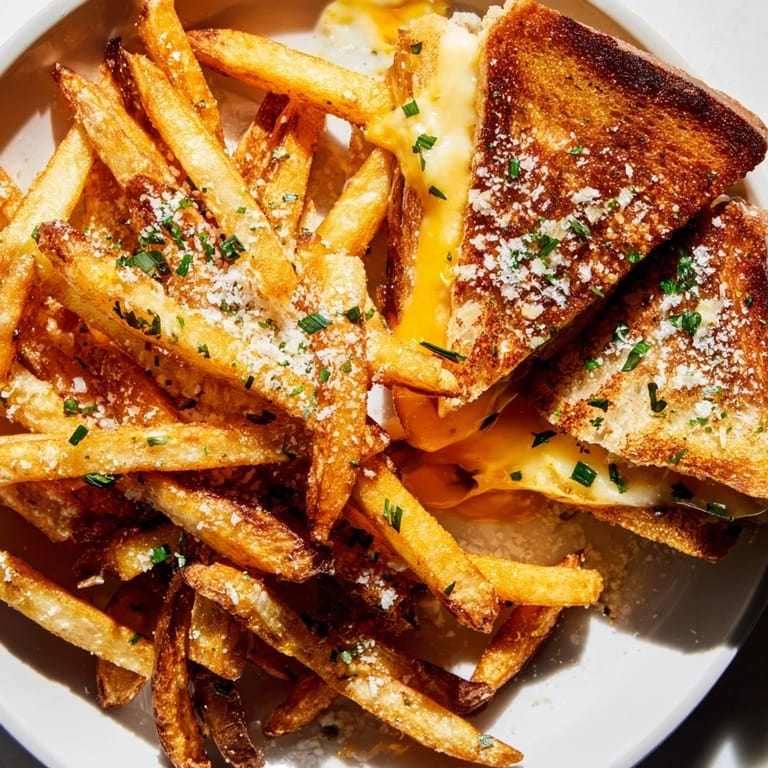
- Plate each grilled cheese with a generous handful of beef tallow fries alongside. Serve right away because fries begin losing their crispness the moment they cool, and grilled cheese is best eaten while the cheese is still soft and the bread still has some give.
 Pin
Pin The real moment this dish clicked for me was realizing it's not fancy or pretentious—it's deeply honest comfort food that actually tastes good because you made it with real ingredients and a little care. There's something grounding about that.
Why Beef Tallow Changes Everything
Beef tallow isn't trendy nostalgia; it's genuinely superior for frying because of its smoke point and the way it cooks potatoes. The subtle savory note it imparts is why old-fashioned fries tasted the way they did before most places switched to vegetable oil for cost reasons. If you've never fried in tallow, this is the recipe to try it.
Getting the Grilled Cheese Right
A grilled cheese lives or dies on bread quality and cheese quality—there's no complexity to hide behind. Sourdough's tang and structure hold up to heat without falling apart, and sharp cheddar actually tastes like something distinctive. The butter and optional mayo create that crispy exterior that makes each bite satisfying, and medium heat gives you time to melt the cheese before the bread burns.
Serving and Storage Tips
Fries are best served immediately, and grilled cheese should be eaten while warm. If you must make these ahead, you can blanch the potatoes earlier and refrigerate them until you're ready for the final fry, but the sandwiches really need to be made fresh.
- Serve with ketchup, aioli, or your favorite dipping sauce to complement the richness.
- A mix of sharp cheddar with Gruyère or mozzarella adds subtle complexity if you want to experiment.
- You can substitute duck fat for beef tallow if that's what you have on hand, though the flavor will be slightly different.
 Pin
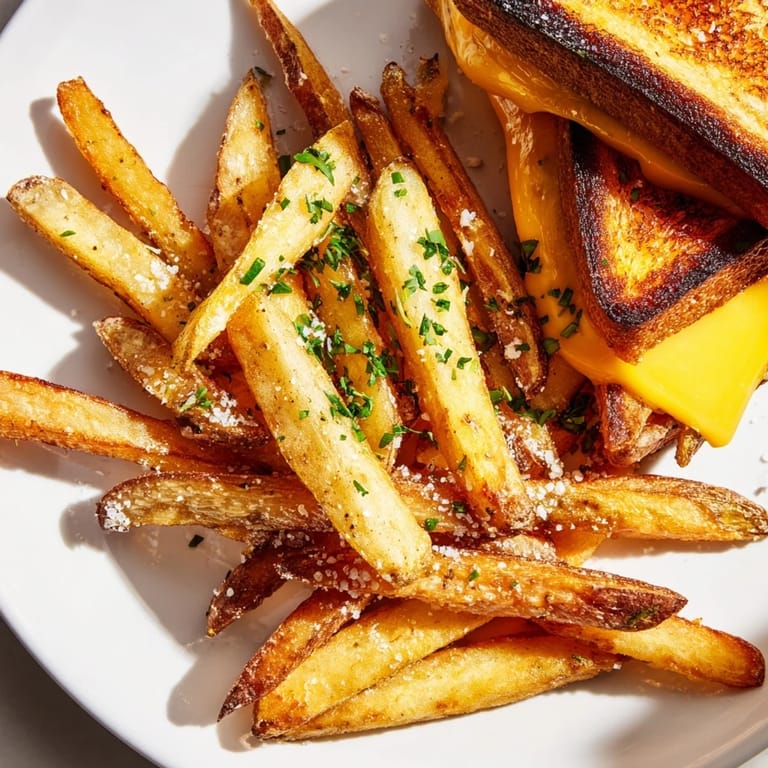
Pin This meal is the kind of food that reminds you why cooking is worth doing—it's not complicated, but it matters. Make it when you want something that tastes genuinely good, not convenient.