 Pin
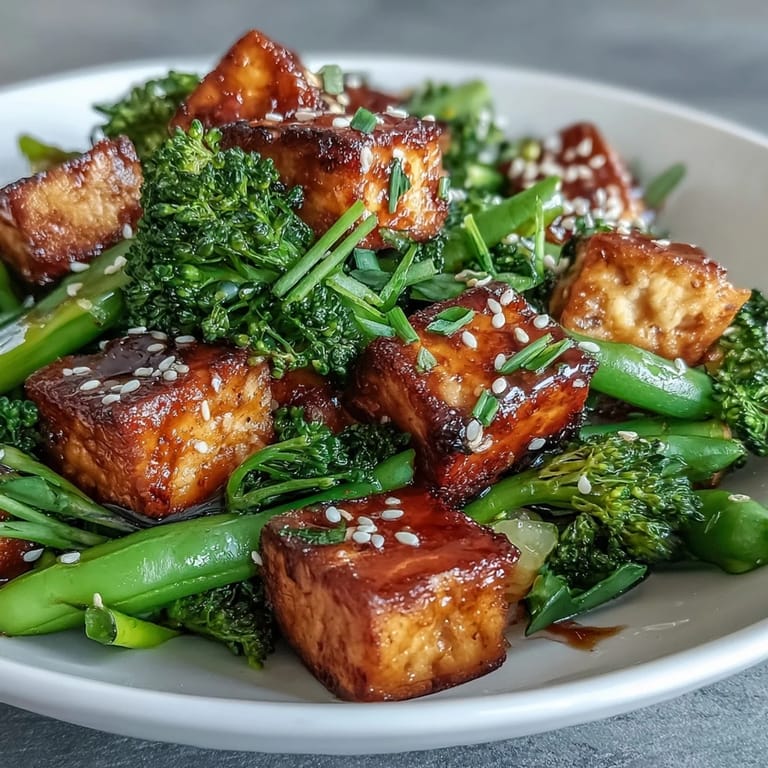
Pin There's something almost meditative about the sizzle of tofu hitting hot oil, that moment when you realize a plant-based dinner doesn't have to be boring or complicated. I stumbled onto this teriyaki stir-fry on a Tuesday night when I had nothing but a block of tofu, whatever vegetables were lurking in my crisper drawer, and a sudden craving for something warm and deeply savory. Twenty minutes later, my kitchen smelled like a restaurant I couldn't afford, and I was honestly shocked at how crispy the tofu turned out. Now it's my go-to when I want something fast that actually tastes like I tried.
My friend Sarah came over one evening convinced she hated tofu, and I remember her surprise when she tried this—she actually went back for seconds and asked for the recipe. The way the sauce clung to those broccoli florets and the sweetness from the maple syrup balanced against the soy sauce just clicked for her. Since then, this dish has become my secret weapon for converting skeptics, and it's become such a regular rotation in my kitchen that I can practically make it with my eyes closed.
Ingredients
- Firm tofu (400 g): The foundation of this dish—pressing it well beforehand removes moisture so it can actually crisp up beautifully rather than steam.
- Cornstarch (4 tbsp total): Two tablespoons coat the tofu for that golden, crispy exterior; the rest thickens the sauce into a glossy finish.
- Vegetable oil (2 tbsp): High heat is your friend here—neutral oil like canola or peanut works best for getting the tofu properly browned.
- Broccoli florets (300 g): Cut them to roughly the same size so they cook evenly and stay bright green with a little bite.
- Snap peas (150 g): These add sweetness and crunch—don't skip them or substitute with something too soft.
- Red bell pepper: Sliced thin so it cooks quickly and adds a pop of color and mild sweetness.
- Spring onions: Slice them and save most for garnish—they'll wilt if cooked too long, so just a handful goes into the stir-fry.
- Soy sauce (60 ml): The backbone of the sauce; use tamari if you need gluten-free and it's honestly better than regular soy sauce anyway.
- Maple syrup or honey: This balances the saltiness and creates that signature teriyaki sweetness—don't skip it or the sauce feels flat.
- Rice vinegar (1 tbsp): The acid that brightens everything and keeps the sauce from being one-dimensional.
- Sesame oil (1 tbsp): Just a tablespoon gives you that toasted, nutty aroma that makes people think you went to more effort than you did.
- Fresh ginger and garlic: Minced or grated, these are what make this taste homemade rather than like a takeout bottle—don't use powdered versions.
Tired of Takeout? 🥡
Get 10 meals you can make faster than delivery arrives. Seriously.
One email. No spam. Unsubscribe anytime.
Instructions
- Press and cube your tofu:
- Drain the tofu and wrap it in a clean kitchen towel or paper towels, then place it on a plate with something heavy on top for at least 10 minutes—this step is non-negotiable if you want crispy edges. Once pressed, cut it into roughly 2 cm cubes so they have surface area to brown.
- Coat and fry the tofu:
- Toss those cubes in cornstarch until every side is dusty, then into a hot skillet with oil where they should sizzle immediately. Let them sit undisturbed for 2–3 minutes per side so they develop a proper golden crust—resist the urge to fidget with them.
- Build your vegetable base:
- Once the tofu is out, the pan is already hot and seasoned with bits of tofu, so add your broccoli, snap peas, and pepper and let them cook for 3–4 minutes with occasional stirring. You want them tender but still snappy when you bite into them.
- Mix your sauce together:
- While everything cooks, whisk the soy sauce, maple syrup, rice vinegar, sesame oil, ginger, and garlic in a bowl so it's ready when you need it.
- Bring it all together:
- Return the tofu to the pan with the vegetables, pour in that sauce, and let it all simmer for a minute so the flavors meld. The pan should smell incredible at this point—that's how you know you're close.
- Thicken and finish:
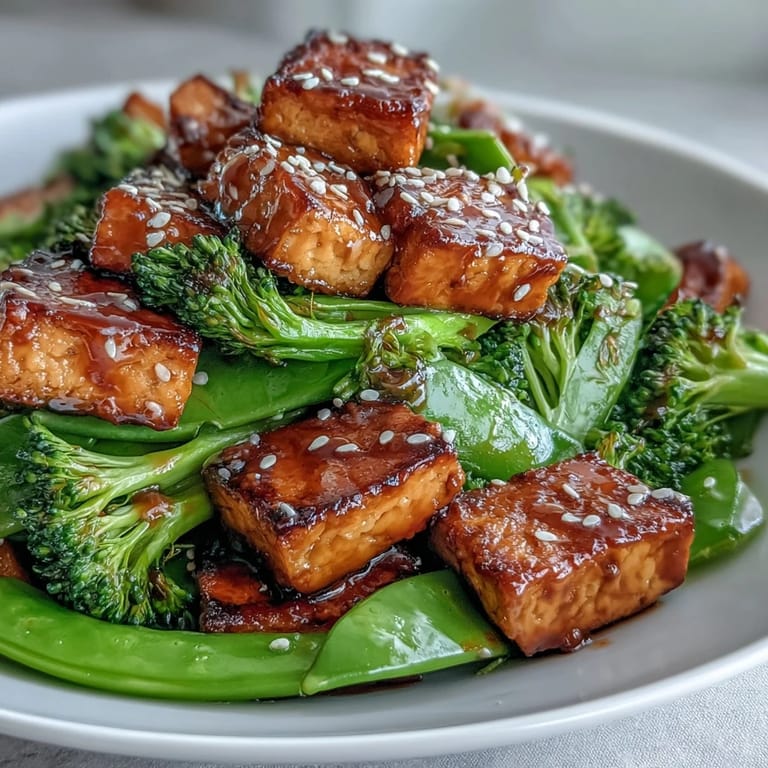
- Stir the cornstarch slurry (that cornstarch mixed with water) to make sure it's smooth, then pour it in and stir everything constantly for about a minute until the sauce becomes glossy and clings to the tofu and vegetables. Remove from heat and scatter with sesame seeds, fresh spring onions, and cilantro if you have it.
 Pin
Pin This dish became more than just dinner when my mom tried it and admitted she'd been missing out on good tofu her whole life—she said it tasted more like the stir-fries from the restaurant we used to visit when I was a kid. There's something about feeding people food that surprises them in the best way that makes cooking feel less like a chore and more like connection.
The Secret to Crispy Tofu Every Time
The real magic isn't in any fancy technique—it's about respecting two things: pressing and patience. Most people either skip the pressing entirely or don't press long enough, then wonder why their tofu steams instead of fries. I learned this the hard way by burning three batches before realizing I was just trapping steam inside the cubes. Once you give it that 10-minute press minimum and let the oil get genuinely hot before adding the tofu, the cornstarch coating will turn golden and crispy in a way that even skeptics can't argue with.
Building Flavor Layers That Actually Work
This sauce works because it's balanced—you've got salt from the soy sauce, sweetness from the maple syrup, acid from the vinegar, heat from the ginger and garlic, and richness from the sesame oil. Skip any one of these and it falls flat or tastes too one-dimensional. I used to make this without the vinegar once and the whole thing tasted kind of cloying, like eating liquid sweetness. Now I always taste as I go and adjust if needed—sometimes I'll add an extra teaspoon of vinegar if the maple syrup is particularly strong, or a tiny pinch more soy sauce if it needs saltiness.
Vegetables and Timing
The trick with stir-fries is understanding that everything needs to cook at different speeds, so you have to add things in a logical order rather than throwing everything in at once. Broccoli takes the longest, snap peas are faster, and bell pepper is somewhere in the middle, which is why I add them all together but watch closely so nothing gets mushy. You'll know they're done when they're bright in color, tender when you poke them with a spoon, but still have a little snap when you bite down—that balance between cooked and crisp is what separates a good stir-fry from a mediocre one.
- Cut all your vegetables before you start cooking so you're not scrambling with a knife when the pan is hot.
- If you love certain vegetables more than others, feel free to swap broccoli for bok choy, add mushrooms, or throw in some carrots—just keep roughly the same total amount.
- Serve over jasmine rice or soba noodles and you've got an actual meal that will genuinely satisfy people.
 Pin
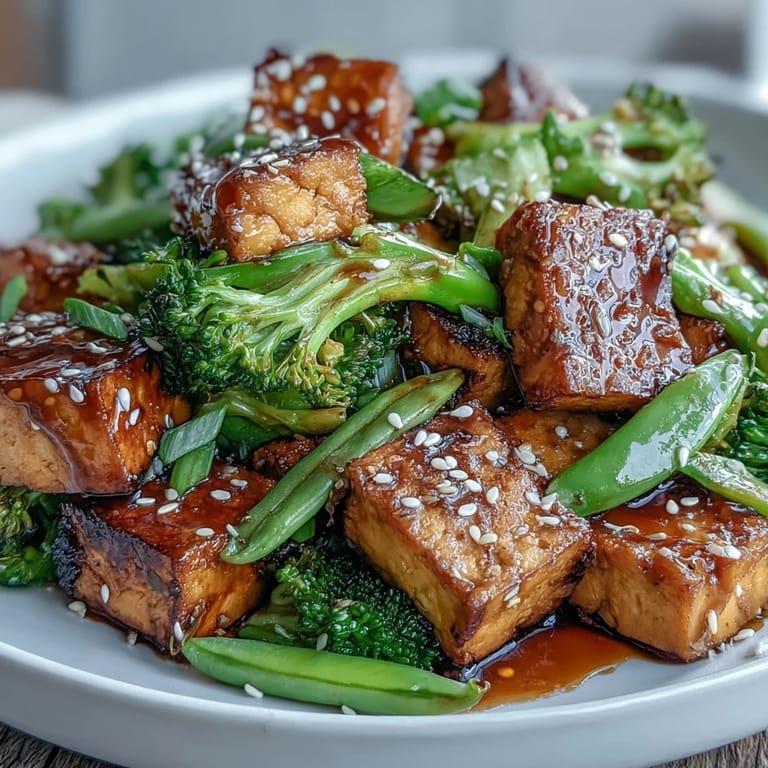
Pin This recipe became part of my regular rotation because it proves that plant-based cooking doesn't mean sacrificing flavor or satisfaction. Every time I make it, someone asks for the recipe, and that never gets old.
Recipe FAQ
- → How do I get tofu crispy?
Press the tofu to remove excess moisture, coat with cornstarch, and pan-fry in oil over medium-high heat until all sides turn golden and crisp.
- → Can I use other vegetables besides broccoli and snap peas?
Absolutely. Feel free to substitute with seasonal vegetables like bell peppers, carrots, or snow peas for varied textures and flavors.
- → What makes the teriyaki sauce thick?
A cornstarch slurry (cornstarch mixed with water) is added at the end to thicken the sauce and help it coat the tofu and vegetables evenly.
- → Is this dish suitable for gluten-free diets?
Yes, by using tamari instead of regular soy sauce, this dish can be made gluten-free without compromising flavor.
- → How long does the entire dish take to prepare and cook?
Preparation and cooking combined take about 30 minutes, making it a quick option for busy weeknights.