 Pin
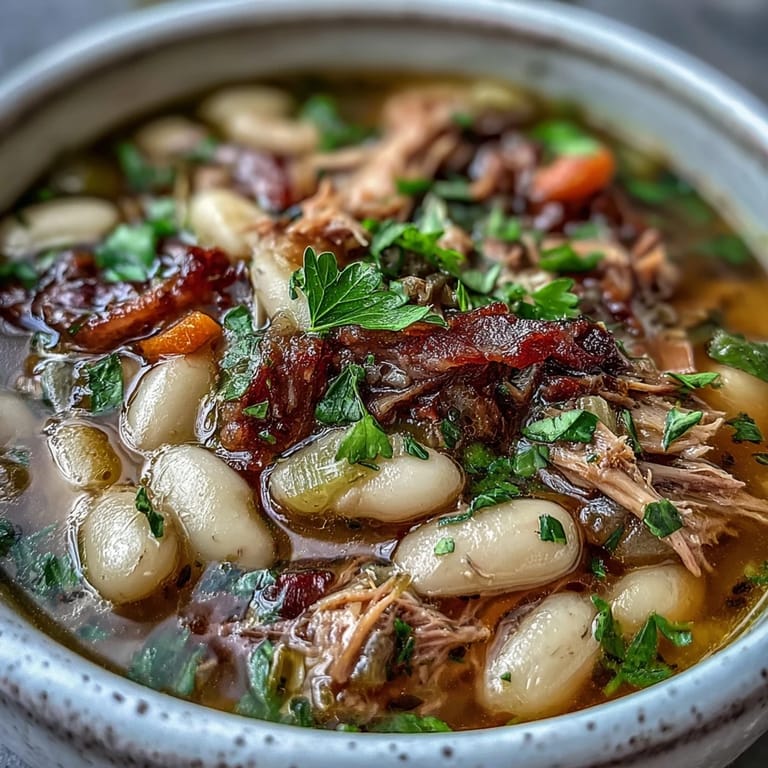
Pin My grandmother kept a ham hock in her freezer year-round, tucked behind the frost-covered bags of collard greens, waiting for the first cold snap when soup season arrived. One November afternoon, she pulled it out with the certainty of someone who'd made this soup a hundred times, and I watched her transform that single smoky bone into something that filled the entire house with warmth. The beans softened into clouds, the broth turned golden and rich, and suddenly I understood why she'd always say this was the kind of food that made you feel taken care of.
I made this soup on a Tuesday when everything felt overwhelming, and by the time it finished simmering, my whole mood had shifted. There's something grounding about watching a pot slowly transform, about knowing that in two and a half hours you'll have something nourishing to show for your time. My partner came home, smelled it from the hallway, and didn't say anything, just grabbed two bowls.
Ingredients
- Smoked ham hock (1 large, about 1–1.5 lb): This is your flavor engine, so choose one with good smoke and a bit of meat clinging to it—it'll give you both the smoky depth and something substantial to shred back into the soup.
- Dried great northern or cannellini beans (1 lb): Soak these overnight so they cook evenly and absorb the broth properly; if you skip this step, you'll end up with some hard beans and some mushy ones.
- Yellow onion (1 large, diced): The aromatic foundation that softens into almost nothing, leaving behind sweetness and depth.
- Carrots (2 medium, diced): They add natural sweetness and stay tender enough to feel substantial in the finished soup.
- Celery (2 stalks, diced): The quiet flavor builder that nobody notices until it's missing, the way good things often work.
- Garlic (3 cloves, minced): A small amount here adds savory notes without overpowering; mince it fine so it distributes evenly.
- Bay leaves (2): These are essential—they add a subtle herbaceous note that grounds the whole dish.
- Dried thyme (1 tsp): This herb loves slow simmering and brings an earthy warmth to beans.
- Black pepper (1/2 tsp): Freshly ground is worth the effort; pre-ground loses its bite after it sits.
- Smoked paprika (1/2 tsp, optional): If you love extra smokiness, this is your secret weapon.
- Chicken broth (8 cups): Low-sodium lets the ham hock shine; you can use water, but the broth makes the soup more forgiving and richer.
- Fresh parsley (2 tbsp for garnish): A bright finish that wakes up the palate after all that slow cooking.
Tired of Takeout? 🥡
Get 10 meals you can make faster than delivery arrives. Seriously.
One email. No spam. Unsubscribe anytime.
Instructions
- Set everything in motion:
- Dump your soaked beans, ham hock, and all the vegetables into a large Dutch oven or pot, then scatter in the bay leaves, thyme, pepper, and paprika. You're creating layers of flavor that will mingle during the long simmer.
- Add the broth and stir:
- Pour in your chicken broth and give everything a good stir, making sure nothing is stuck to the bottom. This is the moment where you're committing to the long cook ahead.
- Bring to a boil, then settle into a simmer:
- Let it come to a rolling boil over high heat—you'll see the foam rise—then lower the heat and cover it. Turn it down so it's just gently simmering, barely a murmur from the pot.
- Let time do the work:
- Stir occasionally over the next two hours, just to make sure nothing settles and sticks. The beans will gradually soften, and the broth will turn a beautiful golden brown.
- Free the ham:
- Pull out the ham hock and set it on a cutting board to cool slightly. Once you can handle it, shred the meat away from the skin and bone, discarding the inedible bits and returning the good stuff to the pot.
- Finish the simmer:
- Leave the pot uncovered for the final 30 minutes, letting the soup reduce slightly and the beans become completely tender. Add more broth or water if you prefer it brothier.
- Taste and adjust:
- The ham hock will have already salted the broth, so taste before adding more salt—you can always add it, but you can't take it back.
- Serve with grace:
- Fish out those bay leaves, ladle the soup into bowls, and scatter parsley over the top for color and freshness. A hunk of cornbread on the side makes it a meal.
 Pin
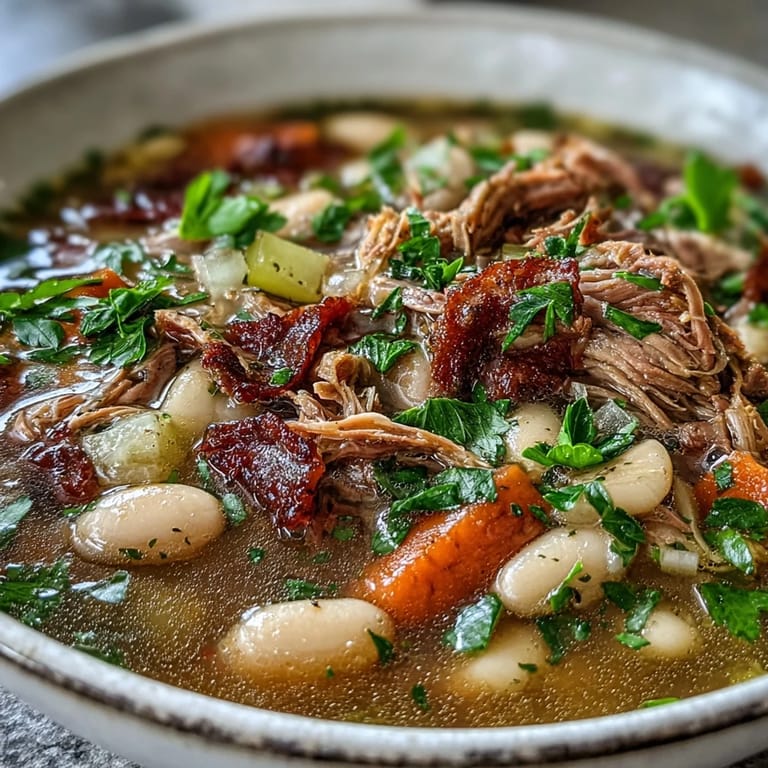
Pin The first time someone asked for seconds, I realized this soup had become a regular in my rotation, the kind of meal you make when you want to feed people well without making a fuss. It sits in the fridge or freezer for weeks, growing better as the flavors deepen, always ready for those days when you need something warm and honest.
The Magic of Long Simmering
This soup doesn't rush, and that's exactly the point. The two-hour simmer allows the beans to absorb all the savory flavors from the ham hock and herbs, while the vegetables break down into the broth, thickening it naturally without any cream or thickening agent. There's a meditative quality to cooking something this slowly—you're not standing over it, but you're aware of it working in the background, transforming simple ingredients into something greater than the sum of their parts.
Why This Soup Feeds More Than Just Bodies
Southern food has a way of carrying stories, and this soup is no exception. It's the kind of dish that appears on tables after losses and at celebrations alike, because it doesn't make a big show of itself—it just shows up with quiet nourishment. I've made it for people who were sick, for friends going through changes, for ordinary Thursdays when nothing else felt right. The soup simply knows what to do.
Make It Your Own
Once you've made this soup once and felt how the flavors work together, you can start playing. Some people swear by mashing a few beans against the side of the pot to thicken it creamily; others add a splash of hot sauce or a pinch of cayenne for a little fire. The bones of the recipe are strong enough to support your additions.
- If you like your soup thicker, mash some of the cooked beans against the pot's side in the last few minutes.
- A squeeze of fresh lemon juice added just before serving brightens everything without anyone knowing why the soup suddenly tastes more alive.
- Leftover soup freezes beautifully for up to three months, so make double and thank yourself later.
 Pin
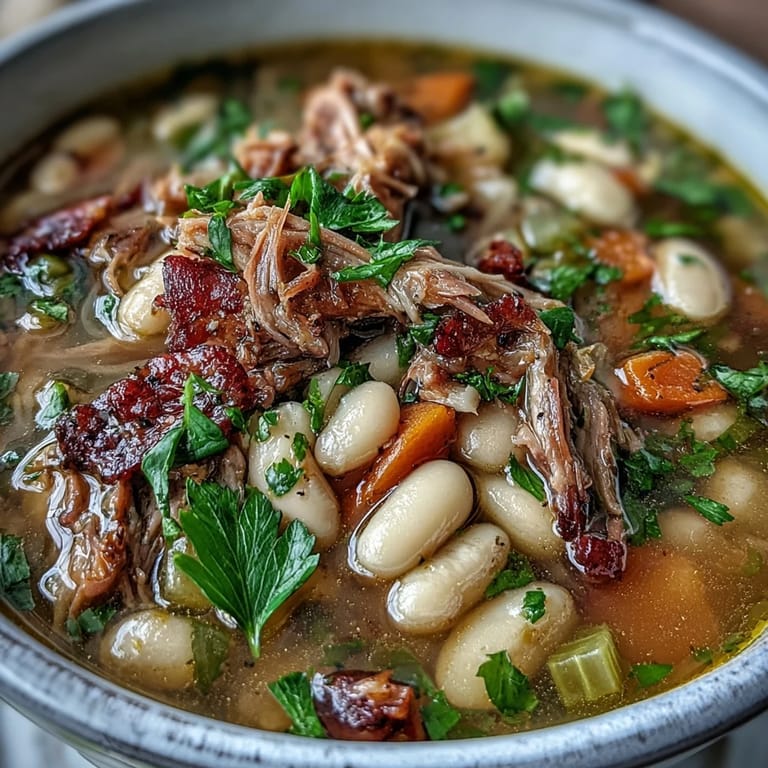
Pin This soup reminds me that the best meals aren't usually complicated—they're just made with patience and care, with ingredients that know how to work together. Make it once and it becomes yours, a recipe that feels less like instructions and more like a habit you're glad to have.
Recipe FAQ
- → What type of beans work best for this dish?
Dried great northern or cannellini beans soaked overnight provide the ideal tender texture and mild flavor for this preparation.
- → How long should the ham hock be cooked?
Simmer the ham hock with the beans and vegetables for about 2 hours until the meat is tender and easy to shred.
- → Can I use broth other than chicken broth?
Yes, low-sodium broth or water can be used; however, chicken broth adds depth and savory richness to the final dish.
- → How can I adjust the texture to be creamier?
Before serving, mash some of the beans against the side of the pot to thicken the broth and create a creamier consistency.
- → What herbs enhance the flavor in this soup?
Bay leaves, dried thyme, and a touch of smoked paprika complement the smoky ham and beans with aromatic, savory notes.
- → Is it possible to make this dish spicier?
Adding a pinch of cayenne pepper or a splash of hot sauce will introduce a pleasant spicy kick to the flavors.