 Pin
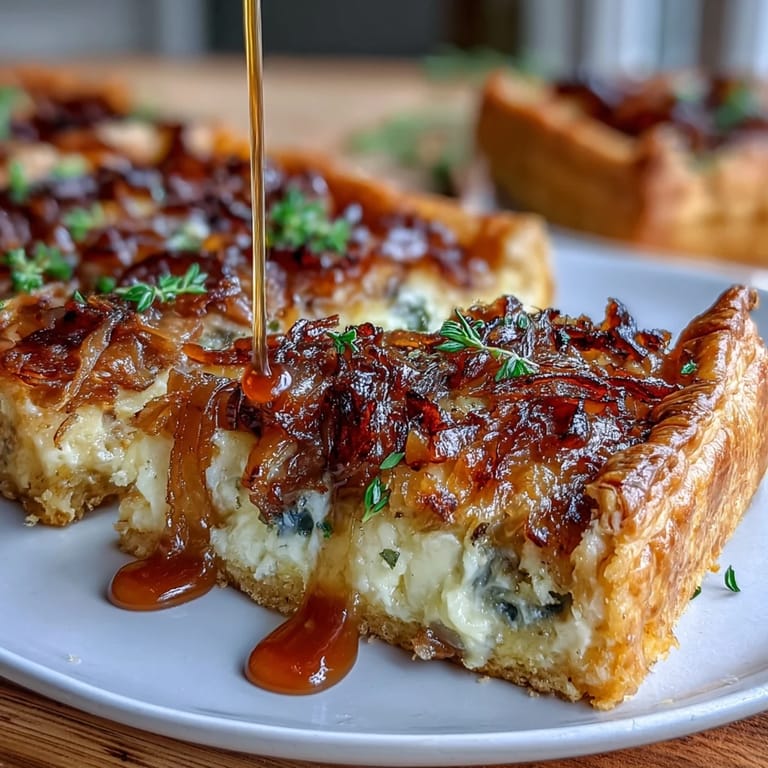
Pin There's something almost meditative about standing over a skillet of onions for half an hour, watching them transform from sharp and pale to deep amber ribbons. I discovered this tart on a gray Sunday when I had nowhere to be, just a farmers market bag of onions and the sudden urge to make something that felt more refined than my usual weekend cooking. The smell that filled my kitchen that afternoon—buttery, sweet, almost caramel-like—made me understand why the French have spent centuries perfecting this simple combination of onions, cheese, and pastry.
I made this for a potluck once, and I watched my neighbor—who's not easily impressed—have a second slice while chatting with someone else, completely distracted but also completely sold. That's when I knew this tart had staying power, that it wasn't just pretty to look at but genuinely memorable to eat.
Ingredients
- Puff pastry (1 sheet, 9-inch round): Thaw it in the fridge the night before if you remember, but honestly even room temperature works fine—just handle it gently so it stays flaky.
- Unsalted butter (2 tablespoons): Pairs beautifully with the olive oil to give the onions that rich, deep flavor without any salt interference.
- Olive oil (2 tablespoons): Prevents the butter from burning at medium-low heat and adds a subtle fruity note.
- Yellow onions (4 large, thinly sliced): Yellow onions are sweeter than white or red varieties, which is exactly what you want for caramelization.
- Salt and black pepper: Season as you go during cooking, not just at the end—it helps draw out the onion's natural sugars.
- Sugar (1 teaspoon): A small amount accelerates caramelization and deepens the sweetness without tasting sugary.
- Fresh thyme (2 teaspoons, or 1 teaspoon dried): Add this late in the cooking so it doesn't lose its fragrance to the long, slow heat.
- Eggs (3 large): Room temperature eggs whisk more smoothly and create a creamier custard.
- Heavy cream (1 cup): This is what makes the filling luxurious—don't skip it or substitute with milk alone.
- Whole milk (1/2 cup): Balances the richness of the cream and prevents the custard from being too heavy.
- Ground nutmeg (1/4 teaspoon): A tiny whisper of nutmeg elevates the custard in a way people can't quite identify but absolutely feel.
- Gruyere cheese (1 1/2 cups, grated): Gruyere melts beautifully and brings a subtle nuttiness that complements the onions perfectly.
- Dijon mustard (1 tablespoon): Creates a flavor barrier between the pastry and filling, keeping the crust crispy longer.
Tired of Takeout? 🥡
Get 10 meals you can make faster than delivery arrives. Seriously.
One email. No spam. Unsubscribe anytime.
Instructions
- Heat your oven and prep the pastry:
- Set the oven to 375°F (190°C) and let it come to temperature while you work. Roll out your puff pastry gently into the tart pan, then prick the base with a fork in scattered spots so it doesn't puff up unevenly during baking.
- Chill while you work on the onions:
- Pop the pastry-lined pan into the refrigerator while you move on to the next step—cold pastry stays flaky.
- Start the long, slow caramelize:
- In a large skillet, melt butter with olive oil over medium-low heat. Add your sliced onions with salt, pepper, and sugar, then stir occasionally and let them cook low and slow for 30 to 35 minutes. You're looking for deep golden-brown onions that smell almost sweet—this patience is non-negotiable.
- Finish the onions with thyme:
- During the last five minutes, stir in your fresh thyme leaves. Let the whole thing cool just slightly so the heat doesn't scramble your eggs when you add them later.
- Build your custard base:
- In a mixing bowl, whisk together eggs, heavy cream, milk, nutmeg, salt, and pepper until smooth and homogenous—no lumps or streaks of egg white.
- Layer it all together:
- Remove the pastry from the fridge and brush the base with Dijon mustard, then spread your cooled caramelized onions in an even layer. Sprinkle the grated Gruyere over the onions, then pour the custard mixture over everything so it fills the gaps and reaches the edges.
- Bake until golden and set:
- Slide it into the oven for 35 to 40 minutes, watching for a golden-brown top and a custard that's just barely set in the center—it should jiggle slightly when you shake the pan, not stay completely still. This is how you know it's cooked through but still creamy.
- Cool before slicing:
- Let the tart rest for about 10 minutes so the custard finishes setting and the flavors settle. This makes slicing infinitely cleaner and easier.
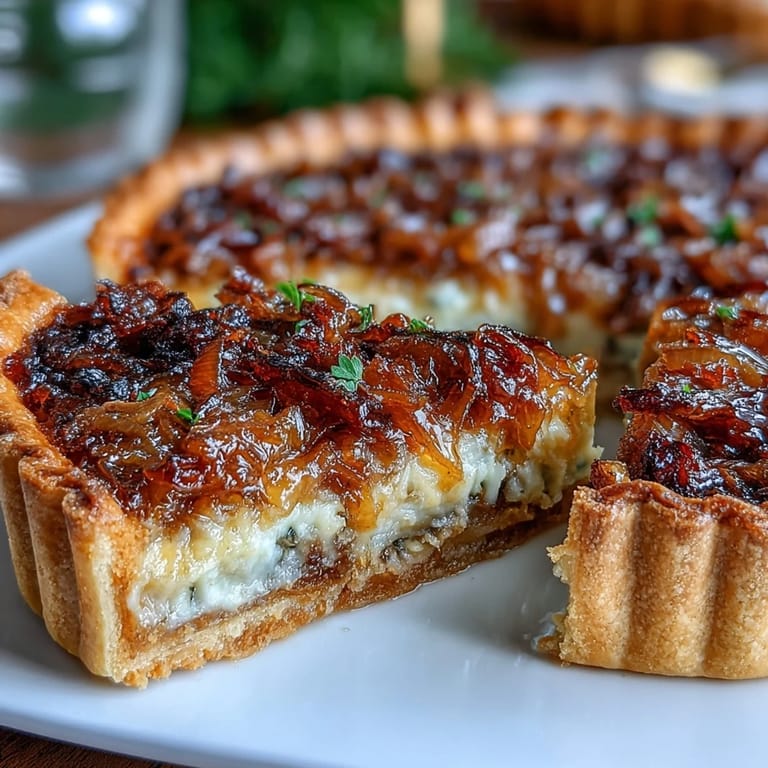 Pin
Pin My partner walked into the kitchen toward the end of baking and just stood there breathing in the aroma—no words, just a contented look that made the whole afternoon of cooking feel worthwhile. Food memories often live in those wordless moments.
The Magic of Slow Caramelization
Caramelizing onions is one of those cooking techniques that teaches you patience in the best way. You can't force it; you can only tend to it, stir it occasionally, and trust the process. The sugars in the onions are breaking down and browning, which transforms their sharp bite into deep, almost honey-like sweetness. I used to think it required constant attention, but I've learned it actually prefers neglect—stir too much and you interrupt the browning process. The rhythm of checking in every few minutes, breathing in that transforming smell, and adjusting the heat keeps me present in the kitchen without demanding all my focus.
Pastry Technique Matters Here
The flakiness of your pastry is what separates this tart from a quiche, and protecting that flakiness is worth thinking about. Prick the base with a fork to prevent excessive puffing, and that mustard layer genuinely acts as a moisture barrier between the wet filling and the dough. I've learned the hard way that if you skip either of these steps, you end up with a soggy bottom crust that feels more like bread than pastry. Temperature matters too—keeping the pastry cold as long as possible before it hits the oven gives it a head start on puffing and crisping before the moisture from the custard reaches it.
Building Flavor in the Custard
The custard filling is your chance to add layers of flavor without overwhelming the delicate onions and cheese. That quarter teaspoon of nutmeg sounds absurdly small until you taste how it whispers through the entire bite, adding complexity that makes people ask what that subtle spice is. The cream and milk ratio matters too—all cream would be too heavy and rich, but the milk lightens it while keeping it luxurious. Room temperature eggs whisk more easily and incorporate more air, which creates a fluffier, more delicate custard in the end.
- Whisk the eggs and cream together for at least a minute to fully incorporate air and create a smoother, creamier filling.
- Don't skip the mustard layer on the pastry base—it's the secret to keeping your crust from turning into mush.
- Let the tart cool for those full 10 minutes before cutting, even if it's hard to wait.
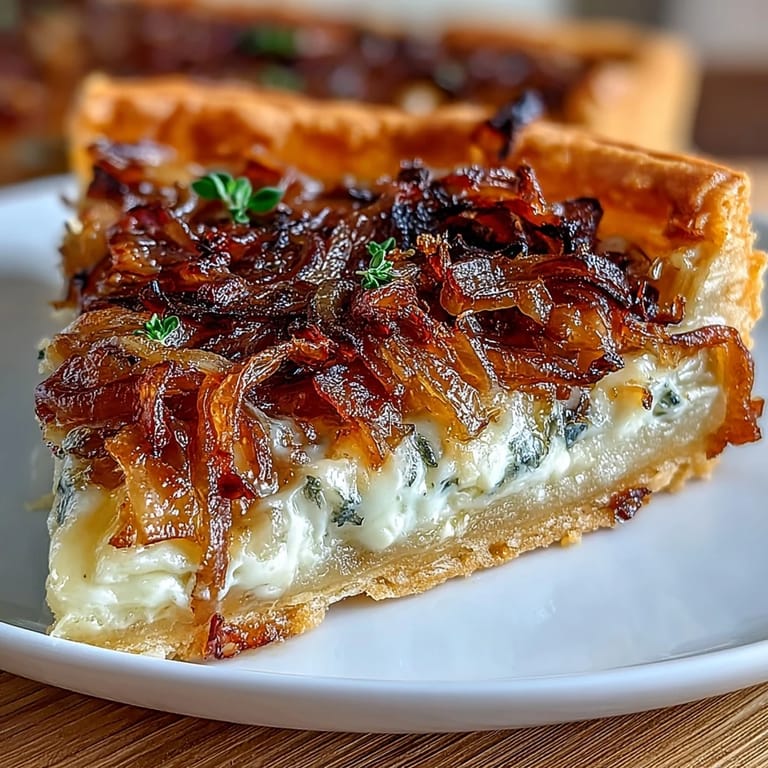 Pin
Pin This tart became my go-to dinner when I wanted to feel fancy without spending hours in the kitchen, and it somehow works for brunch, lunch, or an early supper. Serve it warm with a crisp white wine and some peppery greens, and let everyone rediscover why the French have been making versions of this for centuries.
Recipe FAQ
- → How do I caramelize onions properly?
Cook sliced onions slowly over medium-low heat with butter and olive oil, stirring frequently until they develop a deep golden color and sweet flavor, usually around 30-35 minutes.
- → Can I substitute Gruyere cheese?
Yes, Emmental or Swiss cheese work well as alternatives, offering a similar nutty and creamy profile.
- → What is the purpose of Dijon mustard in this tart?
Brushing Dijon mustard onto the pastry base adds a subtle tang and depth that complements the sweetness of the onions and richness of the cheese.
- → How should I prepare the puff pastry before baking?
Roll out the puff pastry, fit it into the tart pan, trim any excess, prick the base with a fork, and chill to prevent shrinkage during baking.
- → Can I add extra flavor to the caramelized onions?
Yes, a splash of white wine during caramelization enhances depth and complexity without overpowering the natural sweetness.