 Pin
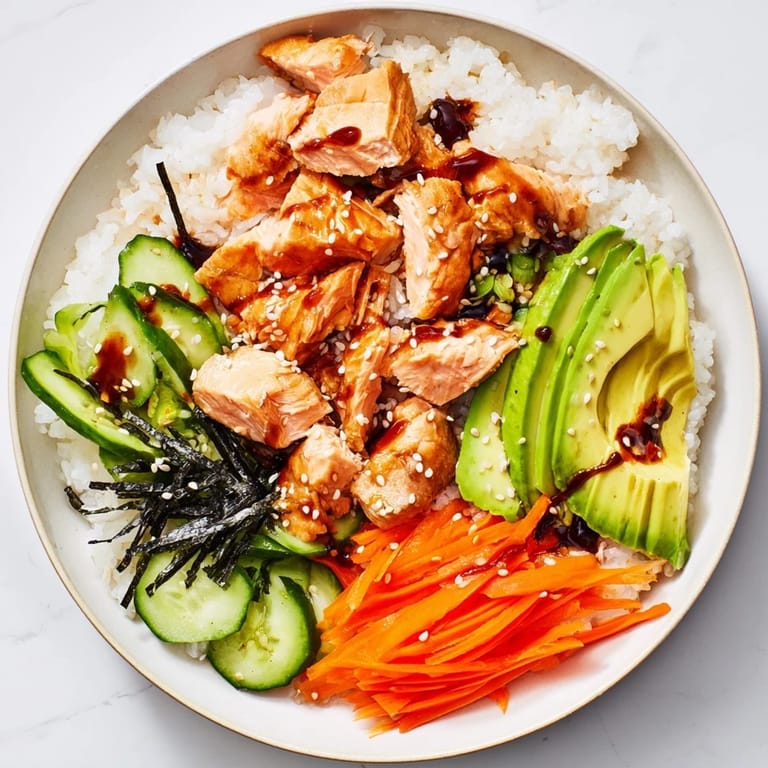
Pin There's something almost meditative about building a rice bowl from scratch—the way each element has its own moment in the pan, its own careful placement. I discovered this particular combination on a quiet Tuesday afternoon when I had leftover salmon, some chicken thighs that needed using, and the sudden realization that the best meals don't need to be complicated, just thoughtfully assembled. The creamy avocado against the tender, glazed protein, the brightness of fresh cucumber—it felt like cooking something that actually tasted the way I wanted to eat.
I remember making this for a friend who was skeptical about homemade Japanese food, convinced it required some secret knowledge I didn't possess. Watching them take that first bite, the way their expression shifted from polite curiosity to genuine surprise—that's when I realized this bowl works because it respects each ingredient enough to let it shine without fussy techniques or obscure ingredients.
Ingredients
- Salmon fillets (2, about 300 g): Buy them fresh the day you're cooking if possible; the smell tells you everything about quality, and fresh salmon cooks more forgivingly than frozen.
- Boneless, skinless chicken thighs (2, about 250 g): They're more forgiving than breasts and stay juicy even if you slightly overcook them, which happens more often than anyone admits.
- Japanese short-grain rice (2 cups): The starch content makes it stick together just enough to eat with chopsticks, but don't skip the rinsing—it makes the difference between gluey and tender.
- Soy sauce (5 tbsp total): Use the regular kind, not low-sodium; the salt is part of what makes the glaze work and taste balanced.
- Mirin (1 tbsp): This sweet rice wine gives the marinade a subtle gloss and depth that regular sugar can't quite replicate.
- Sake (1 tbsp): Dry white wine works in a pinch, but sake has a gentler finish that doesn't overpower the delicate fish.
- Sesame oil (2 tsp total): A little goes far—it's potent and nutty, and too much makes everything taste like you're eating oil rather than food.
- Avocado (1 ripe one): Cut it just before assembly so it doesn't brown and turn that sad, oxidized shade of gray.
- Cucumber (1 small): The thin slices stay crisp longer if you salt them lightly about 5 minutes before serving.
- Carrot (1 medium): The julienne cut catches the sauce better than chunks, and it adds a subtle sweetness that balances the savory marinade.
- Scallions (2): The green parts stay fresh and bright if you slice them just before eating; the white parts can go in earlier.
- Rice vinegar (1 tbsp): It's milder than regular vinegar and brings a clean sharpness to the sauce without being harsh.
- Toasted sesame seeds (2 tbsp): Toast them yourself if you have time—the flavor is noticeably warmer than pre-toasted versions.
- Nori sheets (1, optional): Cut them into thin strips so they stay crispy; they add a briny, umami whisper to each bite.
Tired of Takeout? 🥡
Get 10 meals you can make faster than delivery arrives. Seriously.
One email. No spam. Unsubscribe anytime.
Instructions
- Start the rice the smart way:
- Rinse the rice under cold water, rubbing it gently between your fingers until the water runs clear—this removes excess starch and prevents mushiness. Cook it in a rice cooker with 2 1/2 cups water, or in a covered pot on high heat until steaming, then low heat for 12 minutes; the timing varies by your stove, so listen for when the sizzling stops.
- Make the marinade:
- Whisk soy sauce, mirin, sake, sesame oil, and honey together in a small bowl until the honey dissolves and the mixture smells sweet and salty at once. This balance is what makes the proteins taste glazed rather than just saucy.
- Marinate the proteins:
- Divide the marinade between two shallow dishes—one for salmon, one for chicken—and let them sit for at least 10 minutes while you prep the vegetables. If you have extra time, 20 minutes makes them taste deeper.
- Cook the chicken first:
- Heat a nonstick skillet over medium heat and add the chicken thighs skin-side down if they still have it, or presentation-side down for visual appeal. Let them cook undisturbed for 4–5 minutes until the bottom is golden, then flip and cook another 4–5 minutes until cooked through; they should feel firm to the touch but still have a little spring to them.
- Move the chicken, introduce the salmon:
- Transfer the cooked chicken to a cutting board to rest for a few minutes—this keeps it tender when you slice it. Add the salmon fillets to the still-warm pan and cook for 2–3 minutes per side, watching for the color to become opaque and the edges to flake slightly when you touch them with a fork.
- Prepare the raw toppings:
- Slice the avocado right before assembly, cut the cucumber into thin half-moons, julienne the carrot, and slice the scallions—the vegetables should look fresh and distinct, not wilted together.
- Make the finishing sauce:
- Whisk soy sauce, rice vinegar, sesame oil, and sugar in a small bowl until the sugar dissolves completely; taste it and adjust the balance—more vinegar if it feels flat, more oil if it feels sharp.
- Assemble the bowls:
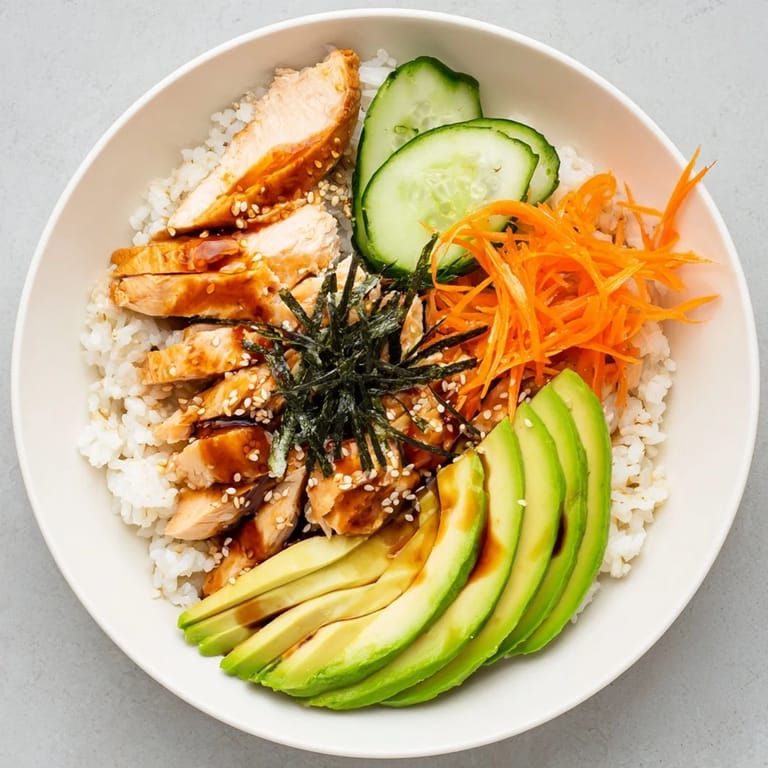
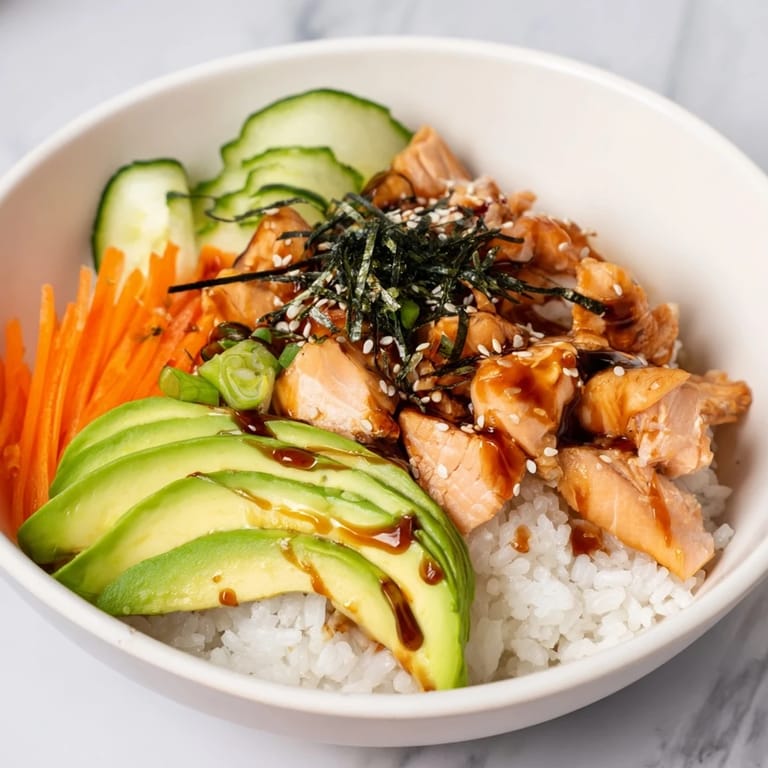
- Divide the fluffed rice among four serving bowls, then arrange the sliced chicken, flaked salmon, avocado, cucumber, carrot, and scallions in a loose pattern over the rice. Drizzle with the finishing sauce, sprinkle with sesame seeds and nori strips, and serve immediately while everything still feels distinct and the rice is warm.
- The ice cube reheating hack:
- If you're reheating a pre-assembled bowl, place a single ice cube in the center of the rice, cover with a microwave-safe lid or plastic wrap, and microwave on high for 1–2 minutes. The ice melts slowly and creates steam that warms the rice without drying it out; remove any remaining ice before eating.
 Pin
Pin What I didn't expect was how this bowl became comfort food for me on nights when everything felt uncertain. There's something grounding about arranging each element with intention, about creating something that's both nourishing and beautiful without pretending to be fancier than it is.
Why This Works as a Complete Meal
This isn't a side dish masquerading as dinner—it's genuinely filling because of the protein combination. Two different proteins mean more texture, more flavor complexity, and honestly, it keeps you satisfied longer than choosing one or the other. The ratio of vegetables to rice to protein feels balanced, which is why you don't finish eating it and immediately want dessert.
The Reheating Secret That Actually Works
Most leftover rice becomes a brick after a day in the fridge, which is why so many people dread rice bowl leftovers. The ice cube hack sounds gimmicky until you see it in action—the ice melts slowly and creates gentle, moist heat instead of harsh microwave radiation that sucks all the moisture out. It's such a small thing, but it means you can actually prepare these bowls ahead without them turning into something you'll regret eating.
Building Layers of Flavor
The real skill in this bowl isn't in the cooking—it's in understanding how the flavors stack. The glazed proteins are salty and slightly sweet from the mirin, the vegetables add freshness and crunch, and the finishing sauce brings everything into conversation. You could mix in everything immediately, but letting each component stay distinct as you eat means every bite tastes different, which keeps it interesting even when you're eating the same ingredients twice.
- Don't skip the rice vinegar in the finishing sauce; it brightens everything and prevents the bowl from tasting heavy.
- Taste the marinade before using it—if it seems too salty, you can dilute it slightly with a splash of water.
- The vegetables should stay visibly separate from each other; they'll mingle slightly as you eat, which is perfect.
 Pin
Pin This bowl proves that the best meals don't require hours of effort or unusual ingredients—just attention to what you're doing and respect for the natural flavors of what you're cooking. Make it once and you'll find yourself reaching for it whenever you want something that feels both comforting and fresh.
Recipe FAQ
- → How does the ice cube help with reheating rice?
Placing an ice cube on the rice while microwaving creates steam as it melts, gently reheating the rice without drying it out.
- → What marinade ingredients enhance the flavors?
The marinade combines soy sauce, mirin, sake, sesame oil, and honey, adding a balanced mix of savory, sweet, and nutty notes to the proteins.
- → Can I swap any toppings for other vegetables?
Yes. Avocado can be replaced with edamame or steamed broccoli, and additional veggies can be added for variety and texture.
- → What cooking methods are used for the proteins?
Chicken thighs are pan-seared until golden and cooked through, while salmon fillets are cooked briefly for a tender texture.
- → Is this bowl suitable for a dairy-free diet?
Yes, all ingredients are dairy-free, suitable for those avoiding dairy products.
- → How should the sauce be prepared and used?
Combine soy sauce, rice vinegar, sesame oil, and sugar; whisk until sugar dissolves. Drizzle over the bowl for a tangy finish.