 Pin
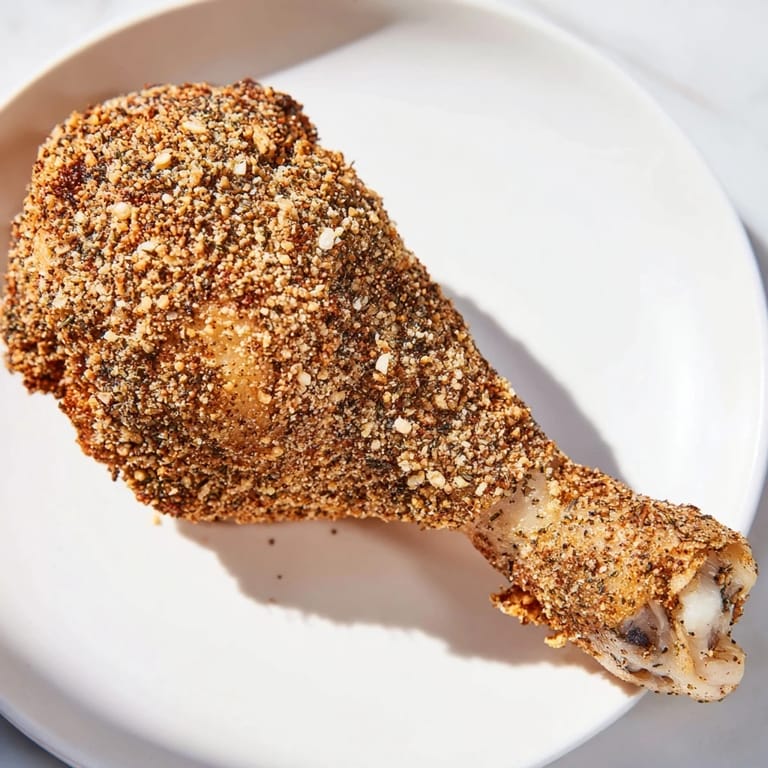
Pin The first time I successfully nailed the KFC spice blend, I was standing in my kitchen at midnight on a random Tuesday, frustrated after weeks of ordering takeout because homemade fried chicken never quite measured up. That night, I'd finally gathered every single spice—paprika, celery salt, ground ginger, sage—and mixed them with almost reverent attention. When I bit into that first piece of golden, crackling chicken twenty minutes later, something clicked: it wasn't just similar to the real thing, it was better, because it was mine. Now, whenever that savory-herbaceous aroma fills my kitchen, it reminds me that sometimes the best discoveries happen when you stop trying to be perfect and just commit to the experiment.
I made this chicken for my brother's surprise birthday dinner, and watching him take that first bite—eyes closed, the corners of his mouth turning up like he'd just tasted something impossible—made every minute of prep work worth it. He kept saying "this is actually insane," between mouthfuls, and my mom even asked for the recipe before dessert, which in our family is basically the highest compliment possible.
Ingredients
- Chicken (8 pieces, skin-on, bone-in): Skin-on and bone-in pieces stay juicier inside while getting gorgeously crispy outside—thighs are especially forgiving and stay tender even if you slightly overcook them.
- Buttermilk (250 ml): This isn't just for flavor; the acidity tenderizes the chicken and helps the spice coating cling like it's meant to be there, creating that sealed, golden exterior.
- All-purpose flour (200 g): The base that carries all your spices, and you want good contact between it and the chicken for maximum crispiness.
- Paprika (2 tsp): The backbone of that signature color and warmth—smoked paprika adds extra depth if you're feeling adventurous.
- Garlic powder, onion powder, dried thyme, basil, oregano (1 tsp each): Together these create savory layers that feel complex without being overwhelming, like someone whispered secrets into the coating.
- Celery salt (1/2 tsp): This is the secret weapon that makes people say "I can't quite place what makes this taste so good."
- White pepper, black pepper, mustard powder, ground ginger, cayenne, sage (1/2 tsp each): These work in harmony—ginger adds subtle heat, sage brings earthiness, cayenne gives warmth without demanding attention, and mustard powder ties everything together mysteriously.
- Vegetable oil (1 liter): You need enough oil to fully submerge the chicken so it fries evenly on all sides; shallow oil means pale spots and disappointment.
Tired of Takeout? 🥡
Get 10 meals you can make faster than delivery arrives. Seriously.
One email. No spam. Unsubscribe anytime.
Instructions
- Prepare the buttermilk bath:
- Whisk together buttermilk, salt, and black pepper in a large bowl, then submerge all your chicken pieces and cover. Let it rest in the refrigerator for at least an hour—overnight is genuinely better because the acid has more time to work its magic and the flavors penetrate deeper.
- Build your spice blend:
- Combine all the flour, paprika, garlic powder, onion powder, thyme, basil, oregano, celery salt, white pepper, black pepper, mustard powder, ginger, cayenne, and sage in a separate bowl. Whisk it thoroughly so every speck of flour is touched by spice; uneven distribution means some bites will taste bland and others will be electric.
- Coat the chicken:
- Pull chicken from the buttermilk, let the excess drip back into the bowl, then press each piece into your spiced flour with genuine intention—don't just dust it, really work the coating into every crevice. Place coated pieces on a wire rack and let them sit for ten minutes; this helps the coating bond and creates a tighter seal.
- Heat your oil:
- Bring your oil to exactly 170°C (340°F) in a deep fryer or heavy pot—use a thermometer because guessing leads to either pale, greasy chicken or burnt exteriors. The oil should shimmer and ripple slightly but not smoke.
- Fry in batches:
- Carefully lower chicken into the hot oil without overcrowding; each piece needs space to cook evenly and the oil needs room to circulate. Fry for 12–15 minutes, turning occasionally, until the exterior is deep golden brown and an instant-read thermometer inserted into the thickest piece reads 75°C (165°F) internally.
- Drain and rest:
- Transfer to a wire rack or paper towels so air can get underneath and prevent steam from making the bottom soggy. Let it rest for five minutes—I know it's hard to wait, but this is when the crust sets up and becomes absolutely shatteringly crispy.
 Pin
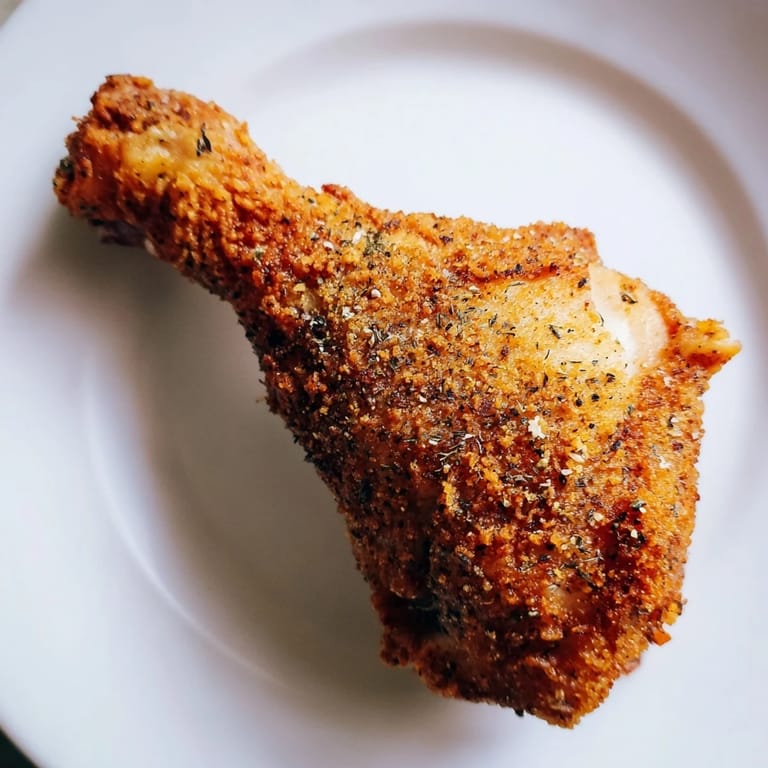
Pin There's a moment just after the chicken comes out of the oil—still crackling softly, steam rising from the perfectly bronzed skin—when someone walks into your kitchen and their entire face changes. That's when you realize you've created something that tastes like comfort and showmanship at the same time, and suddenly fried chicken stops being just dinner and becomes a small, delicious act of love.
The Secret Behind the Spice Blend
People always assume that replicating the famous restaurant taste requires some impossible ingredient or technique, but honestly it's just about commitment to the spice combination. The paprika gives you that signature reddish-golden color, while the celery salt—which probably isn't in your typical spice rack—adds this inexplicable savory depth that makes people lean in and ask for the recipe. The trick is mixing everything thoroughly before you coat the chicken so that every single piece gets the full spectrum of flavors rather than some parts being over-spiced and others bland.
Marinading and Timing
I learned the hard way that rushing the marinade turns out dry chicken, so now I always do it overnight whenever possible. The buttermilk doesn't just flavor the chicken—the acidity breaks down the muscle fibers, which sounds scientific but basically means your chicken stays ridiculously tender even if you're not a perfect fryer. If you're short on time, an hour minimum is acceptable, but the difference between one hour and overnight is genuinely noticeable in how juicy the inside stays.
Serving and Storage Ideas
Fresh fried chicken is best served immediately while the crust is still crackling, but I've also made batches ahead and reheated them in a 180°C oven for about ten minutes, which brings the crispiness back surprisingly well. Leftover chicken keeps for up to four days in the refrigerator in an airtight container, and honestly it makes incredible sandwiches or salad toppers even if the crust isn't quite as shattering as when it was fresh.
- Pair it with creamy coleslaw, crispy fries, and soft biscuits for the full experience.
- If you're avoiding deep frying, an air fryer works at 200°C for about 20 minutes, though the texture won't be quite as dramatically crispy.
- Adjust the cayenne pepper up or down depending on your heat tolerance—the blend works beautifully even without it if you prefer milder flavors.
 Pin
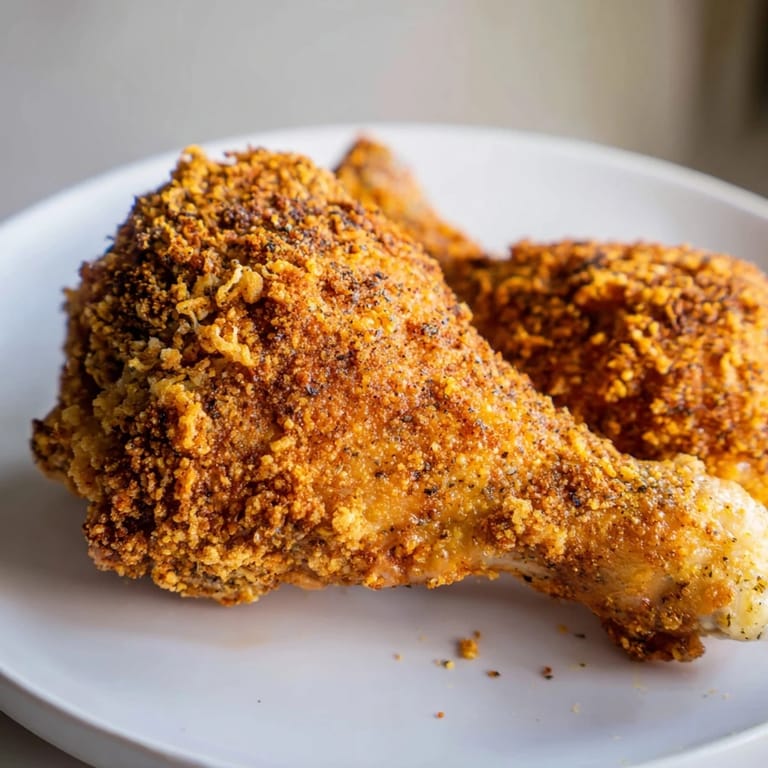
Pin This recipe has become my go-to for impressing people without spending all day in the kitchen, and there's something deeply satisfying about cracking into that golden crust and tasting layers of flavor that taste homemade and special. Once you've made this a few times, you'll stop thinking of fried chicken as takeout food and start owning it as something you can do better.