 Pin
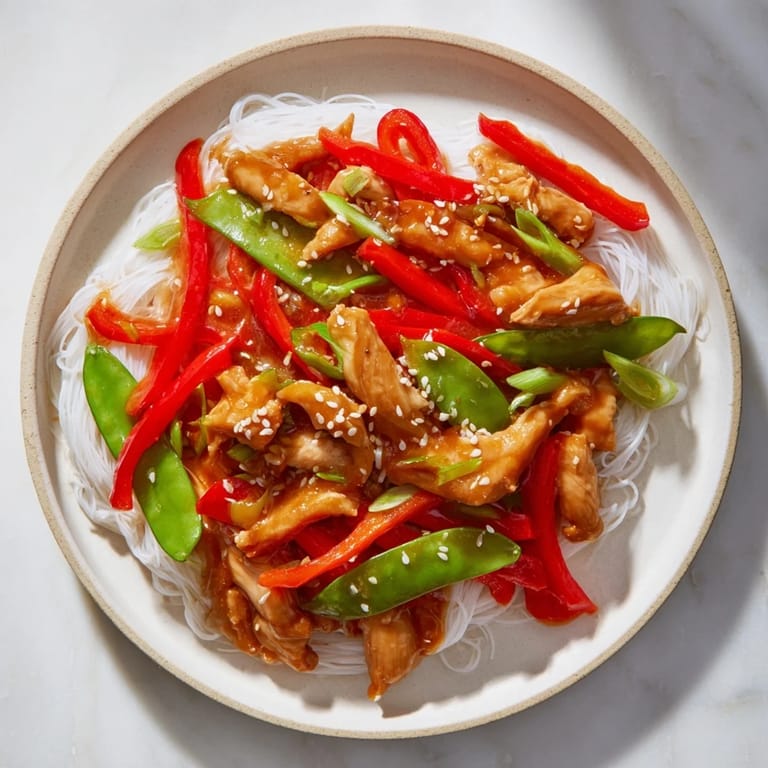
Pin I discovered this dish on a Tuesday night when my fridge held three things: chicken thighs, a half-used jar of hoisin, and a desperate need for dinner. The first time I tossed those sticky-glazed strips over noodles, I understood why this flavor combination has stayed alive in kitchens for generations—it hits every note at once, sweet and savory and just spicy enough to wake you up.
My sister texted me a photo of this dish on her kitchen counter one evening, asking what I'd put in the sauce. By the time we finished our call, she'd already made it for her kids, and now it's the meal they request when they want something that feels fancy but doesn't require fancy effort. That's when I knew it belonged in regular rotation.
Ingredients
- Boneless, skinless chicken thighs or breasts (500 g): Thighs stay juicier, but breasts work fine if that's what you have—just don't skip the cornstarch coating, which keeps them tender.
- Cornstarch (1 tbsp): This creates a subtle crust that grabs the sauce and holds onto it instead of letting it slide off.
- Salt and black pepper: Season the chicken generously before cooking; this is where flavor begins.
- Soy sauce (4 tbsp): The backbone of the sauce—use full-sodium if you can, as it carries more depth.
- Hoisin sauce (2 tbsp): Thick, fermented, slightly sweet—don't skip it or substitute lightly, as it defines the whole character.
- Brown sugar (2 tbsp): Softens the saltiness and creates that glossy, clinging sauce that makes every bite satisfying.
- Rice vinegar (1 tbsp): A small amount cuts through richness without making anything sour or sharp.
- Garlic and ginger (2 cloves and 1 tbsp): Mince them fresh—dried versions taste tired by comparison.
- Sesame oil (1 tsp): A finishing touch of aromatic warmth that shouldn't be skipped or overdone.
- Red bell pepper and snap peas: Choose vegetables that appeal to you; the point is color, crunch, and freshness against the rich sauce.
- Spring onions (4, plus garnish): Some go into the pan for mild allium flavor, and the rest are scattered fresh on top for sharpness.
- Rice noodles or leftover pasta (200 g dried or 3 cups cooked): Delicate rice noodles are traditional, but honestly, any pasta you have on hand absorbs the sauce beautifully.
- Neutral oil (2 tbsp total): Canola or sunflower work best; olive oil burns and tastes wrong here.
- Toasted sesame seeds (2 tbsp): Scatter these at the end for texture and a whisper of nutty flavor.
Tired of Takeout? 🥡
Get 10 meals you can make faster than delivery arrives. Seriously.
One email. No spam. Unsubscribe anytime.
Instructions
- Prep your noodles if needed:
- If you're using dried rice noodles, follow the package instructions, then rinse them under cold water and set them aside so they don't clump together while you cook everything else. If you're recycling cooked pasta, have it ready on a plate.
- Coat the chicken:
- In a bowl, tumble your chicken slices with cornstarch, salt, and pepper until every piece is lightly dusted—this coating is what keeps the chicken silky and helps the sauce cling. Don't skip this step even if you're in a hurry.
- Mix your sauce:
- Whisk all the sauce ingredients together in a small bowl—soy, hoisin, brown sugar, water, rice vinegar, sesame oil, garlic, ginger, and red pepper flakes if you want heat. Taste it raw if you dare; it should balance sweet and salty and a little tangy, with garlic and ginger singing in the background.
- Sear the chicken:
- Heat one tablespoon of oil in your wok or large skillet over medium-high heat until it shimmers and moves like water. Lay the chicken in a single layer and let it sit for a moment before stirring—this creates a light golden crust that tastes better than pale, boiled-looking chicken. After 4 to 5 minutes, when the pieces are cooked through and golden, transfer them to a plate.
- Cook the vegetables:
- Add the remaining oil to the same pan and stir-fry your bell pepper and snap peas for 2 to 3 minutes until they're tender but still have a snap to them when you bite down. You're after that balance between soft and crisp.
- Bring it together:
- Return the chicken to the pan, add your spring onions, and pour in the sauce. Stir everything to coat, then let it bubble gently for 1 to 2 minutes until the sauce thickens slightly and becomes glossy. You'll smell the garlic and ginger really wake up at this moment.
- Finish with noodles:
- Add your cooked rice noodles or pasta and toss the whole thing together over the heat, making sure the noodles are warm and every strand is kissed with sauce. This takes a minute or two.
- Plate and garnish:
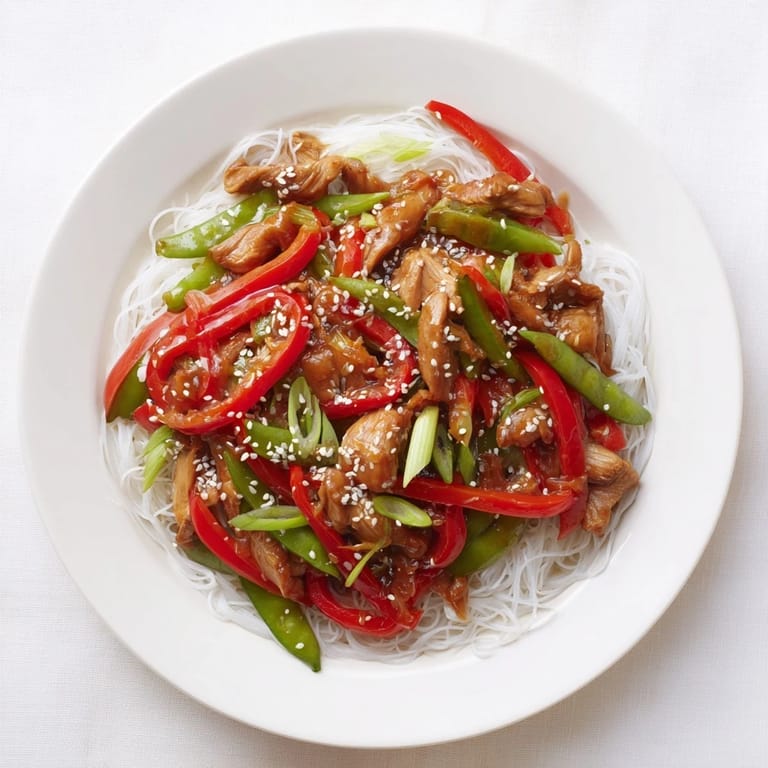
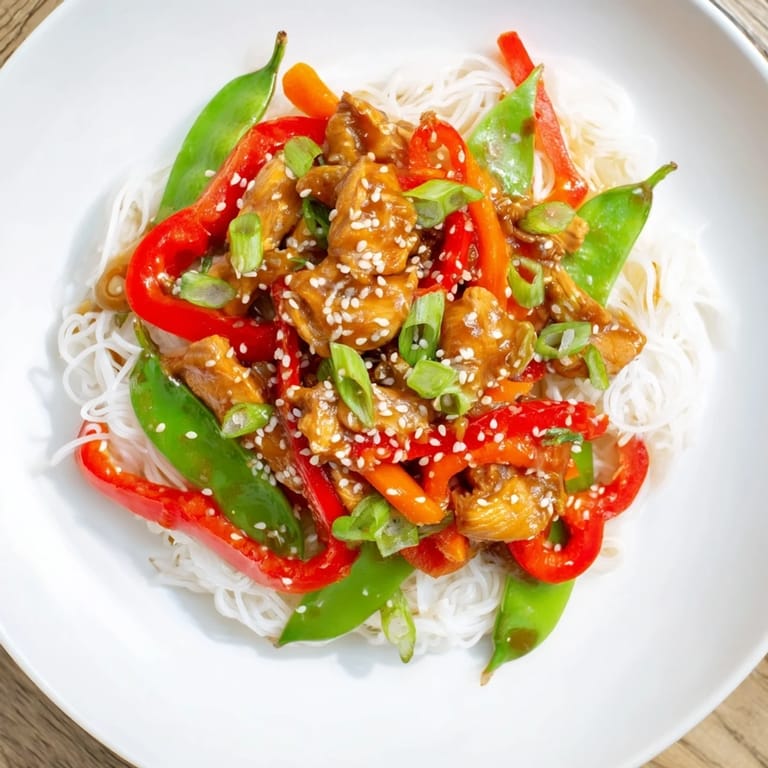
- Divide among bowls or plates, scatter fresh spring onions and sesame seeds over the top, and serve right away while everything is still warm.
 Pin
Pin I made this for my partner on an ordinary Thursday, and they asked if I'd ordered it from somewhere because they didn't believe I'd cooked it at home. That small moment—the surprise that something this bold and balanced could come from a normal weeknight—is why I come back to it again and again.
Why This Sauce Works
The magic isn't in any single ingredient; it's in how they speak to each other. Soy sauce and hoisin create a foundation that tastes fermented and deep, brown sugar softens that saltiness into something almost caramel-like, and the acid from vinegar and the warmth from ginger and garlic prevent the whole thing from feeling one-dimensional. The sesame oil arrives last, a whisper of toasted nuttiness that makes you want another bite.
Customization Without Apology
Swap the chicken for shrimp if that's what you're craving, or crumbled tofu if you want something vegetarian—the sauce loves everything equally. Adjust the sweetness by tasting as you go; if brown sugar feels like too much, reduce it by half a tablespoon. Want extra crunch? Throw in water chestnuts, baby corn, or broccoli florets in those final minutes of cooking with the vegetables.
Serving and Pairings
Serve this hot, right from the wok or skillet into waiting bowls. A light, aromatic white wine like Riesling cuts through the richness beautifully and doesn't compete with the bold flavors. Leftovers keep in the fridge for three days, though they're better eaten fresh—the noodles absorb more sauce as they sit, which some people love and others find too intense.
- Scatter extra sesame seeds and spring onions on top just before serving for color and freshness.
- If you're feeding picky eaters, keep the red pepper flakes on the side so people can add as much heat as they want.
- Make the sauce the night before if you need to save time; it actually tastes better after sitting.
 Pin
Pin This is the kind of meal that teaches you confidence in the kitchen—bold enough to impress people you care about, forgiving enough that you don't have to be perfect. Make it once, and it becomes yours.
Recipe FAQ
- → Can I use other proteins besides chicken?
Yes, tofu or shrimp can be substituted easily for a different protein option while maintaining the dish's flavor profile.
- → What is the best way to cook rice noodles for this dish?
Cook the dried rice noodles according to package instructions, then rinse with cold water to stop cooking and prevent sticking before adding to the stir-fry.
- → How can I adjust the sauce's sweetness?
You can increase or decrease the brown sugar in the sauce to tailor the sweetness to your preference.
- → Which vegetables work well in this stir-fry?
Red bell peppers, snap peas, and spring onions provide color, crunch, and freshness but feel free to add water chestnuts or baby corn for extra texture.
- → Are there any allergen considerations?
This dish contains soy and gluten from the sauces, and shellfish if oyster sauce is used. Gluten-free alternatives and allergen checks are recommended.