 Pin
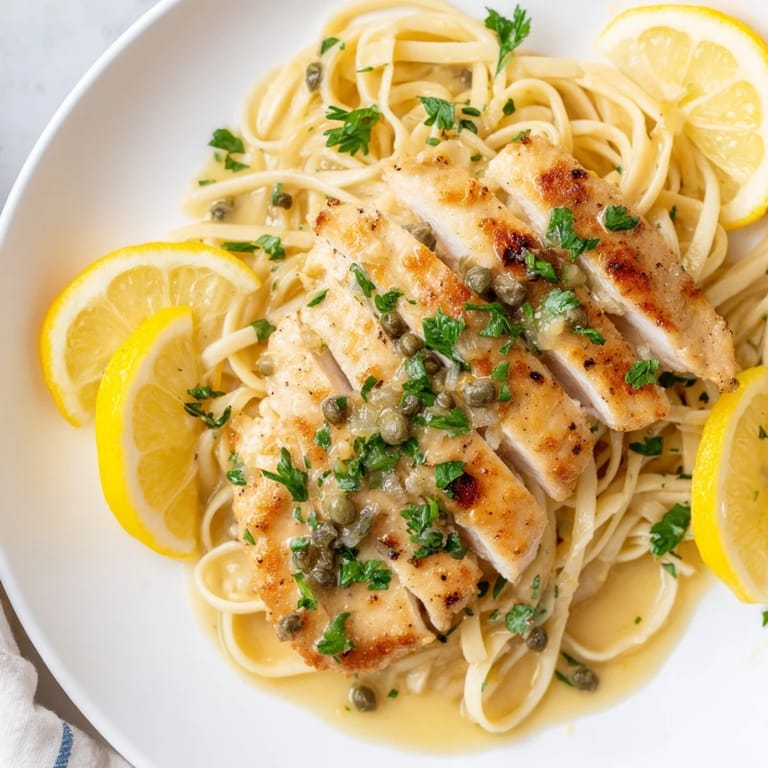
Pin There's something about the smell of lemon and capers hitting a hot pan that immediately transports me to a small trattoria I stumbled into years ago on a rainy Tuesday. I didn't plan to go there—I was just wandering—but the kitchen window was open and that bright, tangy aroma pulled me in like a hook. I ordered chicken piccata and watched the chef work with such ease, as if he'd made it a thousand times before and could do it in his sleep. When it arrived, golden and glistening, I realized right then that some dishes don't need to be complicated to be unforgettable.
I made this last spring when my sister was visiting and swore she didn't have time for a real meal before catching her train. I started cooking and she lingered at the kitchen counter, talking about her new job, and by the time the pasta hit the plate, she'd canceled her plans for another hour. We sat there in the afternoon light, twirling noodles and laughing at nothing in particular, and that's when I knew this recipe was something special—it brings people to the table without making a fuss about it.
Ingredients
- Boneless, skinless chicken breasts (2 large): Pound them gently to an even thickness so they cook through evenly without drying out; thin, uniform cutlets are your secret to tender chicken every time.
- All-purpose flour (½ cup): This light dredge creates a delicate crust that catches and holds the pan's heat, giving you that subtle golden exterior without a heavy coating.
- Olive oil (2 tablespoons) and unsalted butter (1 tablespoon): The combination of oil and butter prevents the butter from burning while cooking at medium-high heat and adds flavor.
- Fresh lemon juice (⅓ cup, about 2 lemons): Always squeeze fresh; bottled lemon juice tastes flat and misses the bright, living quality that makes this dish sing.
- Capers (¼ cup, drained and rinsed): Rinsing them removes excess salt and brine, letting their subtle briny-sour character complement rather than overpower the delicate sauce.
- Dry white wine (½ cup) or chicken broth: The wine adds depth and acidity; if you skip it, use broth instead, but the sauce won't have quite the same sophistication.
- Fresh parsley (2 tablespoons, finely chopped): Add this at the very end so it stays vibrant green and doesn't turn dark and bitter from heat.
- Spaghetti or linguine (12 ounces): Cook it to true al dente—it should have the slightest resistance when you bite it, because it will soften slightly in the sauce.
Tired of Takeout? 🥡
Get 10 meals you can make faster than delivery arrives. Seriously.
One email. No spam. Unsubscribe anytime.
Instructions
- Get the pasta going:
- Bring a large pot of salted water to a rolling boil and cook your pasta according to package directions, but taste it a minute or two early so you catch that perfect al dente moment. Reserve about ½ cup of the starchy pasta water before draining—this liquid gold will help bind everything together at the end.
- Butterfly and season the chicken:
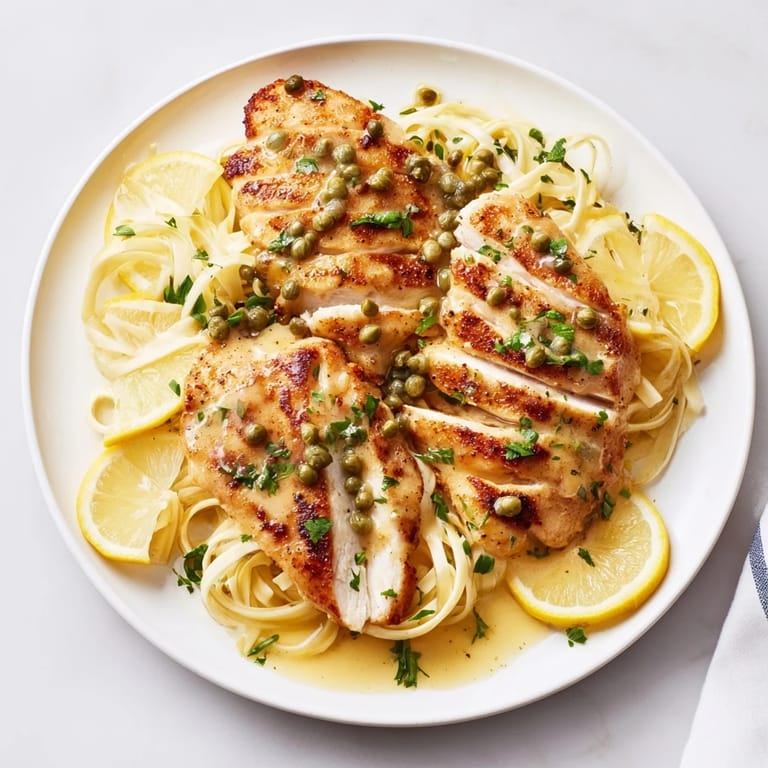
- Lay each chicken breast flat on your cutting board and, using a sharp knife, carefully slice it in half horizontally to create four thin cutlets. Season both sides generously with salt and pepper, then dredge lightly in flour, tapping off the excess so you have just a whisper of coating.
- Sear until golden:
- Heat your skillet over medium-high heat and add the oil and butter together, letting them get hot and fragrant before the chicken goes in. When the cutlets hit the pan, you should hear an immediate sizzle; cook them for about 3-4 minutes per side until they're golden brown and cooked through, then transfer them to a plate and loosely tent with foil to keep them warm.
- Build the sauce magic:
- In the same unwashed skillet, add your minced garlic and let it sizzle for just 30 seconds—don't walk away or it'll burn. Pour in your wine and use a wooden spoon to scrape up all those flavorful brown bits stuck to the bottom, then add the lemon juice, drained capers, and chicken broth and let it all bubble gently for 2-3 minutes.
- Finish with butter and silk:
- Turn the heat down low and whisk in the 2 tablespoons of butter, watching as the sauce transforms into something glossy and luxurious. Slide the chicken back into the pan and spoon that beautiful sauce over each cutlet.
- Bring it all together:
- Add your drained pasta to the skillet and gently toss everything together, letting the noodles soak up the sauce and the chicken warm through. If it looks dry, add a splash or two of that reserved pasta water until the sauce clings to every strand.
- Plate and serve:
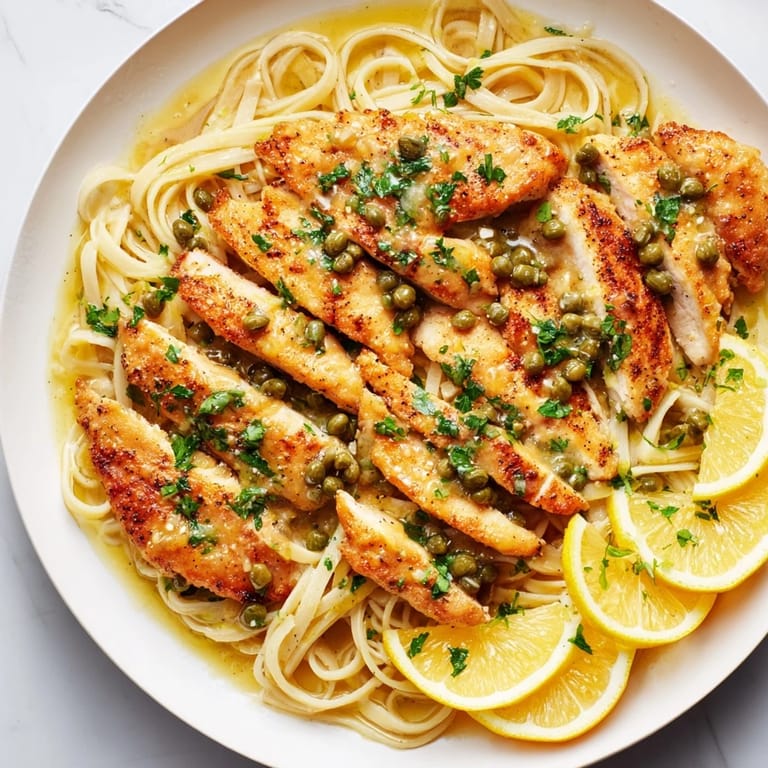
- Divide the pasta among bowls or plates, top each portion with a chicken cutlet, and spoon any remaining sauce over the top. Scatter with fresh parsley and a few lemon slices if you have them, and serve immediately while everything is still warm.
 Pin
Pin There was a Wednesday night when everything felt rushed—my daughter had just learned to ride her bike and my partner was stuck at work late—but I made this anyway. Something about the ritual of it, the careful attention to each step, felt like the one thing I could control that evening. We all sat down together as the sun was setting, and somehow that meal became the moment everything felt less frantic.
Why This Dish Works So Well
What makes chicken piccata so elegant is its simplicity—there's nowhere for a mistake to hide, which is exactly why it feels like such a triumph when everything comes together. The sour notes from the lemon and capers keep the richness of the butter and oil from feeling heavy, and the pasta's starch binds it all into something that tastes far more sophisticated than the effort required. It's a dish that rewards attention but doesn't demand perfection, which is why it's equally at home on a weeknight dinner table or served to people you're trying to impress.
Building Flavor Layers
Each element in this dish earns its place, and understanding that helps you cook with intention. The flour on the chicken isn't just for texture—it's for flavor, because those golden-brown bits are what give the pan character. When you deglaze with wine, you're not just adding liquid; you're dissolving all that accumulated flavor and building a foundation for the sauce. The capers contribute not just saltiness but a subtle funky depth that makes people taste the sauce and wonder what that secret ingredient is—which is always satisfying.
Making It Your Own
This recipe is a foundation, and once you make it a few times and feel confident, you can start playing with it. Angel hair pasta is lovely for a lighter supper, and some cooks like to add a handful of fresh spinach at the end so it wilts into the sauce and adds color. If you're watching dairy, you can use a little less butter or substitute olive oil in the final whisking—the sauce won't be quite as silky, but it will still taste bright and delicious.
- A few capers go a long way, so if you're not sure about them, start with a smaller amount and adjust to your taste.
- White wine can be replaced with chicken broth, apple cider vinegar, or even extra lemon juice if you don't drink or cook with alcohol.
- This dish tastes best served immediately, so have your plates ready and your diners seated before you plate up.
 Pin
Pin This is one of those recipes that feels like a small act of kindness you're performing for yourself and whoever else gets to eat it. The simplicity is the whole point, and the brightness of it all is exactly what you need when life feels a little too heavy.
Recipe FAQ
- → What type of pasta works best with this dish?
Spaghetti or linguine noodles are ideal, as their shape holds the light lemon caper sauce well. Angel hair can be used for a lighter texture.
- → Can I substitute wine in the sauce?
Yes, dry white wine can be replaced with chicken broth for a milder, alcohol-free sauce without compromising flavor.
- → How do I ensure the chicken stays tender?
Slice the chicken breasts thinly and cook them over medium-high heat until golden, avoiding overcooking to keep them juicy and tender.
- → What can be used to thicken the sauce if needed?
The sauce naturally thickens slightly as butter is whisked in. Adding a bit of reserved pasta water also helps achieve a silky consistency without excess thickening.
- → Are there recommended garnishes for enhanced flavor?
Fresh parsley and thin lemon slices add brightness and a fresh finish, complementing the tangy capers and lemon in the sauce.