 Pin
Pin I discovered this shrimp fried rice hack during a particularly chaotic Tuesday night when my roommate texted that she'd be home in twenty minutes and I had nothing prepared. Standing in front of my nearly empty fridge, I remembered the bag of frozen shrimp and yesterday's jasmine rice, and something clicked—what if I stopped overthinking this and just threw everything together fast? The result was so satisfying and came together so quickly that it became my go-to whenever I needed dinner on the table before my patience ran out.
My neighbor came over one evening just as the aroma of soy sauce and toasted sesame oil filled my kitchen, and she asked if she could stay for dinner—that's when I realized this quick recipe had somehow become something people actually wanted to share. It's the kind of dish that feels humble but makes everyone at the table feel cared for.
Ingredients
- Medium shrimp (7 oz): Thaw quickly under cold water and pat completely dry so they caramelize instead of steam—this tiny step changes everything.
- Eggs (2 large): Whisk them together and have them ready; they cook faster than you think and scrambled egg is your binding agent.
- Frozen mixed vegetables (1 cup): No thawing needed, and honestly they stay fresher-tasting this way than fresh vegetables that have sat in your crisper.
- Jasmine rice (2 cups cooked, chilled): Day-old rice is non-negotiable—warm rice will clump no matter what you do, and cold rice separates beautifully into individual grains.
- Soy sauce (2 tbsp): This is your umami foundation; taste as you go because saltiness varies wildly between brands.
- Oyster sauce (1 tbsp): Optional but it adds a savory depth that soy alone can't quite reach, though you can skip it for vegetarian versions.
- Sesame oil (1 tsp): A small amount goes a long way—this is about aroma and finishing flavor, not quantity.
- Ground white pepper (1/2 tsp): It dissolves better than black pepper and gives you that clean heat without visible specks.
- Vegetable oil (1 tbsp): Use something neutral with a high smoke point; you need heat to get good color on the shrimp.
- Scallions: Slice them and separate the white parts (which go in earlier) from the greens (which scatter on top at the end).
Tired of Takeout? 🥡
Get 10 meals you can make faster than delivery arrives. Seriously.
One email. No spam. Unsubscribe anytime.
Instructions
- Get your pan screaming hot:
- Place a large nonstick skillet or wok over medium-high heat and add the vegetable oil. You want it shimmering and almost smoking—this is what gives you that restaurant-quality sear on the shrimp instead of a pale, steamed appearance.
- Sear the shrimp fast:
- Add the shrimp in a single layer and resist the urge to move them around for the first minute. Let them kiss the hot pan until they're pink on the outside, then flip and cook for another minute or so until just cooked through. The moment they turn opaque all the way through, pull them out before they toughen up.
- Scramble the eggs:
- Pour your beaten eggs into the same hot pan and push them around with a spatula until they're just barely set—they'll continue cooking slightly from residual heat. You want soft, tender curds, not rubbery scrambled eggs.
- Warm the vegetables:
- Add those frozen vegetables and stir everything together for about a minute. You're just bringing them to temperature; they'll stay bright and crisp if you don't overdo it.
- Add the rice and break it up:
- Dump in your cold rice and use your spatula to break apart any clumps, folding and turning everything together. Keep stirring for about two minutes until the rice is heated through and everything is starting to stick together lightly.
- Bring it all back together:
- Return the cooked shrimp to the pan and pour in your soy sauce, oyster sauce (if using), sesame oil, and white pepper. Toss everything constantly for just a minute so every grain of rice and every piece of shrimp gets coated in that savory mixture.
- Finish with scallions:
- Scatter in the white and light green parts of your scallions and toss once more. The whole thing should smell incredible and taste balanced—umami-rich but not one-note.
- Taste and serve:
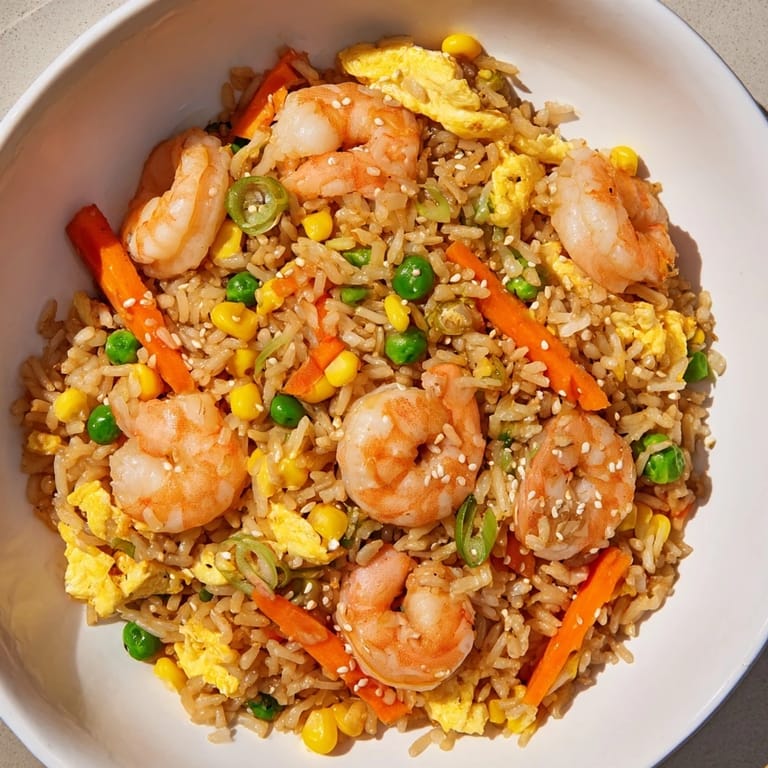
- Take a quick taste. If it feels flat, a little more soy sauce wakes it up; if it's too salty, a squeeze of lime juice (if you have it) brings everything into focus. Serve immediately while it's still steaming, topped with dark green scallion slices and sesame seeds if you've got them.
 Pin
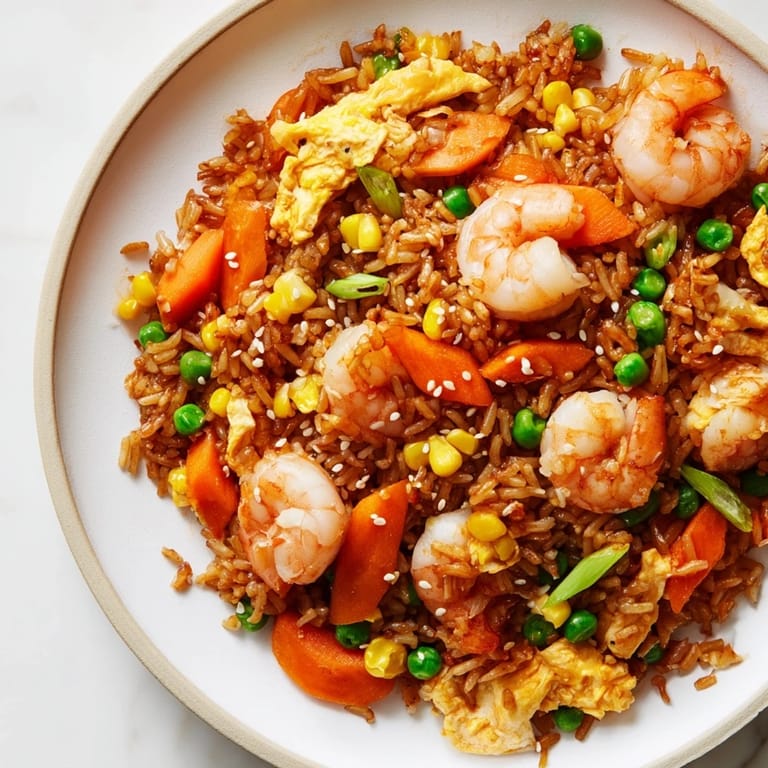
Pin The first time I nailed this recipe, I realized it wasn't actually about rushing—it was about understanding what each ingredient needed at each moment. That shift in perspective made the whole thing feel less like a hack and more like cooking.
Why Cold Rice Changes Everything
Fried rice is actually easier to make with leftover rice than with fresh, which feels backwards until you think about the moisture content. Fresh rice is still steaming internally and releases too much water when you heat it, creating that sticky, clumpy texture that makes people think fried rice is hard. Cold rice from the fridge has lost that excess moisture and each grain stands on its own, ready to absorb the soy sauce and sesame oil without turning into mush. If you're in a real pinch and only have fresh rice, you can spread it on a plate to cool, but honestly, planning ahead by cooking rice the day before makes this dish nearly foolproof.
The Shrimp Question
Medium shrimp work beautifully here because they cook in just a couple of minutes and don't overpower the other flavors, but the real magic is in how you treat them. A lot of people thaw shrimp and throw them directly into the pan while they're still wet, and they end up steaming instead of searing because water and high heat equals steam, not caramelization. Patting them completely dry might seem fussy, but it's the difference between shrimp that tastes like it was lovingly cooked and shrimp that tastes boiled. You can absolutely swap in chicken if shrimp isn't your thing—just cut it into bite-sized pieces and give it an extra minute or so in the pan.
Making It Your Own
This recipe is a foundation, not a rulebook, and once you understand how the pieces fit together, you can improvise freely. On nights when I have them, I'll toss in a handful of cashews or sliced water chestnuts for texture, or swap the frozen mixed vegetables for broccoli florets and bell peppers. A dash of chili sauce or a scattering of crushed peanuts turns it into something completely different, and if you drizzle a little more sesame oil at the end, it feels fancy without any extra work.
- Add a beaten egg in the middle of cooking for extra richness, or leave it out entirely for a lighter version.
- Fresh garlic and ginger minced fine and cooked with the shrimp adds a brightness that makes the whole dish sing.
- If you have any cooked chicken, pork, or even leftover steak, this recipe welcomes it without complaint.
 Pin
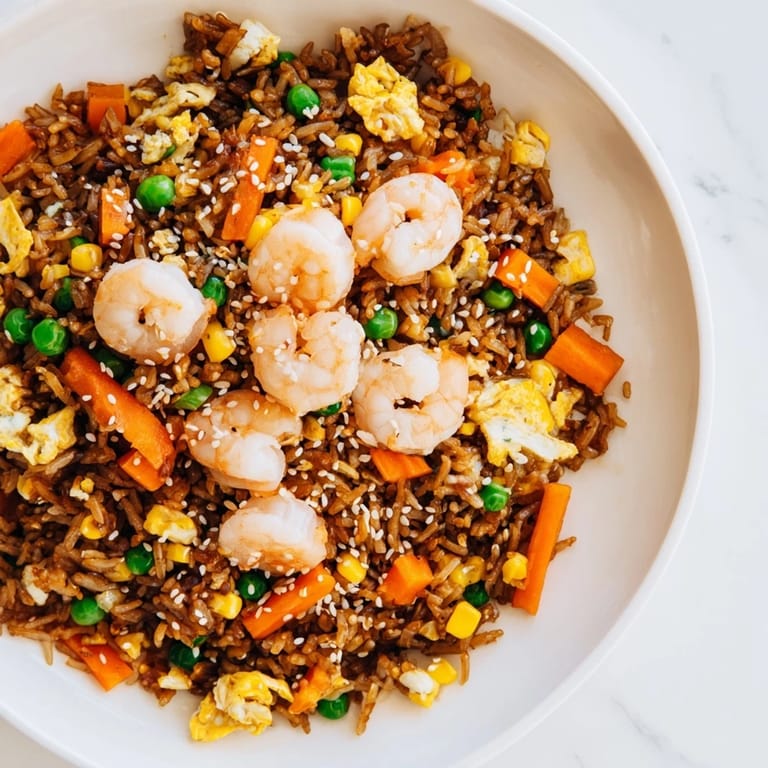
Pin This recipe taught me that the best meals don't require hours in the kitchen—sometimes they just require paying attention to what you're cooking and doing each step with intention. I hope it becomes your weeknight lifeline too.
Recipe FAQ
- → Can I use fresh vegetables instead of frozen?
Yes, fresh vegetables like peas, carrots, and corn work well and can add extra crunch. Adjust cooking time slightly to ensure they are tender.
- → Why is day-old rice recommended?
Day-old rice is drier, preventing clumps and helping to achieve the perfect fried rice texture when stir-frying.
- → What can I substitute for shrimp?
Chicken, tofu, or other seafood can be used as protein alternatives while maintaining the dish's flavor balance.
- → How do I achieve the best flavor balance?
Combining soy sauce, oyster sauce (optional), and sesame oil creates a rich umami profile. Adjust amounts to personal taste.
- → Is it important to use a wok or nonstick skillet?
Both work well. A wok offers even heat distribution for quick stir-frying, but a large nonstick skillet can effectively prevent sticking and burning.