 Pin
Pin I discovered this bowl on a rainy afternoon when I was craving the warmth of ramen but wanted something with a bit more edge to it. My Thai takeout container sat half-empty on the counter while I stared at a package of miso, and suddenly it felt obvious: why not marry these two cuisines? The first spoonful hit with this incredible depth—the savory miso base mellowed by coconut and curry, the chicken tender enough to break with the back of a spoon. It became the kind of dish I make when I want to impress myself in the kitchen.
The first time I served this to friends, they all went quiet after the first sip, and I knew I'd gotten something right. One person asked if I'd been secretly training as a chef, which made me laugh because honestly, I'd just been following my instincts. That's when it clicked that this wasn't just dinner—it was proof that fusion doesn't have to mean confused.
Ingredients
- Vegetable oil: Use a neutral oil that won't compete with the fragrant curry paste—you need something clean that lets the Thai and Japanese flavors talk to each other.
- Medium onion: The foundation of flavor; finely chopped means it dissolves into the broth instead of sitting in chunks.
- Garlic cloves: Fresh is essential here because it softens into the broth and builds that aromatic base that makes people ask what smells so good.
- Fresh ginger: Grated rather than minced gives you a more subtle heat that weaves through everything without dominating.
- Thai red curry paste: This is where the Thai side announces itself; two tablespoons is bold but balanced by the miso.
- Chicken broth: Low sodium lets you control the salt—essential when you're also adding miso and soy sauce.
- White miso paste: Milder and slightly sweet compared to red miso, it plays beautifully with the curry without turning the broth muddy.
- Soy sauce: A splash of umami that makes everything taste more like itself.
- Fish sauce: Just a tablespoon adds a savory depth that tastes nothing fishy once it's dissolved in the hot broth.
- Sugar: A tiny bit rounds out the spice and salt, balancing the heat naturally.
- Sesame oil: Drizzled in at the end, it adds a toasted warmth that ties the whole thing together.
- Boneless, skinless chicken breasts: Quick-cooking and lean, they soak up the broth's flavor without becoming dry if you don't overcook them.
- Fresh ramen noodles: They have a tender chew that dried noodles can't match, though dried works if that's what you have.
- Bok choy: Blanched just long enough to stay crisp-tender, it adds a fresh earthiness that contrasts with the rich broth.
- Large eggs: Seven minutes gives you that jammy yolk that breaks into the broth like liquid gold.
- Crispy fried shallots: Store-bought saves time and honestly taste better than most homemade versions; they add texture and a sweet-savory crunch.
- Scallions: A fresh brightness at the very end that keeps the bowl from feeling heavy.
- Red chili: Optional but worth it—thin slices let you add heat exactly how you want it.
- Fresh cilantro: A handful scattered on top brings a herbaceous lift that makes every spoonful feel new.
- Lime wedges: The acid that wakes everything up; squeeze it in or serve on the side so people can adjust as they eat.
Tired of Takeout? 🥡
Get 10 meals you can make faster than delivery arrives. Seriously.
One email. No spam. Unsubscribe anytime.
Instructions
- Sear the chicken first:
- Heat oil in your large pot until it shimmers, then sear the chicken for about 2 to 3 minutes per side until the outside turns golden. The meat won't be cooked through yet, but you're building flavor. Set it aside on a clean plate.
- Build your flavor base:
- In that same pot with the chicken drippings, add fresh oil and sauté your onion until it softens and turns translucent, maybe 2 minutes. You're looking for the kitchen to smell like cooking now. Add your garlic and ginger and let them bloom for about a minute until the aroma hits you—that's the signal they're ready.
- Wake up the curry paste:
- Stir in the Thai red curry paste and let it cook for a minute in the hot oil. This step matters more than you'd think; it opens up the spices and lets them become part of the broth instead of staying separate. The pot should smell bold and aromatic.
- Create the broth:
- Pour in the chicken broth and bring everything to a simmer. Return your seared chicken to the pot and let it gently simmer for 12 to 15 minutes until fully cooked through. You'll know it's ready when a knife slides through the thickest part without any resistance. The broth will have already taken on color and depth from the curry and the chicken.
- Season with soul:
- Remove the cooked chicken and set aside. Now whisk in your miso paste, soy sauce, fish sauce, sugar, and sesame oil. Whisk patiently until the miso completely dissolves—little pockets of miso in your broth are disappointing. Keep the broth hot but never let it boil hard, because you want to preserve the subtle flavors you've built.
- Prepare the soft-boiled eggs:
- While the broth simmers, bring water to a boil in a separate small pot. Gently lower your eggs into the boiling water and set a timer for exactly 7 minutes. The timing here is everything—too short and the yolk is too runny, too long and you lose that golden jammy center. Transfer them immediately to an ice bath when time's up; this stops the cooking. Once cool, peel them carefully under cool running water, starting from the wider end where the air pocket makes it easier.
- Cook noodles and greens together:
- Bring a large pot of water to a boil and cook your ramen noodles according to the package directions. In the last 2 minutes, add your bok choy halves so they blanch just enough to be tender but still bright green. Drain everything and divide among your bowls.
- Assemble with intention:
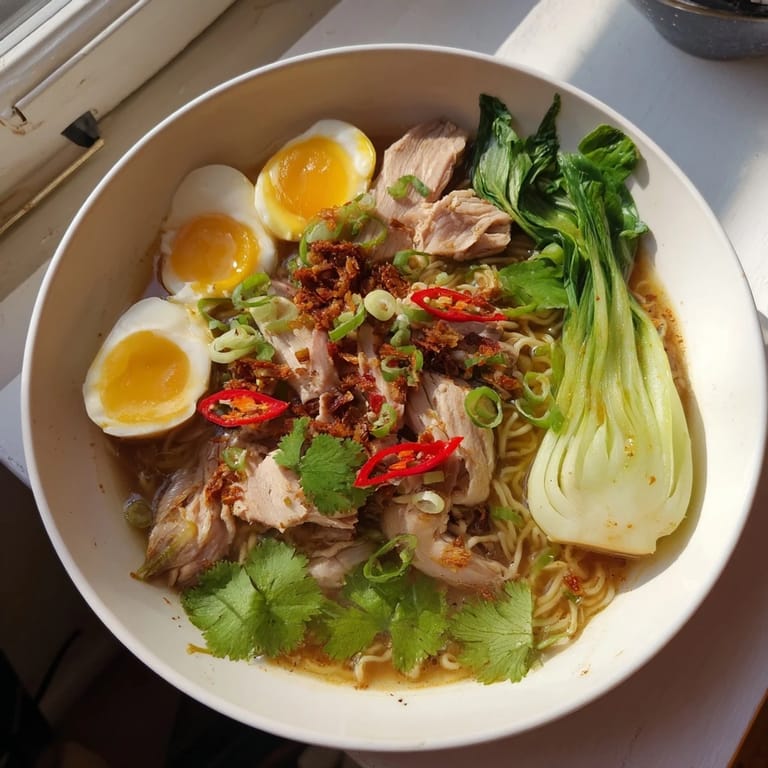
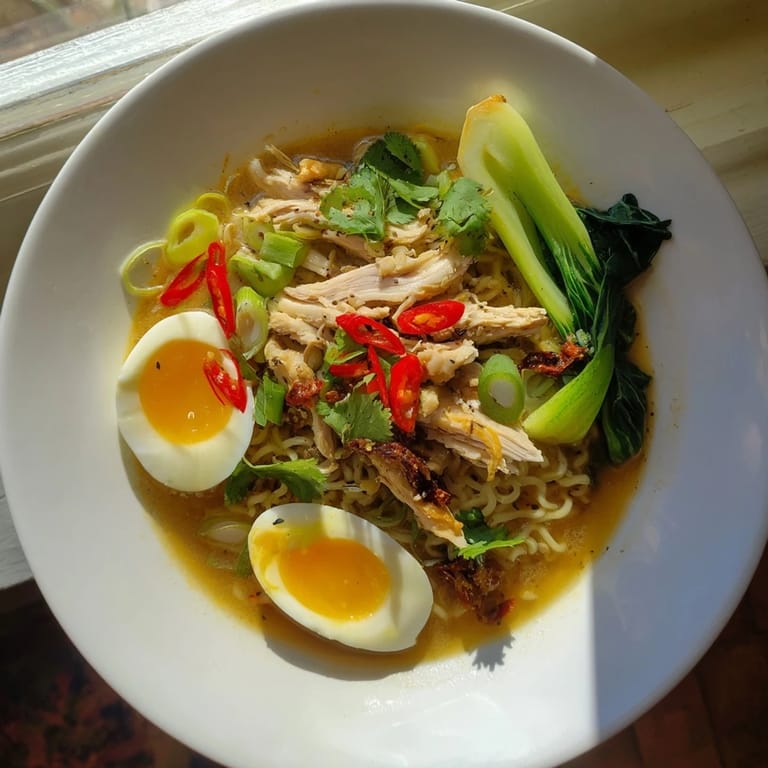
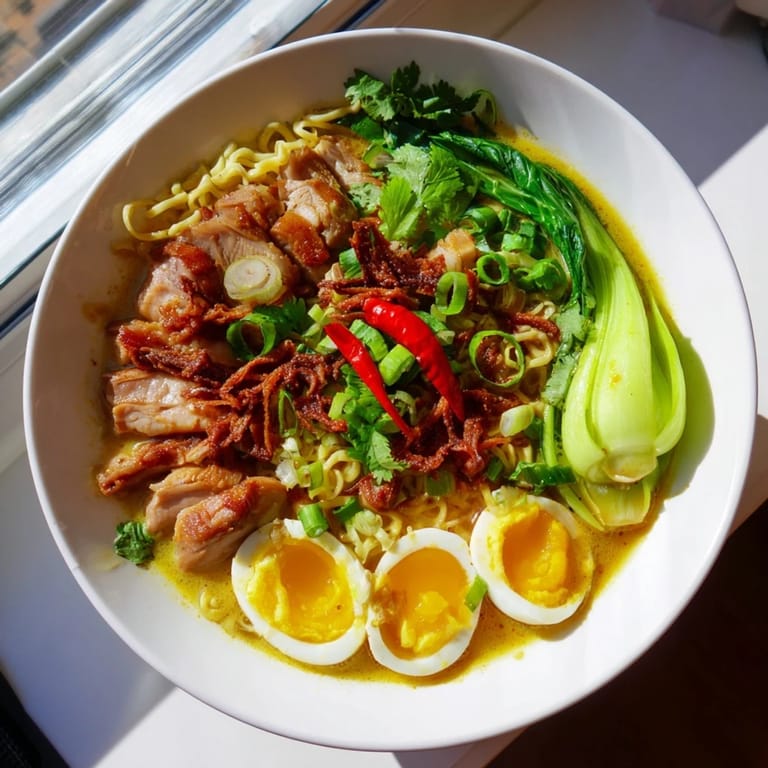
- Ladle the hot broth over your noodles and bok choy, then arrange your toppings like you're painting: sliced chicken in one area, egg halves arranged cut-side up, a handful of crispy shallots, scattered scallions, chili slices if you want heat, and fresh cilantro leaves on top. Serve with lime wedges and let people adjust the flavors as they eat.
 Pin
Pin I remember one night when someone asked for seconds before finishing their first bowl, then asked for thirds after that. We laughed because it had never happened before, and suddenly this bowl felt like more than just a recipe—it felt like something I'd created that mattered to people. That's the moment I knew this fusion actually worked.
The Art of Balancing Heat and Comfort
Thai food lives in intensity—the heat, the brightness, the boldness of every element. Miso broth lives in subtlety and depth. When you combine them, you're not just mixing two recipes; you're letting them negotiate on your palate. The spice from the curry paste should make you sit up and pay attention, but the miso paste should comfort you at the same time. It's a dance, and the beauty is that you control the music.
Why Fresh Ramen Matters Here
Dried ramen noodles are reliable and shelf-stable, but fresh ramen has this tender, slightly springy bite that absorbs the broth differently. They're more delicate, more luxurious somehow, and they deserve a broth this complex. If you can find them in the refrigerated section of your grocery store or at an Asian market, use them. The difference is real enough that your bowl will taste noticeably better, and that's worth the small effort of seeking them out.
Customizing Your Bowl
This recipe is really a template for your own preferences. Some nights I add a drizzle of sriracha on top for extra heat; other times I add a splash of coconut milk to make the broth richer and slightly sweeter. I've served it to vegetarians by swapping the chicken broth for vegetable broth, skipping the fish sauce, and adding extra tofu for protein. The framework stays the same, but your bowl becomes uniquely yours.
- Make it vegetarian by using vegetable broth, omitting the fish sauce, and adding crispy tofu cubes or mushrooms for umami and substance.
- Dial up the spice by adding more curry paste or fresh Thai chilis, or cool it down by reducing both if you're feeding people who prefer milder flavors.
- Try adding a splash of coconut milk to the broth if you want it richer and sweeter, or a squeeze of lime juice if you want it brighter and more acidic.
 Pin
Pin This bowl is proof that some of the best cooking comes from following a craving instead of following rules. Make it, adjust it, own it, and most importantly, share it with people who will appreciate what went into creating something that tastes this good.
Recipe FAQ
- → How do I achieve the perfect soft-boiled eggs?
Bring water to a gentle boil, then carefully add eggs and cook for exactly 7 minutes. Immediately transfer them to ice water to stop cooking and make peeling easier.
- → Can I substitute the chicken broth?
Yes, vegetable broth works well for a lighter or vegetarian-friendly variation. Adjust seasonings accordingly to maintain depth of flavor.
- → How do I balance the spiciness in the broth?
Modify the amount of Thai red curry paste and optional chili slices according to your heat preference. Starting with less allows gradual adjustment.
- → What’s the best way to cook the bok choy?
Blanch bok choy in the final minutes of noodle cooking to retain its crisp-tender texture and vibrant color.
- → How can I make the broth rich and flavorful?
Sauté aromatics like onion, garlic, and ginger before adding red curry paste and broth. Incorporate miso, soy, fish sauce, and sesame oil off the heat to preserve aroma.