 Pin
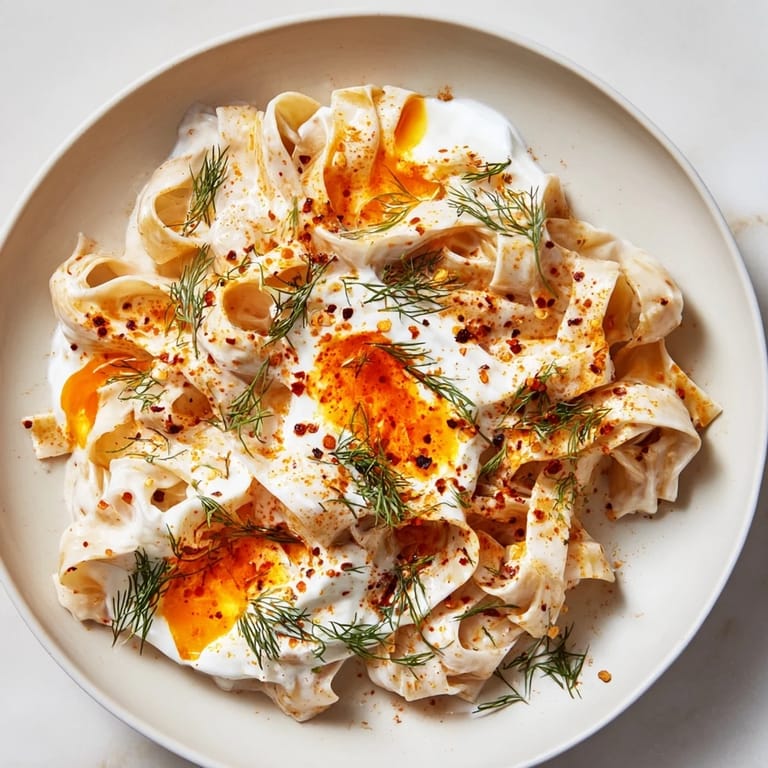
Pin There's something almost magical about the moment a plain bowl of pasta transforms into something entirely unexpected. I discovered this Turkish-inspired dish on a Tuesday evening when my fridge held nothing but Greek yogurt, butter, and the tail end of a pasta box. What emerged from that bare-bones combination was so vivid and warming that I've made it countless times since, each batch tasting like a small victory. The garlicky yogurt creates this luscious, cooling canvas, while the paprika butter drizzles over top like liquid gold, hissing softly as it hits the heat. It's become my go-to when I need dinner on the table before anyone gets hangry.
I remember serving this to my neighbor who had just moved in, unsure what to make for a quick get-to-know-you dinner. She took one bite and her eyes widened—not in the polite way people eat food they're uncertain about, but genuinely delighted. The paprika butter's color and aroma were doing half the work before she even tasted it. That meal turned into a friendship, and now whenever she stops by the kitchen, she asks if I'm making the Turkish pasta. It's strange how a dish can become proof that you care.
Ingredients
- Dried pasta (400 g): Tagliatelle and spaghetti work beautifully, though any shape you have hanging around will do—the texture matters more than the form.
- Greek yogurt (400 g, full-fat): Full-fat is non-negotiable here; the richness is part of the whole point, and it won't break or separate when the warm pasta lands on top.
- Garlic (2 cloves, finely minced): Fresh and raw is essential—it should be aggressive enough to remind you you're eating something alive.
- Lemon juice (1 tbsp, optional): A small squeeze brightens the yogurt's tang without overpowering the gentle heat of the butter.
- Unsalted butter (60 g): The canvas for your spice, so use something you'd actually eat on toast.
- Olive oil (1 tbsp): This prevents the butter from burning and extends its luxurious drizzle across the pasta.
- Sweet paprika (1 1/2 tsp): The star of the show—look for paprika that smells warm and slightly sweet, not dusty.
- Chili flakes (1/2 tsp): Adjust this to your heat tolerance; I learned this by once using too much and my dinner guests politely suffering through it.
- Ground cumin (1/4 tsp, optional): A whisper of earthiness that makes people wonder what the secret ingredient is.
- Fresh dill or parsley: Chop it just before serving so it hasn't lost its bright, grassy scent.
- Black pepper: Freshly ground, because it matters more than you'd think.
- Salt for pasta water: Make it taste like the sea—this is where most of the pasta's seasoning comes from.
Tired of Takeout? 🥡
Get 10 meals you can make faster than delivery arrives. Seriously.
One email. No spam. Unsubscribe anytime.
Instructions
- Heat your water and get the pasta going:
- Fill a large pot with water and salt it generously—taste it, and it should taste like seawater. Bring it to a rolling boil, then add the pasta, stirring once so nothing sticks. You're aiming for al dente, which means a slight resistance when you bite it, not mushy.
- Build your yogurt bed:
- While the pasta cooks, whisk together the Greek yogurt, minced garlic, salt, and lemon juice if you're using it. Let it sit at room temperature—cold yogurt against hot pasta will seize up and clump, which is the opposite of what we want. Taste it and adjust the salt; it should feel almost too garlicky on its own.
- Infuse the butter with warmth and color:
- In a small saucepan over medium heat, melt the butter with the olive oil. Once it's foaming slightly, add the paprika, chili flakes, and cumin, then just watch it—within a minute or two, the kitchen will smell incredible and the mixture will deepen to a brick-red orange. The sizzle is your signal that it's working; remove it from heat before it can burn.
- Bring it all together:
- Drain your pasta, reserving about a quarter cup of that starchy water. Add a splash of pasta water to the yogurt to loosen it slightly, then toss the hot pasta with the yogurt mixture so every strand gets coated. This is where the residual heat of the pasta warms the yogurt without curdling it.
- Plate and dress:
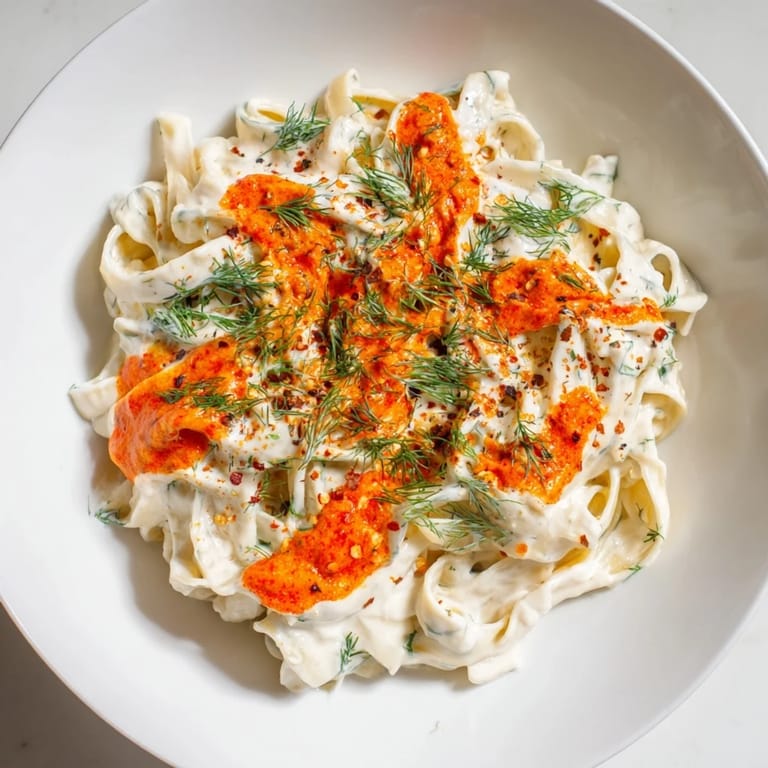
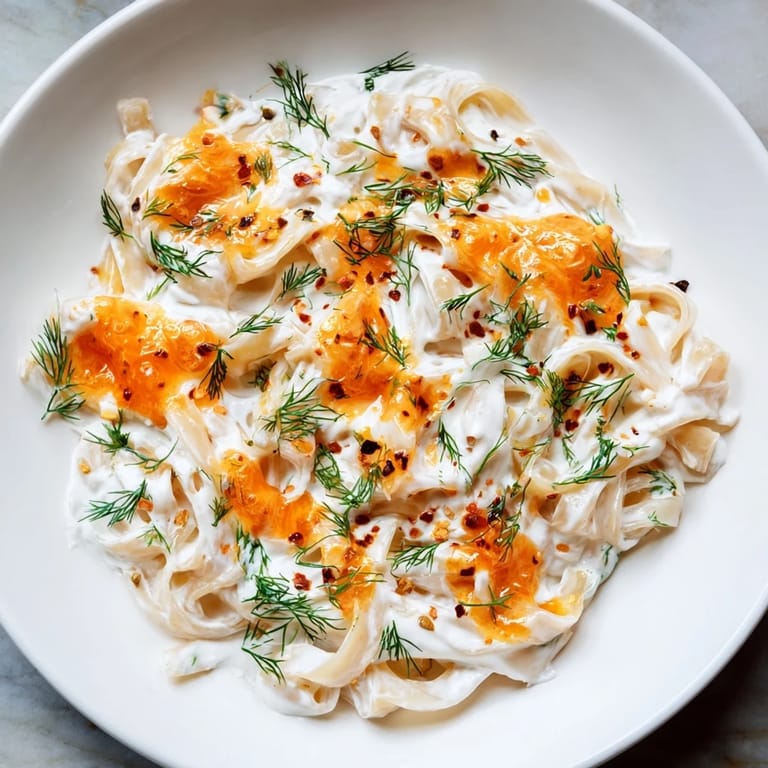
- Divide the pasta among serving bowls or plates while it's still warm. Spoon the buttery, paprika-chili oil over the top in dramatic swirls, then scatter the fresh dill or parsley and a crack of black pepper across everything. The heat of the pasta will release the herb's fragrance.
 Pin
Pin There was an evening when my young niece, who eats only chicken fingers and plain pasta, asked for a second helping of this. Her mother and I exchanged a glance of pure disbelief, then quietly celebrated the small miracle of a vegetable-skeptic discovering that food could be this delicious. That's when I realized this dish isn't just dinner—it's a gateway.
Variations That Actually Work
I've learned that this recipe loves company. Sometimes I'll add a handful of wilted spinach to the yogurt, which turns it the color of aged linen and adds an earthy note. Other times, if I'm feeling indulgent, I'll stir a spoonful of labneh (strained yogurt) into the mix for something tangier and more intense. I once added crispy pine nuts on top and suddenly it felt like a restaurant dish. The beauty is that the paprika butter is so insistent with its flavor that it anchors whatever you decide to add.
Pairing and Serving Thoughts
This pasta demands something cold and bright alongside it—a crisp white wine like Sauvignon Blanc or an icy glass of sparkling water with lemon. I typically make a simple green salad with a sharp vinaigrette, which cuts through the richness of the yogurt and butter without competing for attention. The whole meal comes together in the time it takes to have a conversation, which is exactly when you need dinner most.
The Quiet Joy of Minimal Ingredients
There's a special kind of satisfaction in making something this nourishing and memorable from a handful of pantry staples. It reminds me that cooking doesn't require elaborate techniques or obscure ingredients—sometimes the most honest meals come from knowing how to treat simple things with respect. The paprika butter, the cool yogurt, the hot pasta—each element transforms the others, which feels like a small lesson in how life actually works. This dish has taught me more about balance, timing, and the importance of letting good ingredients speak for themselves than many more complicated recipes ever could.
- If you prefer less heat, start with half the chili flakes and add more if your second taste tells you to.
- Make the paprika butter right before you plate—it's best when it's still warm enough to shimmer.
- Leftovers are strangely good the next day cold, straight from the fridge, though the yogurt will have thickened considerably.
 Pin
Pin This is the kind of dish that reminds you why you cook in the first place. It asks so little and gives so much back.
Recipe FAQ
- → How do I achieve the perfect al dente pasta texture?
Boil salted water and cook the pasta just until tender but still firm to the bite. Drain promptly and reserve some pasta water to adjust the sauce's consistency.
- → Can I adjust the spice level in the paprika chili butter?
Yes, you can increase or decrease chili flakes to suit your heat preference. For more depth, Aleppo pepper can also be added.
- → Is there an alternative to Greek yogurt for the garlicky topping?
Labneh works well as a tangier substitute, maintaining the creamy, garlic-infused element of the dish.
- → What herbs pair best with this dish for garnish?
Fresh dill or parsley are recommended for their bright, herbal notes that complement the rich butter and yogurt flavors.
- → Can this dish be made gluten-free?
Using gluten-free pasta ensures the dish is suitable for gluten-sensitive diets without compromising flavor or texture.