 Pin
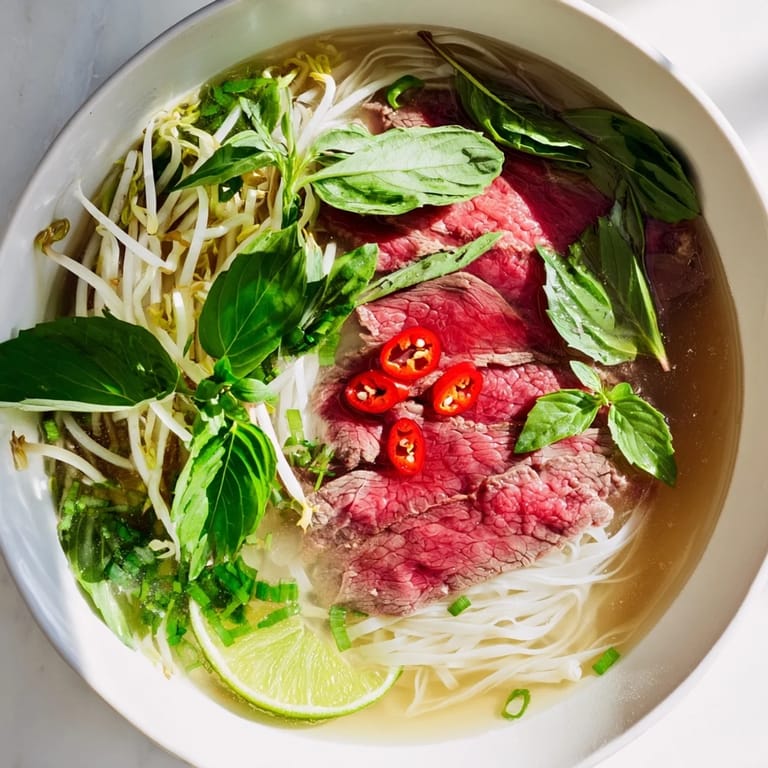
Pin The first time I made pho at home, I was chasing the ghost of a perfect bowl from a tiny restaurant on the other side of town—the kind of place where steam rises from every table and the air tastes like cinnamon and star anise. I thought I'd need hours and a secret family recipe, but then a friend casually mentioned she made it on weeknights, and everything changed. This express version doesn't cut corners; it just respects your time. Thirty-five minutes later, you're ladling hot broth over tender beef and breathing in aromas that somehow transport you somewhere far away, even if you're just standing in your kitchen.
I made this for my partner on a cold evening when neither of us wanted to leave the house, and I watched something shift in their expression when they took that first sip—not just tasting the food, but really tasting it, noticing how the ginger and star anise were singing together in the broth. That's when I realized pho isn't really about being fancy or complicated; it's about those quiet moments when a bowl of soup reminds you that cooking for someone is its own kind of attention.
Ingredients
- Low-sodium beef or chicken broth (8 cups): The foundation of everything—choose a broth you'd actually drink on its own, because you'll taste every nuance of it here.
- Fresh ginger (2-inch piece, sliced): Don't peel it; the papery skin adds subtle texture and keeps the slices intact as they release their warmth.
- Whole star anise (3): These little stars deliver licorice notes that somehow feel both exotic and comforting—one of my most-repeated kitchen discoveries.
- Cinnamon stick (1): Just one; it adds depth without announcing itself loudly in every spoonful.
- Whole cloves (3): These tiny powerhouses are easy to forget but make all the difference between pho and just hot broth.
- Fish sauce (1 tablespoon): I know it smells like low tide, but trust it—it's the umami anchor that makes everything taste intentional.
- Soy sauce (1 tablespoon): Adds salty, rich undertones that round out the spice profile.
- Sugar (1 teaspoon): A small gesture toward balance; it smooths any sharp edges without making the broth sweet.
- Dried or fresh rice noodles (300 g): Fresh noodles cook in seconds, while dried ones need a few minutes—both work beautifully here.
- Beef sirloin or eye round (300 g, thinly sliced): The thinner you slice it, the faster it cooks in the hot broth—a sharp knife or a brief trip to the freezer makes this easier.
- Bean sprouts (1 cup): They stay crisp even when you ladle hot broth over them, adding crunch in every bite.
- Fresh Thai basil: It's peppery where Italian basil is sweet—if you can't find it, fresh mint does a decent job.
- Fresh cilantro: Some people skip it, but those of us who love it can't imagine pho without that bright, herbal finish.
- Scallions (2, thinly sliced): They wilt slightly from the heat but keep their gentle onion flavor.
- Fresh chili (optional, thinly sliced): Heat is personal; let your guests decide how much fire they want.
- Lime wedges: The acid cuts through the richness and wakes up every flavor on your palate.
- Hoisin sauce and Sriracha: These aren't hidden ingredients—they're part of the ritual, meant to be stirred in by each person according to their mood.
Tired of Takeout? 🥡
Get 10 meals you can make faster than delivery arrives. Seriously.
One email. No spam. Unsubscribe anytime.
Instructions
- Build your broth base:
- Combine broth, halved onion, ginger slices, star anise, cinnamon, and cloves in your largest pot. Bring everything to a rolling boil, then drop the heat and let it simmer uncovered for 20 minutes so the spices can fully unfold and the broth turns fragrant and golden.
- Season and strain:
- Stir in fish sauce, soy sauce, sugar, and salt to taste—this is when the broth suddenly comes alive. Pour it through a fine-mesh strainer to catch all the solids, leaving you with clear, clean broth; return it to the pot and keep it at a gentle simmer.
- Cook your noodles:
- While the broth simmers, boil a separate pot of salted water and cook the rice noodles according to package timing. Drain them well and divide among four large bowls, making a small nest in the center of each.
- Add your protein:
- Arrange your thin-sliced beef directly over the noodles in each bowl—it looks sparse now, but that's exactly right. The hot broth will do all the cooking work in the next step.
- The hot broth moment:
- Carefully ladle the steaming broth over the beef and noodles, pouring it in a steady stream so the meat cooks gently from the residual heat. You'll see the beef turn from raw red to a perfect rosy pink in seconds.
- Finish with fresh elements:
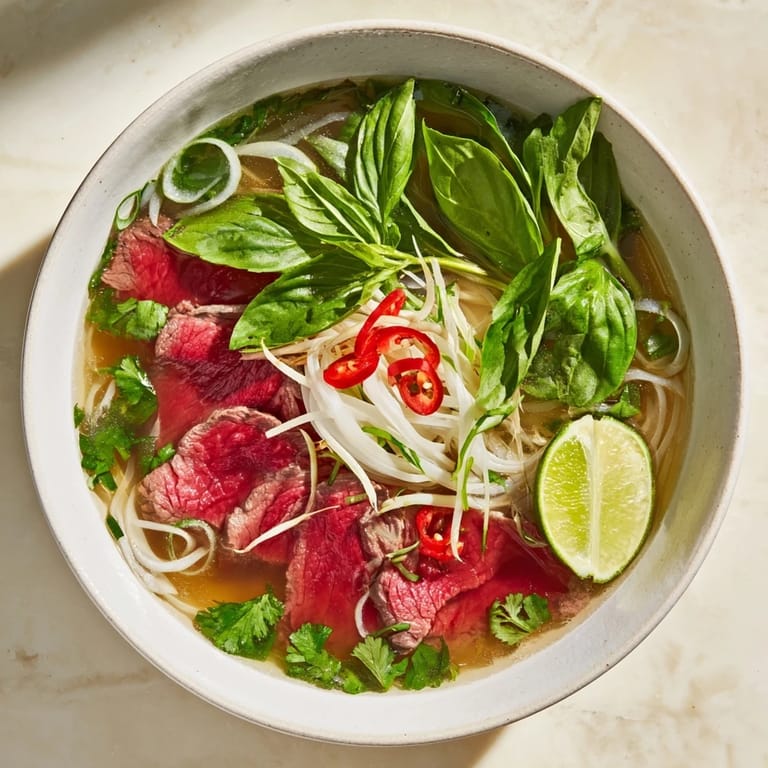
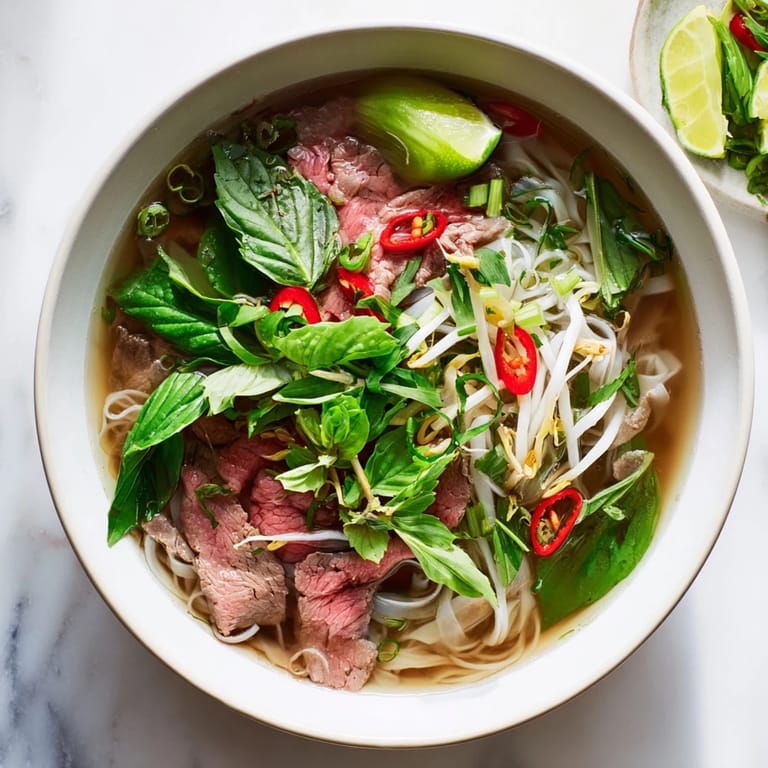
- Top each bowl with handfuls of bean sprouts, torn basil, cilantro, sliced scallions, and chili if you're using it. Set out the lime wedges, hoisin, and Sriracha so everyone can adjust their bowl to taste.
 Pin
Pin I remember serving this to my neighbor who had just moved in, and she came back the next week asking for the recipe, saying she'd made it twice already. It's become one of those dishes that makes people feel like you did something special for them, even though you know how simple and straightforward it really is.
The Magic of Char
If you have the patience and a gas burner or kitchen torch, lightly char the onion halves and ginger slices before they go into the broth—hold them directly over the flame for just 30 seconds per side until their edges blacken slightly. This adds a subtle smokiness that elevates the broth from good to the kind you remember tasting somewhere special. It's an optional extra touch, but once you try it, you'll find yourself doing it every time.
Making It Your Own
The beauty of pho is that it's built for customization, and what works for one person's bowl might be completely different for the person sitting next to them. Some nights I add a handful of fresh mint or fried shallots I've been saving; other times I keep it austere and focused. For a vegetarian version, swap the meat for pressed tofu sliced the same way, and use vegetable broth instead—the spiced broth is so complete that you won't miss anything at all.
Timing and Flow
The thirty-five-minute window is real, but it's not rigid—you can start your noodle water while the broth simmers, and you can have your bowls set up and waiting before you even strain the broth. This isn't a recipe that requires you to stand still and wait; it's one where small prep steps happening in parallel mean that everything comes together at exactly the right moment. The whole experience feels less like cooking and more like conducting a gentle, aromatic symphony.
- Have everything prepped before you start so you're not chopping herbs while your broth gets cold.
- Don't wait until the last second to slice your beef; do it while the broth simmers so you're ready to move quickly at the end.
- Serve it immediately—pho is meant to be eaten hot, with the beef still cooking gently in each spoonful.
 Pin
Pin This dish taught me that some of the most satisfying meals come from respecting both the tradition and the reality of a weeknight. You're not pretending this took hours; you're just cooking something true and delicious in the time you actually have.
Recipe FAQ
- → How do I make the broth flavorful quickly?
Simmer aromatic spices like star anise, cinnamon, and cloves with onion and ginger for 20 minutes, enhancing flavor while keeping cooking time short.
- → Can I substitute chicken for beef?
Yes, thinly sliced chicken breast works well and cooks quickly when the hot broth is ladled over it.
- → What noodles are best for this dish?
Flat rice noodles, known as bánh phở, offer the ideal texture and absorb the broth’s flavors beautifully.
- → How should garnishes be prepared?
Fresh herbs like Thai basil and cilantro should be washed and roughly chopped; bean sprouts and scallions add crunch and freshness.
- → Are there vegetarian variations?
Use vegetable broth and substitute tofu for meat to create a satisfying plant-based version.