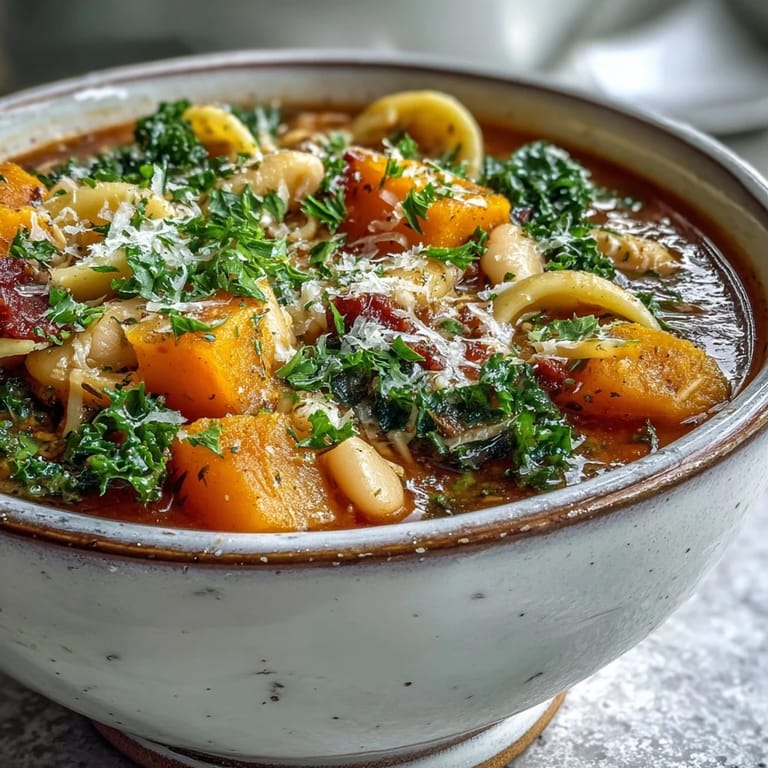
 Pin
Pin There's something about the smell of butternut squash caramelizing in olive oil that makes November feel less gray. My neighbor knocked on the kitchen door one afternoon with a bag of kale from her garden, and I had half a squash sitting on the counter—suddenly this soup was born. It became the thing I'd make when the weather turned and friends needed warming up, when a simple bowl could feel like a conversation.
I served this soup to my book club on the coldest night of the year, and three people asked for the recipe before they'd finished their bowls. One friend went back for seconds while still holding the first spoon—that's when you know a soup has crossed from nice to necessary.
Ingredients
- Olive oil: Two tablespoons is enough to build flavor without making this heavy; use something you'd actually taste, not the cheapest bottle.
- Yellow onion: Medium dice this slowly if you have time—it sweetens everything it touches.
- Carrots and celery: The holy trinity starts here; don't skip the carrot skin if it's clean, just scrub it.
- Garlic: Mince it fresh and listen for that moment it stops smelling sharp and starts smelling like dinner.
- Butternut squash: About 1½ pounds peeled and diced small so it softens into the broth; the smaller the pieces, the faster it cooks.
- Zucchini: Medium dice keeps it from disappearing into nothing during the simmer.
- Fresh kale: Remove those tough stems—they're bitter and chewy; tear the leaves into bite-sized pieces.
- Canned diced tomatoes: Don't drain them; those juices are liquid gold for the broth.
- Cannellini beans: Rinse them well to wash away that tin-can funk and murky liquid.
- Small pasta: Ditalini or elbow macaroni; add it near the end so it stays tender and doesn't turn to mush.
- Vegetable broth: Six cups gives you a brothiness that's not too thin; taste yours first and season accordingly.
- Water: One cup dilutes the saltiness of store-bought broth.
- Dried oregano, thyme, and rosemary: These three together smell like an Italian kitchen; crush them between your palms before stirring in to release their oils.
- Red pepper flakes: Optional but worth it—just a pinch gives warmth without heat.
- Fresh parsley: Chopped at the very end; it brightens everything it touches.
- Parmesan cheese: Grated fresh tastes nothing like the shake-can version.
Tired of Takeout? 🥡
Get 10 meals you can make faster than delivery arrives. Seriously.
One email. No spam. Unsubscribe anytime.
Instructions
- Start with the foundation:
- Heat olive oil in a large pot over medium heat and add your diced onion, carrots, and celery. Sauté for 5 to 6 minutes, stirring now and then, until the vegetables start to soften and smell sweet. You'll feel the kitchen shift into cooking mode the moment they hit the oil.
- Wake up the garlic:
- Stir in your minced garlic and let it cook for about a minute until it stops smelling raw. Don't walk away—garlic burns faster than you'd think and tastes bitter when it does.
- Add the squash and zucchini:
- Toss in your peeled, diced butternut squash and zucchini, stirring occasionally for 4 to 5 minutes. The squash will begin to soften at the edges and the oil will turn golden from its natural sugars.
- Build the broth:
- Pour in the diced tomatoes with their juices, then add your vegetable broth and water. Bring everything to a boil—you'll hear the soup start to simmer and bubble at the edges first.
- Season and simmer:
- Stir in the oregano, thyme, rosemary, and red pepper flakes if using. Lower the heat and let it simmer uncovered for 15 minutes so the flavors marry and the squash gets truly tender.
- Add the beans and pasta:
- Stir in the drained cannellini beans and your small pasta, then simmer for another 8 to 10 minutes until the pasta is soft and the squash dissolves slightly into the broth. Taste it here—this is your moment to decide if you need salt.
- Finish with kale:
- Stir in the torn kale and cook for 2 to 3 minutes until it wilts and turns a darker green. Fresh herbs added this late stay bright and don't turn to mush.
- Final touch:
- Remove from heat, stir in fresh chopped parsley, then ladle into bowls and top with grated Parmesan if you like. The soup will smell like a trattoria kitchen.
 Pin
Pin My mother called midway through making this soup one December evening, and I kept her on the phone while I stirred and explained what was happening in the pot. By the time she hung up, she'd already written down the recipe, and it became something she made when her own kitchen needed filling with warmth and purpose.
Why Winter Squash Transforms Everything
Butternut squash has this quiet magic—it doesn't announce itself like tomatoes do, but it adds sweetness and body to any soup without cream or heavy starches. When it simmers long enough, it softens into the broth, thickening it naturally. I've learned to always cut it smaller than you think you need to, because the smaller pieces break down into the soup, making it taste richer than it is.
The Secret of Building Flavor in One Pot
This soup works because you're not rushing—you start with a proper sauté of the aromatic vegetables, let each layer of flavor develop before moving to the next. The dried herbs go in early enough to bloom in the warm broth but late enough that they don't lose their potency. It's the difference between a soup that tastes like ingredients and one that tastes like a single, cohesive thing.
Making It Your Own
Once you've made this once, you'll understand the logic and feel brave enough to swap things around. Use chickpeas instead of cannellini beans, or add spinach with the kale, or throw in a Parmesan rind at the beginning if you want deeper umami. The base stays the same—the aromatics, the squash, the broth—but the rest is yours to play with.
- A Parmesan rind simmered in the broth for the last 20 minutes adds unexpected depth—just fish it out before serving.
- This soup freezes beautifully for up to three months; add the pasta fresh when you reheat it so it doesn't turn to mush.
- Serve with crusty bread and a crisp white wine like Pinot Grigio for a meal that feels both simple and complete.
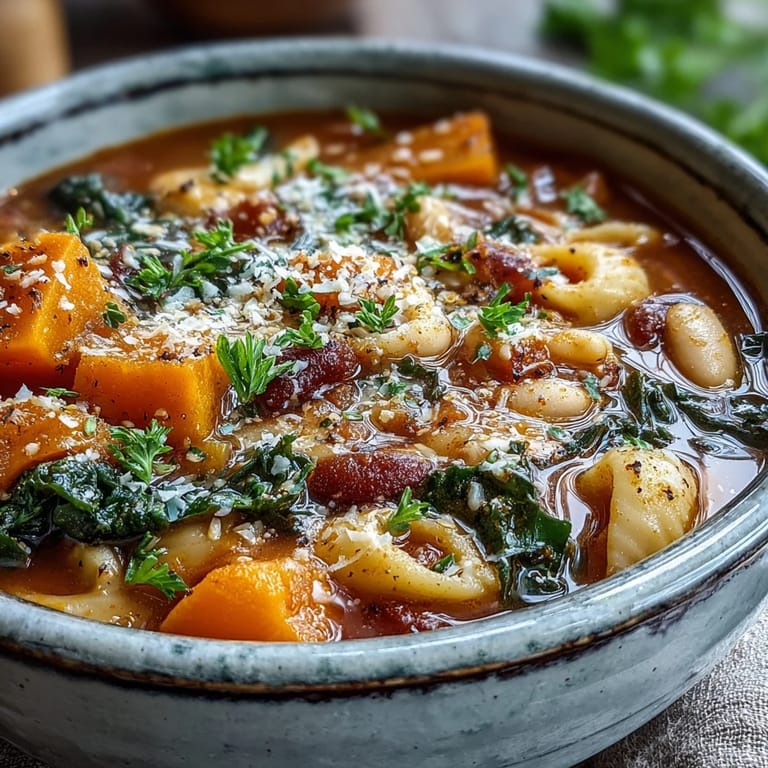 Pin
Pin This soup has become my answer to almost everything that needs warming up—whether it's a cold evening, a friend who needs feeding, or a moment when cooking something from scratch feels like the only thing that makes sense. Make it once and you'll understand why.
Recipe FAQ
- → What makes this minestrone perfect for winter?
The combination of hearty butternut squash, nutrient-rich kale, and warming spices like dried oregano, thyme, and rosemary creates a filling bowl that warms you from within. The rich tomato broth provides comfort during cold months.
- → Can I make this minestrone ahead of time?
Absolutely. This soup actually improves overnight as flavors meld together. Store in the refrigerator for up to 4 days. The pasta may absorb more liquid, so add extra broth when reheating.
- → What pasta works best in minestrone?
Small shapes like ditalini or elbow macaroni are traditional because they spoon up easily with the vegetables and beans. You can also use shells, small penne, or broken spaghetti pieces.
- → How do I make this minestrone vegan?
Simply omit the Parmesan cheese garnish or use a dairy-free alternative. The soup base is entirely plant-based, using olive oil and vegetable broth as its foundation.
- → What can I serve with winter minestrone?
Crusty bread is ideal for dipping into the broth. A crisp white wine like Pinot Grigio complements the tomatoes and vegetables. A simple green salad with vinaigrette makes a complete meal.
- → Can I freeze leftover minestrone?
Yes, freeze for up to 3 months. Consider cooking pasta separately and adding it when reheating to prevent it from becoming mushy. Kale may also soften more after freezing.