 Pin
Pin There's something about November rain that makes me crave a pot of minestrone, the kind that fills your kitchen with the smell of caramelized onions and herbs. My neighbor actually taught me this version years ago when she showed up at my door with a soup pot and said, "You're making this wrong." She was right—I'd been rushing it, not giving the butternut squash time to get sweet, not letting the broth really marry with the vegetables. Now I make it exactly her way, and it's become my go-to when the weather turns cold and everyone needs something warm and real.
I made this for a potluck once and someone asked for the recipe before even finishing their bowl, which honestly made my whole day. What I love about serving this soup is watching people go back for seconds without realizing they're eating mostly vegetables—the pasta and beans hide the healthiness in the best way possible.
Ingredients
- Olive oil: You need good oil here because it's the first thing that touches the pan, setting the tone for everything else; don't skip it or use the cheapest bottle.
- Yellow onion, carrots, and celery: This is your flavor foundation, and taking five full minutes to soften them matters more than you'd think.
- Garlic cloves: Add them after the softer vegetables so they don't burn; you want them fragrant, not bitter.
- Butternut squash: The sweetness here balances the tomatoes and herbs, so don't substitute with something milder.
- Zucchini: It breaks down slightly and thickens the broth naturally without becoming mushy if you time it right.
- Diced tomatoes: Canned is perfectly fine and honestly more consistent than fresh in winter months.
- Kale: Tear out those tough stems or you'll bite into something unpleasant; the leaves wilt beautifully in the heat.
- Cannellini beans: They're mild enough not to overpower, but they add protein and a creamy texture to the broth.
- Small pasta: Ditalini or elbow macaroni works because they're small enough to fit on your spoon with vegetables and broth.
- Vegetable broth: I use the kind with no added salt so I can control seasoning at the end.
- Bay leaf, oregano, thyme, and rosemary: These herbs are the soul of the soup, and using dried herbs here is totally fine because they soften in the long simmer.
Tired of Takeout? 🥡
Get 10 meals you can make faster than delivery arrives. Seriously.
One email. No spam. Unsubscribe anytime.
Instructions
- Start with the base:
- Heat your olive oil in a large pot over medium heat, then add your diced onion, carrots, and celery. You'll know they're ready when the edges of the onion turn golden and everything smells sweet, which should take about five minutes.
- Build the flavor:
- Stir in your minced garlic and let it cook for just one minute—you want to see it become fragrant and slightly golden at the edges. Any longer and it turns bitter, which would wreck the whole thing.
- Add the squash and zucchini:
- Toss in your butternut squash cubes and diced zucchini, stirring occasionally for five minutes so they start to soften and release their flavors into the oil. This step is where people often get impatient, but that five minutes makes a real difference.
- Pour in the liquids and herbs:
- Add your diced tomatoes, vegetable broth, bay leaf, oregano, thyme, and rosemary all at once, then bring everything to a boil. The broth will darken slightly and start smelling incredibly good.
- Simmer the squash:
- Lower the heat, cover the pot, and let it simmer gently for fifteen minutes until the butternut squash is tender but not falling apart. You can actually tell it's done when a fork slides through a cube easily.
- Add the beans, pasta, and greens:
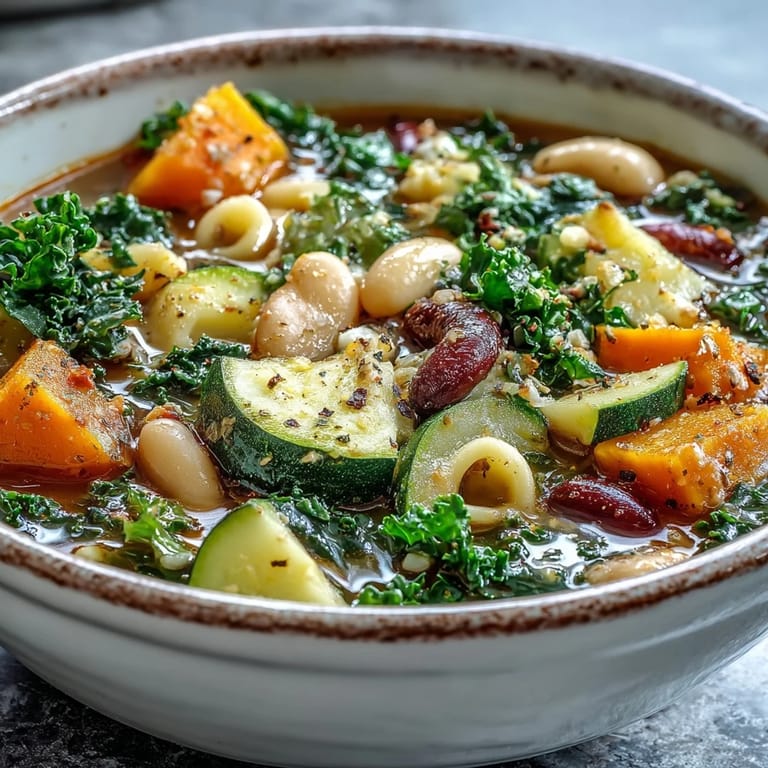
- Remove the lid, stir in your drained beans, pasta, and chopped kale, then simmer uncovered for ten to twelve minutes. The pasta will cook while the kale wilts down, and the whole pot becomes this beautiful deep green.
- Taste and adjust:
- Fish out that bay leaf, then taste your soup and add salt and pepper until it tastes like home to you. Remember that Parmesan, if you use it, adds saltiness too.
- Serve:
- Ladle into bowls and top with freshly grated Parmesan and chopped parsley if you want, then serve with crusty bread on the side for dipping. This is the moment where your kitchen becomes a refuge.
 Pin
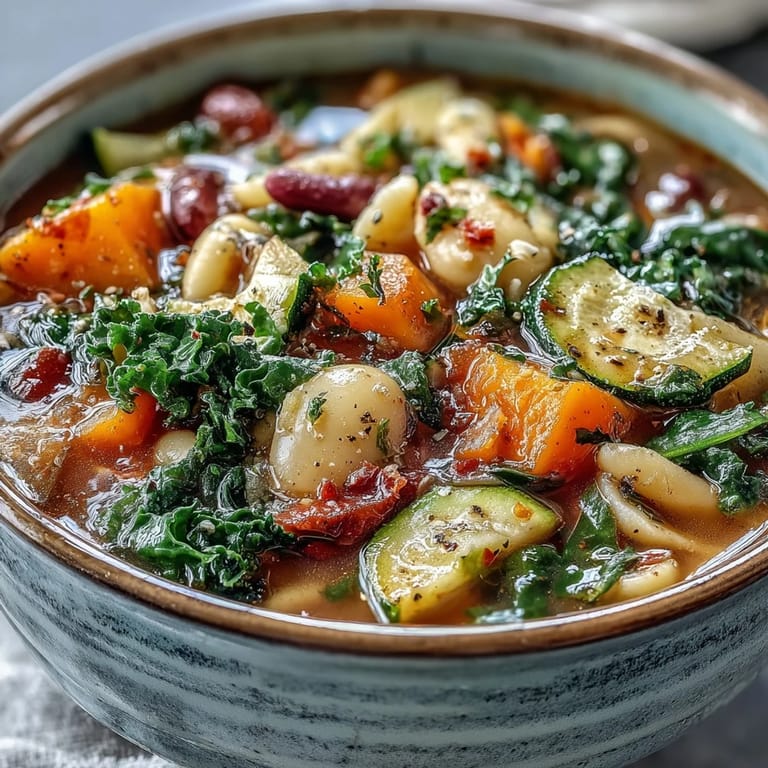
Pin My sister brought a thermos of this to my house when I had the flu, and I remember thinking that soup tastes different when someone made it for you with that kind of care. That's what this recipe is really about—it's not fancy, but it's honest and warming in a way that matters on the days you need it most.
When to Make This Soup
This minestrone is perfect for those first cold snaps when you want to use up what's left of the fall vegetables. I usually make it between October and February, but honestly, there's nothing stopping you in summer if you find good squash at the farmer's market. The beauty of this soup is that it works in any season because it's built on comfort rather than a specific time of year.
Storage and Reheating
This soup gets better the next day because the flavors have time to really know each other, so don't hesitate to make it ahead. It keeps in the refrigerator for about four days, and you can also freeze it for up to three months (just leave out the pasta if you're freezing, then add fresh pasta when you reheat). When you reheat, do it gently on the stovetop with a splash of broth so the vegetables don't fall apart and the pasta doesn't get weird.
Making It Your Own
Once you understand how this soup works, you can swap vegetables based on what's in your crisper drawer—I've made it with red potatoes, fennel, green beans, and even cabbage. The herb ratio matters more than the exact vegetables, so stick with the oregano, thyme, and rosemary as your anchor. If you want it heartier, add more beans or a bigger handful of pasta, and if you want it brothier, just use more vegetable broth and less of the solid vegetables.
- A Parmesan rind simmered in the broth adds an umami depth that changes everything if you have one hanging around.
- For a gluten-free version, use rice or quinoa instead of pasta, or skip the grain entirely and add a second can of beans.
- Fresh herbs at the end (parsley, basil, or thyme) brighten the soup and make it feel less heavy.
 Pin
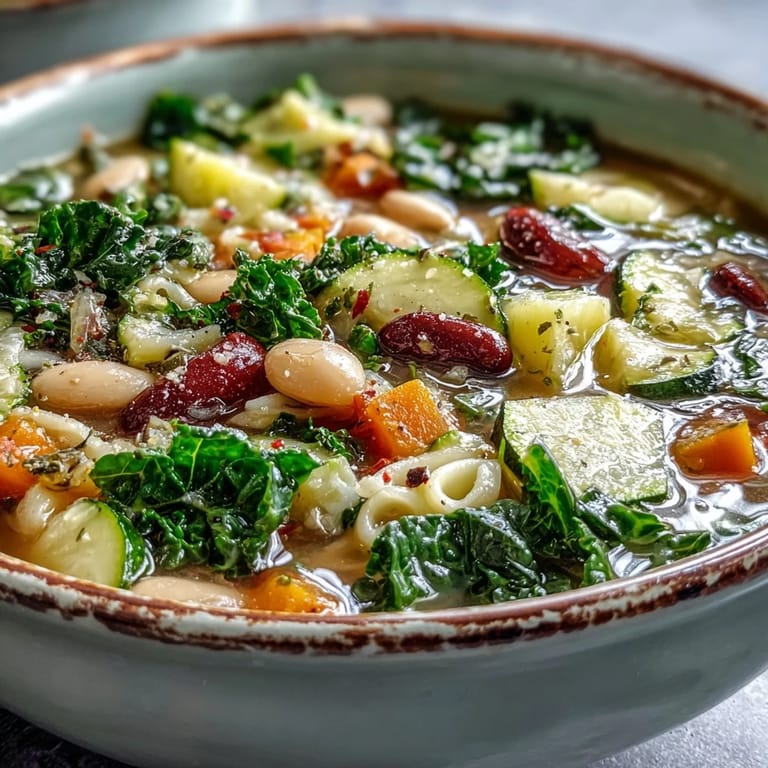
Pin This soup has a way of making you feel like you've done something nourishing and real, which in November especially feels like a gift. Serve it with good bread and a person you like, and you've got a meal that's about more than just eating.
Recipe FAQ
- → Can I make this ahead of time?
Absolutely. This actually tastes better the next day as flavors have time to meld. Prepare up to 3 days in advance and store in the refrigerator. Add a splash of broth when reheating as pasta will absorb liquid.
- → What pasta works best?
Small shapes like ditalini, elbow macaroni, or shells are ideal. They fit neatly on the spoon and hold the broth well. For gluten-free needs, rice or corn-based small pasta performs beautifully.
- → Can I freeze this?
Yes, freeze for up to 3 months. Consider cooking pasta separately and adding when reheating to prevent it from becoming mushy. Leave out garnishes like Parmesan and fresh parsley until serving.
- → What can I substitute for kale?
Fresh spinach, Swiss chard, or chopped collard greens all work wonderfully. Add delicate greens like spinach in the last 2-3 minutes of cooking to prevent wilting too much.
- → How do I make this more filling?
Add an extra can of beans, incorporate diced potatoes with the squash, or serve with thick slices of crusty bread. A drizzle of olive oil over each bowl also adds richness and satisfaction.
- → Is this suitable for meal prep?
Perfect for weekly meal prep. Portion into individual containers for easy lunches. The flavors deepen over time, making it an excellent make-ahead option for busy weeknights.