 Pin
Pin The first time I encountered hojicha, it was steaming in a ceramic cup at a quiet tea house tucked between narrow Tokyo streets, and I was immediately drawn to its toasted, almost nutty warmth. Years later, I found myself wondering if that same comforting flavor could translate into something I could make at home, something that would fill my kitchen with that same gentle, roasted aroma. The answer came to me one quiet afternoon while scrolling through old recipe notes, and I realized a delicate sponge roll could become the perfect canvas for hojicha's subtle sophistication. Adding mango felt like painting with unexpected color, brightening the earthy tea without overshadowing it. This roll cake became my way of capturing that tea house moment whenever I needed it.
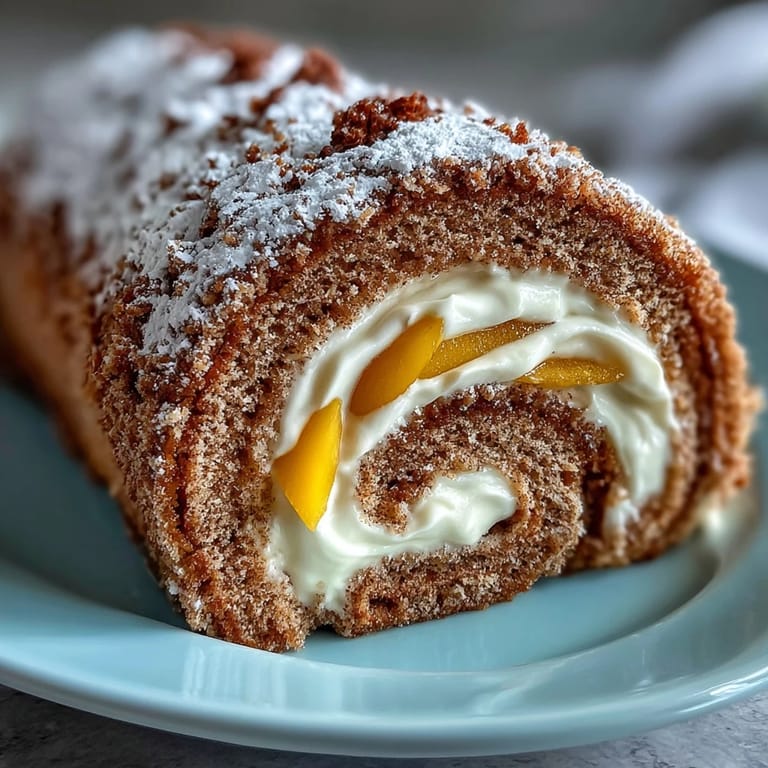
I made this for my sister's birthday dinner on a Sunday in early autumn when the afternoons had just started turning crisp. She'd mentioned in passing that she wished she could recreate the feeling of visiting a Japanese café, and I kept that comment tucked away. When I pulled this roll from the refrigerator and sliced through it to reveal those ribbons of mango against the creamy hojicha filling, the whole table went quiet for a moment before everyone reached for a plate. That silence before the fork touches down—that's when I know a dessert has done its job right.
Ingredients
- Eggs, separated: Four large ones give you the structure and lift you need; make sure they're at room temperature for the best volume when whipping the whites.
- Granulated sugar: Eighty grams split between the yolks and whites keeps the cake tender while building stability in the meringue.
- Whole milk: Sixty milliliters adds moisture and richness that cake flour alone can't deliver.
- Vegetable oil: Fifty milliliters keeps the crumb tender and prevents that dry, spongy texture some cakes develop.
- Cake flour and cornstarch: Seventy grams cake flour plus ten grams cornstarch creates a delicate, almost silky texture that rolls without cracking.
- Hojicha powder: One tablespoon in the cake plus two teaspoons in the cream is the magic ratio—enough presence without bitterness.
- Heavy cream: Use at least thirty-five percent butterfat and keep it cold; this is the foundation of a cream that holds its shape.
- Powdered sugar: Two tablespoons sweetens the cream gently without the grittiness that granulated sugar would create.
- Ripe mango: Choose one that yields slightly to pressure; the sweetness and acidity contrast beautifully with the toasted tea notes.
Tired of Takeout? 🥡
Get 10 meals you can make faster than delivery arrives. Seriously.
One email. No spam. Unsubscribe anytime.
Instructions
- Prepare your workspace:
- Preheat your oven to 170°C and line that 23 by 33 centimeter tray with parchment paper, making sure the corners are tucked in so nothing spills over during baking. Separating your eggs while they're still cool makes this step cleaner and safer.
- Build the yolk base:
- Whisk the egg yolks with forty grams of sugar until the mixture turns pale and slightly fluffy, which takes about two minutes of steady whisking. This lightness matters because it's the first step toward a tender crumb.
- Combine wet and dry:
- Add the milk and oil to your yolk mixture and stir until smooth, then sift together the cake flour, cornstarch, hojicha powder, and salt directly over the bowl. Fold gently with a spatula, rotating the bowl as you go, until you see no streaks of flour—this should take about fifteen folds.
- Create the meringue:
- In a completely clean, dry bowl (any grease will sabotage this), beat the egg whites until they're foamy and opaque, then add the remaining forty grams of sugar gradually while continuing to beat. You'll know you've reached stiff peaks when the mixer leaves trails that don't collapse back into themselves.
- Fold with intention:
- This is where patience pays off—add the meringue to the yolk mixture in three separate additions, folding gently each time so you keep as much air in the batter as possible. The batter should look light and slightly fluffy, not dense.
- Pour and tap:
- Spread the batter evenly into your prepared tray, smoothing the surface with an offset spatula, then tap the tray gently against the counter three or four times to release large air bubbles that would create tunnels in the finished cake. You want an even surface so the roll doesn't crack later.
- Bake to perfection:
- Thirteen to fifteen minutes is all this delicate cake needs; you're looking for it to spring back when you press it lightly with your finger, and the edges should be just barely pulling away from the tray. A few minutes too long and it becomes fragile to roll.
- Invert immediately:
- The warm cake is forgiving, so work quickly—turn it out onto fresh parchment paper, carefully peel away the baking paper, and loosely cover it with a clean kitchen towel so it cools evenly without developing a skin. This is the secret to a roll that won't crack.
- Whip the hojicha cream:
- Pour your cold heavy cream into a chilled bowl and begin whipping; when it starts to thicken, add the powdered sugar and hojicha powder and continue to medium-stiff peaks. The cream should hold its shape but still feel pillowy.
- Spread and arrange:
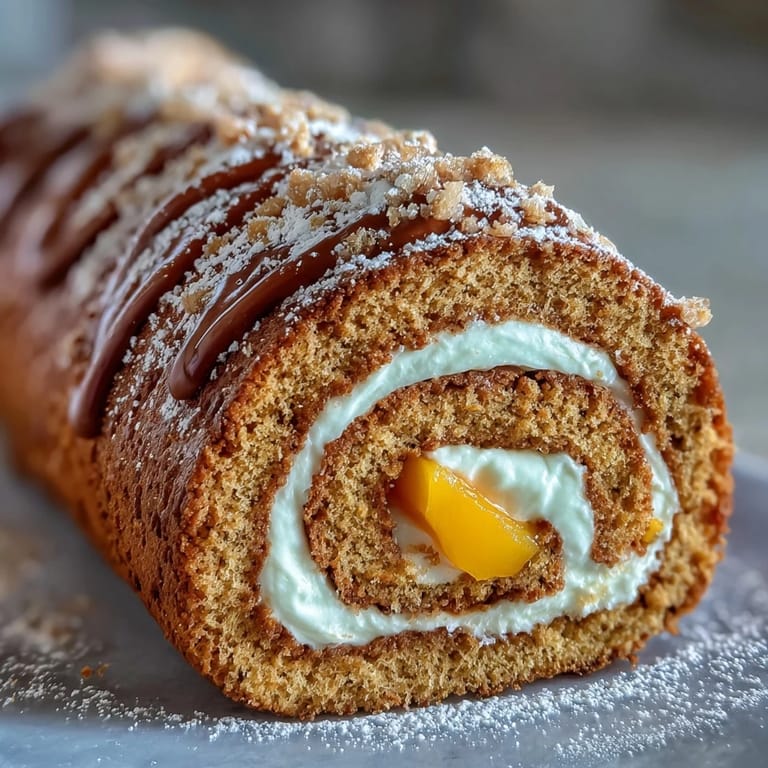
- Once the cake is completely cool, spread the hojicha cream evenly across the surface with an offset spatula, then line those mango strips along one of the short edges in a neat row. The fruit acts as an anchor for the rolling.
- Roll with confidence:
- Using the parchment paper beneath the cake as your guide, gently roll from the edge where the mango sits, forming a tight spiral as you go—don't rush this, and if a small crack appears in the top, don't worry because hojicha powder will cover it. The parchment helps keep everything together.
- Chill to set:
- Wrap your roll loosely in fresh parchment paper and refrigerate for at least thirty minutes so the cream firms up and the flavors meld together. This waiting period makes slicing infinitely cleaner.
- Finish and serve:
- Trim the rough ends with a sharp, warm knife (running it under hot water and wiping it clean between cuts helps), then slice into eight equal pieces. A light dusting of hojicha powder or powdered sugar on top makes each slice look finished.
 Pin
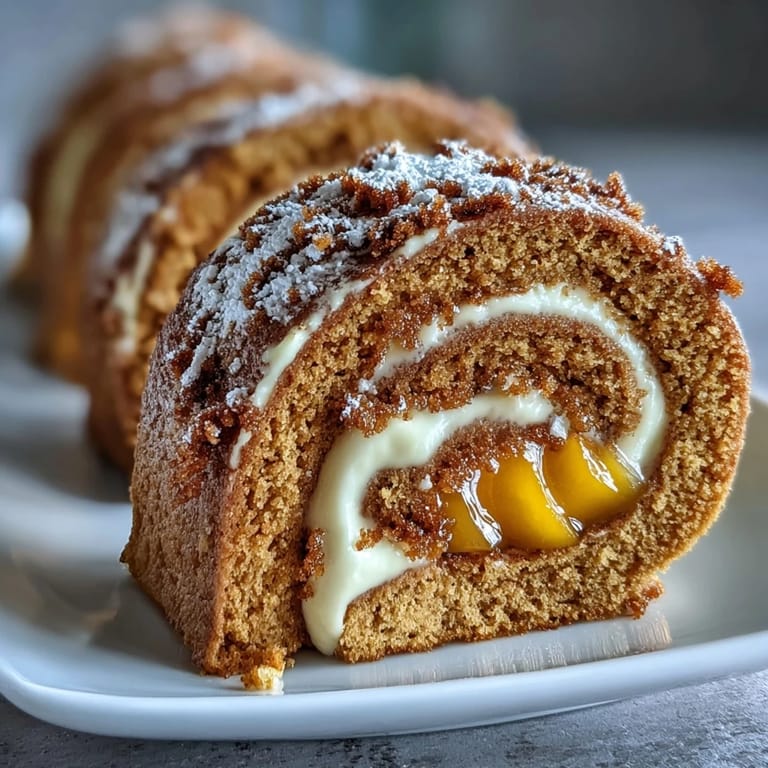
Pin I remember the quiet satisfaction of sliding that first slice onto a plate and watching the swirl of hojicha cream and mango ribbons come into focus—it felt like I'd somehow captured something precious. That dessert became the thing my family asks for first whenever I mention planning a special dinner.
The Magic of Hojicha in Baking
Hojicha is roasted green tea, which means it already has a toasted, slightly sweet character that other teas lack, making it incredibly forgiving in desserts. The roasting process tames any bitterness, so even if you're generous with the powder, you'll never end up with something that tastes like you're chewing on a tea bag. I learned this by accident when I once used double the hojicha powder thinking it would deepen the flavor, and instead of tasting overpowering, it simply became more complex and nutty. This is why hojicha works in delicate cakes where you need control and subtlety.
Why This Roll Doesn't Crack
Most people assume that rolling a sponge cake requires some special technique or years of practice, but the truth is simpler—it comes down to moisture, temperature, and knowing when to invert. The milk and oil in this sponge keep it tender even after baking, and inverting while it's still warm makes it pliable without being fragile. I discovered this the hard way after attempting a rolled cake years ago that was so dry it shattered like glass, and I realized I'd been missing that crucial moment where the cake is still warm enough to bend but cool enough to handle.
Flavors That Play Well Together
Hojicha is warm, roasted, and vaguely nutty—it sits somewhere between tea and toasted grain in flavor profile. Mango brings acid and brightness that would seem opposite to hojicha, but that contrast is exactly what makes the combination feel complete rather than one-note. The heavy cream acts as a peacemaker between the two, its richness giving both flavors room to breathe without competing for attention.
- If mango isn't available, strawberries or thin peach slices work beautifully because they bring acidity without heaviness.
- A tiny pinch of salt in the cream (literally one grain) can amplify the hojicha flavor in a way that feels almost magical.
- Serve this within twenty-four hours of assembly for the best texture, as the cake will gradually absorb moisture from the cream over time.
 Pin
Pin This hojicha roll cake is the kind of dessert that quietly becomes a tradition without you quite realizing it happened. Make it once and you'll understand why.
Recipe FAQ
- → What does hojicha taste like?
Hojicha has a distinctively earthy, nutty flavor with caramel-like notes. Unlike regular green tea, it's roasted over high heat, which reduces bitterness and creates a warm, toasty profile that pairs beautifully with sweet creams and fruits.
- → Can I make the sponge ahead of time?
The sponge can be baked a day in advance. Wrap it tightly in plastic wrap once completely cooled and store at room temperature. Fill with cream just before serving to maintain the best texture and prevent sogginess.
- → Why did my cake crack when rolling?
Cracking usually happens when the sponge is overbaked or too dry. Ensure you don't exceed the baking time and roll the cake while it's still slightly warm. Rolling while warm helps the sponge develop flexibility and prevents cracking.
- → Can I substitute the mango filling?
Absolutely! While mango adds a lovely tropical contrast, you can use sliced strawberries, peaches, or omit fruit entirely. The hojicha cream stands beautifully on its own, or you could add a layer of red bean paste for a more traditional Japanese touch.
- → How long will this roll cake stay fresh?
The filled roll cake is best enjoyed within 1-2 days when stored in the refrigerator. The cream may begin to weep after that. For optimal results, bake the sponge ahead and fill with freshly whipped hojicha cream the day you plan to serve.
- → What if I can't find hojicha powder?
You can substitute with matcha powder for a more vibrant green color and grassier flavor, or use regular roasted green tea leaves ground into a fine powder. The taste profile will shift slightly but still create a delicious dessert.